Exosomes and peptides are different materials. Exosomes are membrane-bound vesicles released by cells that carry proteins, lipids and nucleic acids, while peptides are short chains of amino acids (Fig. 1); the copper tripeptide GHK-Cu, three amino acids holding a copper ion, is the example most skin-care readers know.
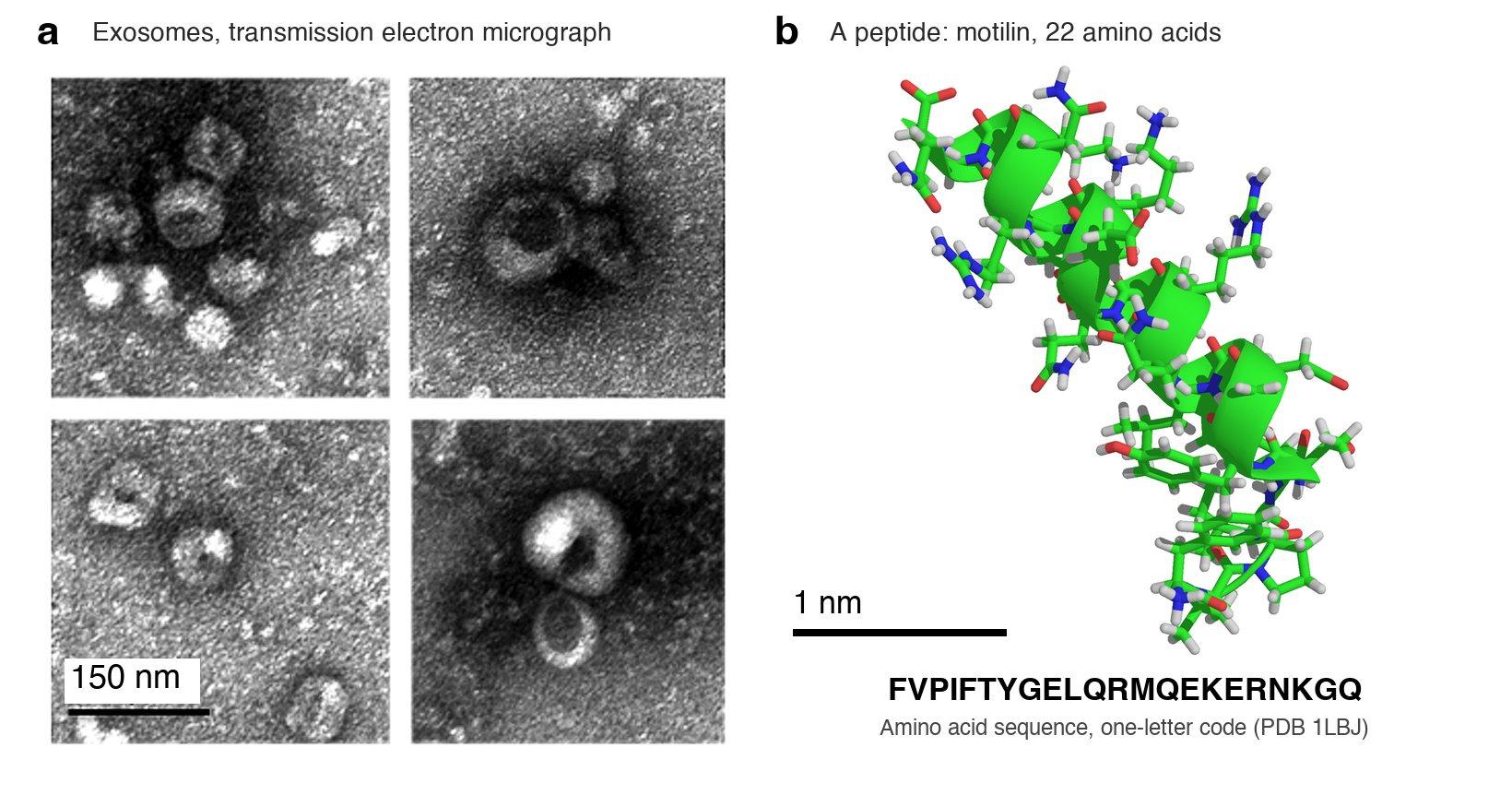
Many practices ask whether they can offer both. The two lines fall under different US rules and are ordered in different ways, and each leaves its own paper trail. The sections below describe each material, the framework that governs it and the records a practice file should hold.
Regulatory status
The FDA stated in its 2019 public safety notification that there are no FDA-approved exosome products, and its 2020 consumer alert, current as of 2024, repeats that position. ExaVeyra supplies exosome material for topical aesthetic use by licensed practitioners, described by its available formats. Compounded peptide preparations are not FDA-approved; a 503A compounding pharmacy prepares them for an individual patient against that patient’s prescription, available to NPI-verified licensed practitioners in the states where the pharmacy is licensed. Clinical use of either line is the practitioner’s decision.
Understanding the structural difference between vesicles and peptides
Kalluri and LeBleu reviewed exosome biology in Science in 2020. They described exosomes as a subset of extracellular vesicles with an average diameter of about 100 nanometers, formed through the endosomal pathway and carrying cargo that reflects the cell of origin.
Each vesicle is a lipid bilayer enclosing many different molecules, so a preparation is characterized by particle size, concentration, surface markers and morphology. The International Society for Extracellular Vesicles sets the reporting standard for that work in MISEV2023, which asks studies to separate vesicles from non-vesicular particles and to report how each was measured.
Contreras and Ariza-Donado observed in a 2026 review that many aesthetic products and studies call their preparations exosomes although endosomal origin is not always demonstrated. For that reason the guideline’s umbrella term, extracellular vesicles, appears so often in the literature.
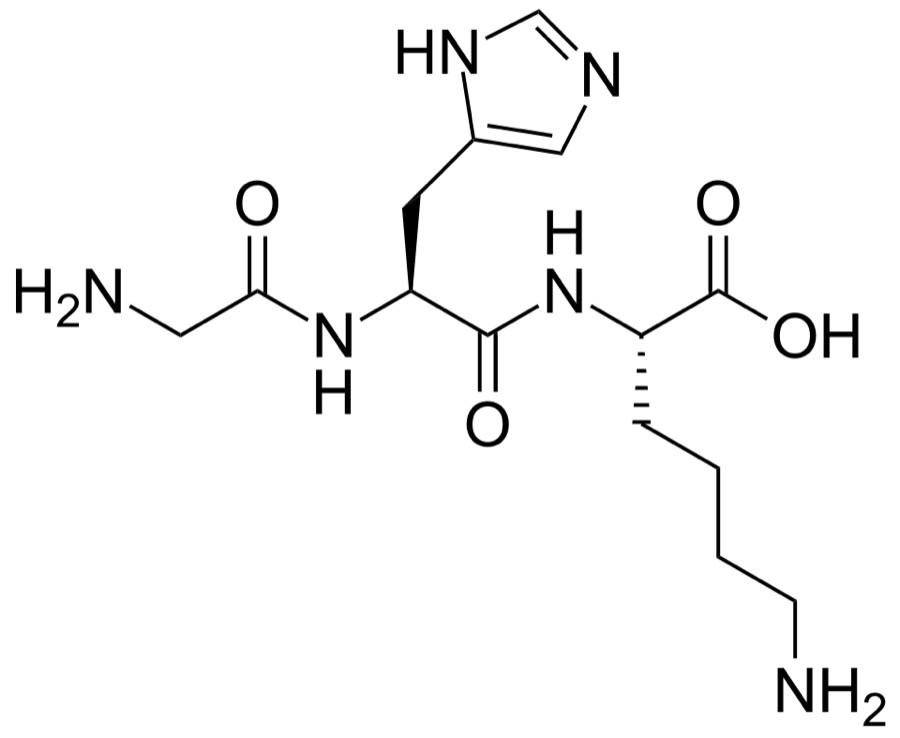
A peptide is a single molecule with a defined sequence. GHK is glycine, histidine and lysine, a tripeptide of roughly 340 daltons (Fig. 2), and Pickart and colleagues reported in a 2015 review that it occurs in human plasma, saliva and urine, declines with age and is proposed to act as a complex with copper(II). Sequence, purity and copper content establish its identity.
Errante and colleagues grouped cosmetic peptides into signal peptides, carrier peptides and neurotransmitter inhibitors in a 2020 review. Pai and colleagues used a similar scheme in 2017, adding structural peptides as a fourth group, and both reviews place GHK-Cu among the carrier peptides because it delivers copper.
| Feature | Exosome material | Peptides such as GHK-Cu |
|---|---|---|
| What it is | Lipid-bilayer vesicles released by cells, carrying many molecules | A single defined chain of amino acids, here bound to copper |
| Scale | About 100 nanometers on average (Kalluri 2020) | About 340 daltons for the free tripeptide |
| How identity is shown | Particle size, concentration, marker proteins and morphology, to MISEV2023 headings | Sequence, purity and copper content |
| How it reaches a practice | Supplied material for topical aesthetic use by licensed practitioners | Cosmetic ingredient in finished skin care, or a 503A preparation compounded for one patient |
| FDA approval | No FDA-approved exosome products (FDA 2019, 2020) | Cosmetics need no premarket approval; compounded preparations are not FDA-approved |
GHK-Cu illustrates why copper peptides are studied as a separate science
Pickart and Margolina reviewed the GHK-Cu literature in 2018, summarizing in vitro and animal work on collagen, elastin and glycosaminoglycan synthesis and on dermal fibroblast function. Their 2015 review reported gene-expression data in which GHK up- or downregulated at least 4,000 human genes.
Both reviews come from the peptide’s original investigator, writing from a company research address. They are the natural entry point to the field, and the primary studies they cite deserve a reading of their own.
Mokhtar and colleagues published a systematic review of GHK-Cu in aesthetic medicine in 2026 and located 20 studies, 18 preclinical and two randomized controlled trials. The authors reported that the clinical studies described better patient-reported satisfaction after laser resurfacing and lower wrinkle volume and depth against controls. With well-designed clinical trials still few, they called for larger controlled trials with standardized formulations and delivery methods.
Delivery is a separate research question for a hydrophilic peptide. Ogórek and colleagues noted in a 2025 review that the skin transport of liposomal GHK-Cu has received little study. Li and colleagues reported in 2015 that almost no peptide or copper crossed intact human skin in 9 hours in vitro, while 134 nanomoles of peptide crossed skin pretreated with microneedles.
Exosomes and GHK-Cu rest on evidence bases of different size and design
Gaebe and colleagues reviewed 16 facial vesicle studies with 503 participants in 2026 and rated risk of bias moderate to critical and the certainty of evidence low or very low. Within those ratings, most studies reported improvement in at least one skin quality outcome, none reported a serious adverse event, and the authors described the findings as preliminary signals of benefit and short-term safety.
Knauer and colleagues located 18 studies of topical exosomes for skin rejuvenation in a 2026 scoping review. In a parallel survey of the first 20 commercial exosome cosmetic products found online, they reported minimal information on isolation, processing or shelf life, which is why the documentation section of this guide lists characterization and lot records.
For peptides as a class, Nukaly and colleagues pooled 19 randomized trials with 1,341 participants in a 2026 meta-analysis of oral and topical peptides. The pooled effect on wrinkles was modest and driven largely by oral polypeptides, effects on elasticity and density were inconsistent, and adverse events were few; the authors called for larger trials with standardized outcomes.
A PubMed search on 7 October 2026 located no published human trial that combined exosome material with GHK-Cu in one protocol. Each line has its own small literature, so a practice comparing exosomes vs GHK-Cu reads two separate evidence bases side by side.
Three regulatory frameworks govern the two product lines
The FDA’s cosmetic-or-drug page defines a cosmetic by its purpose of cleansing, beautifying, promoting attractiveness or altering the appearance. On the same page, the agency defines a drug as an article intended for the diagnosis, cure, mitigation, treatment or prevention of disease, or intended to affect the structure or any function of the body.
The agency states that intended use can be established by claims on labeling, in advertising, on the internet and in promotional materials, which places the words used about a product among the factors the agency describes.
Cosmetic peptide ingredients sit in the first frame. The FDA states that cosmetic products and ingredients other than color additives do not need approval before marketing, and Pai and colleagues noted the same absence of premarket requirements for peptide ingredients.
The Modernization of Cosmetics Regulation Act of 2022 added facility registration, product listing, safety substantiation records and reporting of serious adverse events to the FDA within 15 business days.
Exosome material sits in a frame of its own. The FDA stated in 2019 that exosomes used to treat diseases and conditions in humans are regulated as drugs and biological products, and its 2020 consumer alert, current as of 2024, states that there are currently no FDA-approved exosome products. ExaVeyra supplies its exosome material for topical aesthetic use by licensed practitioners and makes no statement about outcomes.
Compounded peptide preparations sit in the third frame. Section 503A of the Federal Food, Drug, and Cosmetic Act exempts a drug compounded for an identified individual patient, based on a valid prescription order, from the Act’s new drug approval, adequate-directions labeling and current good manufacturing practice provisions. The FDA states that compounded drugs are not FDA-approved and that it does not verify their safety, effectiveness or quality before they are marketed.
Route matters for GHK-Cu in particular. The FDA’s list of bulk substances that may present significant safety risks carries an entry for GHK-Cu for injectable routes of administration, recorded as nominated and withdrawn, with the agency’s stated concern about immunogenicity from aggregation and peptide-related impurities.
The entry is written for injectable routes, and the topical GHK-Cu preparations listed on this site are compounded creams and solutions prepared to prescription.
| Product line | Governing framework | How it is ordered | Documentation |
|---|---|---|---|
| Exosome material | FDA position on exosome products; supplied for topical aesthetic use by licensed practitioners | By the practice, after license verification | Lot number on the vial; certificate of analysis, characterization panel and cold-chain records on request |
| Cosmetic peptide skin care | FD&C Act cosmetic definition and MoCRA | Retail or professional skin-care purchasing | Ingredient label, the maker’s MoCRA listing and adverse event contact |
| Compounded peptide preparation | FD&C Act section 503A and the state board of pharmacy | A prescription for an identified patient, in states where the pharmacy is licensed | Patient-specific label with a beyond-use date assigned at preparation |
Each line answers a different request from the same patients
Exosome material is ordered by the practice for topical aesthetic use under the practitioner’s direction. A compounded peptide preparation is ordered for one patient at a time and dispensed by the pharmacy against that patient’s prescription, so the two lines meet different requests from the same patient population.
Sourcing both from one supplier keeps onboarding, license verification and the compliance file in one place. The paperwork stays separate by design, because a lot record for vesicle material and a prescription record for a compounded preparation answer to different authorities.
Understanding the scope of the current evidence
Both literatures are active and early, and their limits can be stated precisely.
- The human trials located study exosome material and GHK-Cu separately, so any statement about using them together rests on separate studies.
- Gaebe 2026 rated the certainty of facial vesicle evidence low or very low, and the studies are small, short and often split-face.
- Mokhtar 2026 found two randomized trials of GHK-Cu among 20 studies; most of the GHK-Cu literature is preclinical.
- The two most cited GHK-Cu reviews come from the peptide’s original investigator, and several of the cosmetic formulation studies they summarize were published as conference proceedings and a book chapter, as the reviews’ reference lists show (Pickart 2015, Pickart 2018).
- Nukaly 2026 found the pooled wrinkle effect of peptides was driven largely by oral polypeptides, so the pooled figure speaks mainly to oral products.
- Skin penetration is measured differently for each material: GHK-Cu in permeation cells (Li 2015, Ogórek 2025) and vesicles by characterization and labeling methods that MISEV2023 asks authors to report in full.
- Knauer 2026 found that commercial exosome cosmetics reported little about isolation, processing or shelf life, so one product’s result may not transfer to another.
Each of these limits is also a question the next study can answer.
Documenting each line in the practice file
A practice that keeps one file per product line can answer an inspector’s, an insurer’s or a patient’s question from the record. The fields below follow the sources cited in this article.
- Exosome material: the lot number, expiry, certificate of analysis and characterization panel, mapped where possible to MISEV2023 headings, with the manufacturer’s documentation kept on file.
- Exosome material: the cold-chain record from receipt to use, since the material ships frozen from the manufacturing facility, and the storage log for the clinic freezer.
- Compounded peptide preparations: the prescription for each identified patient, the pharmacy’s license in the patient’s state, and the beyond-use date on the label.
- Cosmetic peptide products: the full ingredient list, the maker’s contact for serious adverse event reports under MoCRA, and the claims the practice makes about the product.
- For every line: any adverse event, recorded with the lot or prescription number and reported to the FDA through MedWatch where the event warrants it.
The same list sets out what to ask any supplier of both lines. A practice can request the certificate of analysis for each exosome lot together with the characterization panel and cold-chain records, confirm that the compounding pharmacy is licensed in each state where its patients live, and compare the supplier’s product language with the manufacturer’s documentation.
One supplier can carry both lines with the documentation each requires
ExaVeyra supplies exosome material to NPI-verified practices, shipped frozen from the manufacturing facility with the lot number on every vial. The certificate of analysis, characterization panel and cold-chain records for each lot are available on request.
GHK-Cu is available as topical 503A preparations compounded to prescription through a licensed pharmacy partner, in the states where that pharmacy is licensed. The practitioner decides how either line is used, and a verified account gives access to the product documentation for both lines before the first order.
SNAP-8 and other product and ingredient names mentioned on linked pages are trademarks of their respective owners and are used only to identify the products.
The scientific team answers questions about either line, from vesicle characterization to how a compounded preparation is ordered, before a first order. Practices can apply for an account or send a question through the contact page.
Educational Disclaimer: This article is for educational purposes only and does not constitute medical or legal advice. It does not identify any material, compound, device setting or protocol as safe, effective or appropriate for any patient, and it is not intended to diagnose, treat, cure, or prevent any disease. Questions about a treatment belong with the reader’s own licensed provider. Exosome material is supplied for topical aesthetic use by licensed practitioners. No exosome product is FDA-approved for any use, and ExaVeyra Sciences makes no statement about administration, route, or outcome. Compounded medications are not FDA-approved. They are prepared by a 503A compounding pharmacy licensed by the Texas State Board of Pharmacy for an individual patient against that patient’s prescription, and are available to NPI-verified licensed practitioners only, in the states where the pharmacy is licensed. Product, device and brand names mentioned are trademarks of their respective owners and are used only to identify the products discussed. Their mention is not an endorsement, and those owners have not reviewed or endorsed this article. ExaVeyra Sciences is a supplier and takes no part in any diagnosis, treatment decision, or plan of care. Findings described are attributed to the peer-reviewed literature, trial registries and agencies cited. The content of these guides is provided for general informational purposes only. It does not constitute legal, medical, or regulatory advice, and does not establish that any particular product or practice is compliant. Regulatory requirements vary by state and depend on the circumstances of each practice. Each practitioner should consult their own legal counsel and the applicable state licensing boards before acting on anything stated here.
References
- 1.Gaebe K, Lowe K, Bosnalie D, Khoury S, Villemure Poliquin N, Nichols A. Effectiveness and Safety of Extracellular Vesicle-Based Therapies for Nonsurgical Facial Rejuvenation: A Systematic Review. Facial Plast Surg Aesthet Med. 2026. Published online ahead of print. PMID 42487416. doi:10.1177/26893614261457879PRISMA systematic review with risk-of-bias and GRADE assessment; 16 studies, 503 participants, split-face, comparative and single-arm designs. Carries in this article: the certainty rating for facial vesicle studies; most studies reported improvement in at least one skin quality outcome, no serious adverse events were reported, risk of bias was moderate to critical and GRADE certainty was low or very low. Disclosure: academic authors (Canada); no COI statement in the PubMed record.
- 2.Mokhtar J, Mohamad B, Haddad J, Said A, Menon A, Kreutz-Rodrigues L, et al. The Regenerative Potential of GHK-Cu in Aesthetic Medicine. Aesthet Surg J. 2026. Published online ahead of print. PMID 42619529. doi:10.1093/asj/sjag169PRISMA systematic review, searches from inception to March 2026; 20 studies, 18 preclinical and 2 randomized controlled trials, of GHK-Cu as a standalone intervention. Carries in this article: the current evidence map for GHK-Cu in aesthetic practice, the two human trials it located (patient-reported satisfaction after laser resurfacing; wrinkle volume and depth against controls), and the authors’ conclusion that well-designed clinical trials are few. Disclosure: academic authors (UAE, Egypt, USA); no COI statement in the PubMed record.
- 3.Nukaly HY, Halawani IR, Irtaza HM, Alturkistani T, Serafi MR, Alhawsawi W, et al. Oral and topical peptides for skin aging: systematic review and meta-analysis of randomized controlled trials. Front Med (Lausanne). 2026;13:1618306. PMID 41924746. PMC13037056. doi:10.3389/fmed.2026.1618306Systematic review and random-effects meta-analysis of randomized controlled trials (Cochrane RoB 2), PROSPERO CRD420250652779; 19 trials, 1,341 participants. Carries in this article: a modest pooled wrinkle effect driven largely by oral polypeptides, inconsistent effects on elasticity and density, few adverse events, and the authors’ call for larger trials with standardized outcomes. Disclosure: the authors declared no commercial or financial conflicts.
- 4.Knauer G, Chang A, Gupta A, Brownstone N, Mejia N, Bauman S, et al. Clinical Evidence and Commercial Landscape of Topical Exosomes for Skin Rejuvenation: A Scoping Review. Aesthet Surg J. 2026;46(11):NP148-NP157. PMID 42411735. doi:10.1093/asj/sjag141Scoping review (PRISMA-S and PRESS search, 2,394 records screened) plus a survey of the first 20 commercially available exosome cosmetic products; 18 studies of topical exosomes for skin rejuvenation, from human- and plant-derived sources. Carries in this article: commercial products carried minimal information on isolation, processing or shelf life, the reason the documentation section asks for characterization and lot data. Disclosure: academic authors (USA); no COI statement in the PubMed record.
- 5.Contreras C, Ariza-Donado A. Extracellular Vesicles in Regenerative and Cosmetic Medicine: Safety, Clinical Effectiveness, Therapeutic Applications, and Regulatory Challenges. Int J Mol Sci. 2026;27(12):5541. PMID 42353255. PMC13299476. doi:10.3390/ijms27125541Narrative review of Scopus and PubMed literature with an exploratory qualitative survey of 12 aesthetic physicians (Colombia). Carries in this article: many aesthetic products and studies call their preparations exosomes although endosomal origin is not always demonstrated, and the field is limited by variable sources, isolation methods and regulatory frameworks. Disclosure: the authors declared no conflict of interest.
- 6.Welsh JA, Goberdhan DCI, O'Driscoll L, Buzas EI, Blenkiron C, Bussolati B, et al; MISEV Consortium; Théry C, Witwer KW. Minimal information for studies of extracellular vesicles (MISEV2023): From basic to advanced approaches. J Extracell Vesicles. 2024;13(2):e12404. PMID 38326288. PMC10850029. doi:10.1002/jev2.12404International Society for Extracellular Vesicles reporting guideline, compiled with ISEV task forces and more than 1,000 researchers. Carries in this article: the reference standard for vesicle nomenclature, separation from non-vesicular particles and characterization, which an exosome certificate of analysis should map to. Disclosure: many consortium authors list EV company affiliations, declared in full in the article.
- 7.Kalluri R, LeBleu VS. The biology, function, and biomedical applications of exosomes. Science. 2020;367(6478):eaau6977. PMID 32029601. PMC7717626. doi:10.1126/science.aau6977Narrative review in Science. Carries in this article: exosomes as a subset of extracellular vesicles with an average diameter of about 100 nanometers, formed through the endosomal pathway and carrying nucleic acids, proteins, lipids and metabolites that reflect the cell of origin. Disclosure: the authors declared patents, equity and consulting ties to an exosome company.
- 8.Pickart L, Vasquez-Soltero JM, Margolina A. GHK Peptide as a Natural Modulator of Multiple Cellular Pathways in Skin Regeneration. Biomed Res Int. 2015;2015:648108. PMID 26236730. PMC4508379. doi:10.1155/2015/648108Narrative review by the peptide’s original investigator. Carries in this article: GHK is present in human plasma, saliva and urine and declines with age, is proposed to function as a copper complex, and was reported to up- and downregulate at least 4,000 human genes in gene-expression data; cosmetic formulation findings summarized from earlier work. Disclosure: the authors list a company affiliation; no COI statement in the PubMed record.
- 9.Pickart L, Margolina A. Regenerative and Protective Actions of the GHK-Cu Peptide in the Light of the New Gene Data. Int J Mol Sci. 2018;19(7):1987. PMID 29986520. PMC6073405. doi:10.3390/ijms19071987Narrative review by the same group. Carries in this article: the standard entry point to the GHK-Cu literature, summarizing in vitro and animal work on collagen, elastin and glycosaminoglycan synthesis and the gene-expression data. Disclosure: the authors declared no conflict of interest and list a company affiliation; the review is a synthesis by the peptide’s principal investigator, a reason to read the primary studies it summarizes.
- 10.Errante F, Ledwoń P, Latajka R, Rovero P, Papini AM. Cosmeceutical Peptides in the Framework of Sustainable Wellness Economy. Front Chem. 2020;8:572923. PMID 33195061. PMC7662462. doi:10.3389/fchem.2020.572923Mini-review of the most investigated peptides in cosmetic formulations. Carries in this article: the three working categories of cosmetic peptides (signal peptides, carrier peptides and neurotransmitter inhibitors) and the authors’ emphasis on the studies behind claimed activity. Disclosure: academic authors (Italy, Poland, France); no COI statement in the PubMed record.
- 11.Pai VV, Bhandari P, Shukla P. Topical peptides as cosmeceuticals. Indian J Dermatol Venereol Leprol. 2017;83(1):9-18. PMID 27451932. doi:10.4103/0378-6323.186500Narrative review. Carries in this article: cosmetic peptides grouped as signal, structural, carrier and neurotransmitter-modulating peptides; the absence of premarket regulatory requirements for peptide ingredients in cosmetics; and the authors’ caution that clinical evidence for efficacy is often weak and absorption may be poor. Disclosure: academic authors (India); no COI statement in the PubMed record.
- 12.Li H, Low YS, Chong HP, Zin MT, Lee CY, Li B, et al. Microneedle-Mediated Delivery of Copper Peptide Through Skin. Pharm Res. 2015;32(8):2678-89. PMID 25690343. doi:10.1007/s11095-015-1652-zIn vitro skin permeation study with two skin models, plus cellular and porcine safety models. Carries in this article: in 9 hours, 134 nanomoles of peptide permeated microneedle-pretreated human skin while almost no peptide or copper crossed intact human skin, which frames why GHK-Cu delivery is studied as its own question. Disclosure: academic authors (Singapore); the PubMed record lists non-US government research support.
- 13.Ogórek K, Nowak K, Wadych E, Ruzik L, Timerbaev AR, Matczuk M. Are We Ready to Measure Skin Permeation of Modern Antiaging GHK-Cu Tripeptide Encapsulated in Liposomes? Molecules. 2025;30(1):136. PMID 39795193. PMC11721469. doi:10.3390/molecules30010136Narrative methods review. Carries in this article: GHK-Cu is fairly hydrophilic with limited permeation through the stratum corneum, and the transport of liposomal GHK-Cu has received little attention, a gap in the evidence. Disclosure: the authors declared no conflicts of interest.
- 14.U.S. Food and Drug Administration. Public Safety Notification on Exosome Products. December 6, 2019 (content current as of 12/06/2019; verified 16 November 2026). https://www.fda.gov/vaccines-blood-biologics/safety-availability-biologics/public-safety-notification-exosome-productsAgency safety notification (CBER). Carries in this article: the agency statement that there are currently no FDA-approved exosome products, and that exosomes used to treat diseases and conditions in humans are regulated as drugs and biological products subject to premarket review; the notice also points practitioners to MedWatch for adverse event reports.
- 15.U.S. Food and Drug Administration. Consumer Alert on Regenerative Medicine Products Including Stem Cells and Exosomes. Issued July 22, 2020; content current as of 04/09/2024; verified 22 November 2026. https://www.fda.gov/vaccines-blood-biologics/consumers-biologics/consumer-alert-regenerative-medicine-products-including-stem-cells-and-exosomesAgency consumer alert (CBER). Carries in this article: the FDA states that exosome products are regulated by the agency, that exosome products intended for diseases or conditions in humans require FDA approval, and that there are currently no FDA-approved exosome products; it also describes the agency’s concern about misleading marketing of unapproved products.
- 16.U.S. Food and Drug Administration. Is It a Cosmetic, a Drug, or Both? (Or Is It Soap?). Content current as of 09/11/2024; verified 16 November 2026. https://www.fda.gov/cosmetics/cosmetics-laws-regulations/it-cosmetic-drug-or-both-or-it-soapAgency guidance page on the FD&C Act definitions. Carries in this article: the legal definitions of a cosmetic and of a drug, intended use established by claims on labeling, advertising, the internet and promotional materials, and that cosmetic products and ingredients other than color additives do not need FDA approval before marketing.
- 17.U.S. Food and Drug Administration. Modernization of Cosmetics Regulation Act of 2022 (MoCRA). Content current as of 10/29/2026; verified 16 November 2026. https://www.fda.gov/cosmetics/cosmetics-laws-regulations/modernization-cosmetics-regulation-act-2022-mocraAgency overview of the 2022 statute. Carries in this article: facility registration, product listing, reporting of serious adverse events to the FDA within 15 business days, and records supporting safety substantiation, the duties that apply to cosmetic peptide products and their makers.
- 18.U.S. Food and Drug Administration. Compounding and the FDA: Questions and Answers. Content current as of 09/16/2025; verified 16 November 2026. https://www.fda.gov/drugs/human-drug-compounding/compounding-and-fda-questions-and-answersAgency question-and-answer page (CDER). Carries in this article: compounded drugs are not FDA-approved and the FDA does not verify their safety, effectiveness or quality before marketing; state boards of pharmacy have primary day-to-day oversight of state-licensed pharmacies; and 503B outsourcing facilities follow current good manufacturing practice.
- 19.Federal Food, Drug, and Cosmetic Act section 503A, Pharmacy compounding, 21 U.S.C. 353a(a). US Code, 2024 edition, verified 16 November 2026. https://www.govinfo.gov/content/pkg/USCODE-2024-title21/html/USCODE-2024-title21-chap9-subchapV-partA-sec353a.htmFederal statute. Carries in this article: sections 501(a)(2)(B), 502(f)(1) and 505 of the Act do not apply to a drug compounded for an identified individual patient based on a valid prescription order, which is why a 503A preparation is ordered per patient and carries no FDA approval.
- 20.U.S. Food and Drug Administration. Certain Bulk Drug Substances for Use in Compounding that May Present Significant Safety Risks. Content current as of 04/22/2026; verified 16 November 2026. https://www.fda.gov/drugs/human-drug-compounding/certain-bulk-drug-substances-use-compounding-may-present-significant-safety-risksAgency list (CDER). Carries in this article: the entry for GHK-Cu for injectable routes of administration, recorded as nominated and withdrawn, with the agency’s stated concern about immunogenicity from aggregation and peptide-related impurities and limited human data. The entry is written for injectable routes only.
Image credits
- Fig. 1Panel a: Gallo A, Tandon M, Alevizos I, Illei GG. Panel b: Ayacop, Wikimedia Commons, panels assembled and labeled, scale bar relabeled in panel a and added to panel b, CC0 1.0 (panel a) and public domain (panel b). Panel a: Gallo A, Tandon M, Alevizos I, Illei GG. The majority of microRNAs detectable in serum and saliva is concentrated in exosomes. PLoS One. 2012;7(3):e30679. DOI article. Panel b: structure from Andersson A, Mäler L. NMR solution structure and dynamics of motilin in isotropic phospholipid bicellar solution. J Biomol NMR. 2002;24(2):103-112; image at Wikimedia Commons file ↩
- Fig. 2Edgar181, Wikimedia Commons, Public domain. ↩