Exosomes have become one of the most discussed topics in aesthetic medicine and for good reason. These nano-scale extracellular vesicles, secreted naturally by cells as part of intercellular communication, carry a complex cargo of proteins, lipids, and nucleic acids that influence cellular behavior. As topical aesthetic treatments, they represent a biologically active class of product unlike anything previously available in the clinic setting. But with popularity comes noise and separating the signal from the marketing requires a close look at the underlying science.
What Are Exosomes, Precisely?
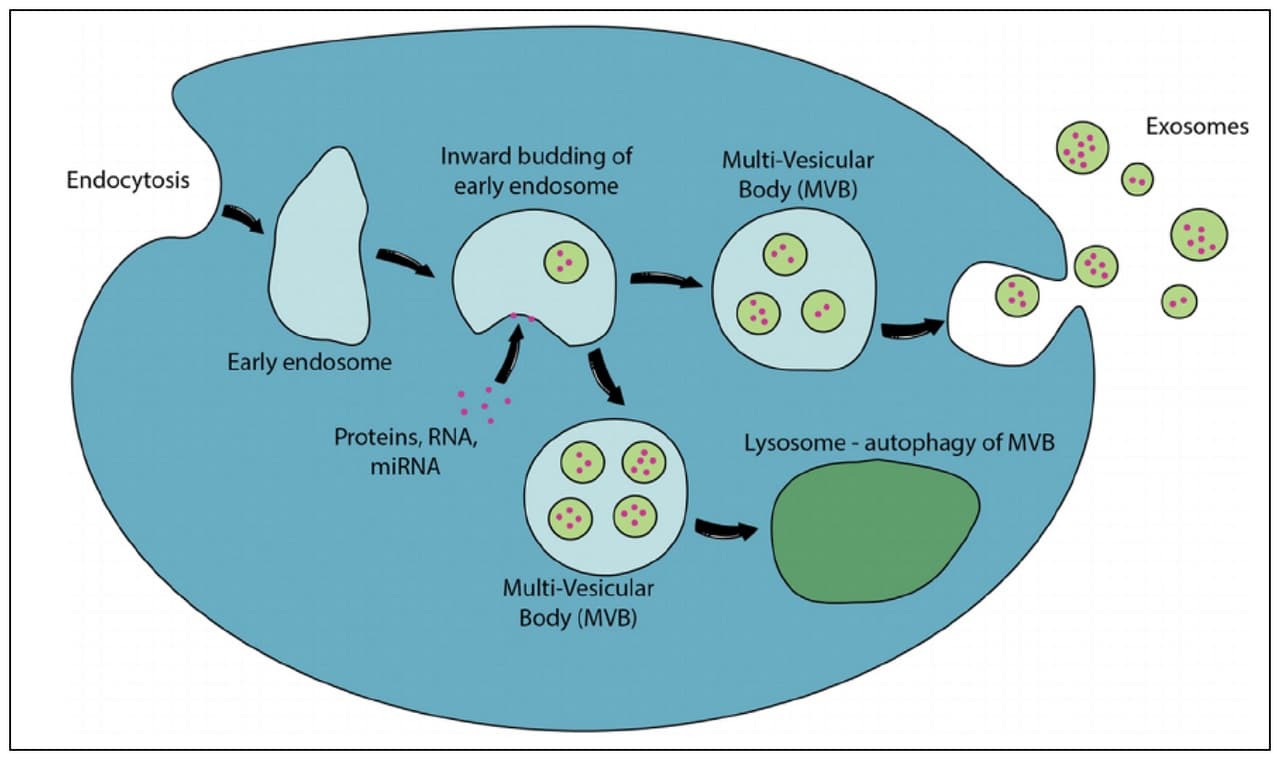
Exosomes are a subset of extracellular vesicles (EVs) ranging from approximately 30 to 150 nanometers in diameter. They form inside cells within multivesicular bodies and are released into the extracellular space upon fusion of these bodies with the plasma membrane (Fig. 1). Their distinguishing features include a phospholipid bilayer membrane, surface expression of tetraspanin proteins (CD9, CD63, CD81), and an interior cargo of microRNAs, messenger RNAs, proteins, and lipids that reflect the biology of the cell of origin.
This cargo is not random. It is selectively packaged by the parent cell and changes based on cellular state, stimulus, and environment. A vesicle derived from a cell in an active, healthy state carries a different molecular fingerprint than one derived from a stressed or senescent cell a distinction that has significant implications for product quality and characterization.
Key Definition
Exosomes are not cells and do not replicate. They are membrane-bound nanoparticles that deliver molecular cargo to recipient cells, modulating their behavior through receptor-ligand interactions, membrane fusion, and endocytosis.
The Topical Application Rationale
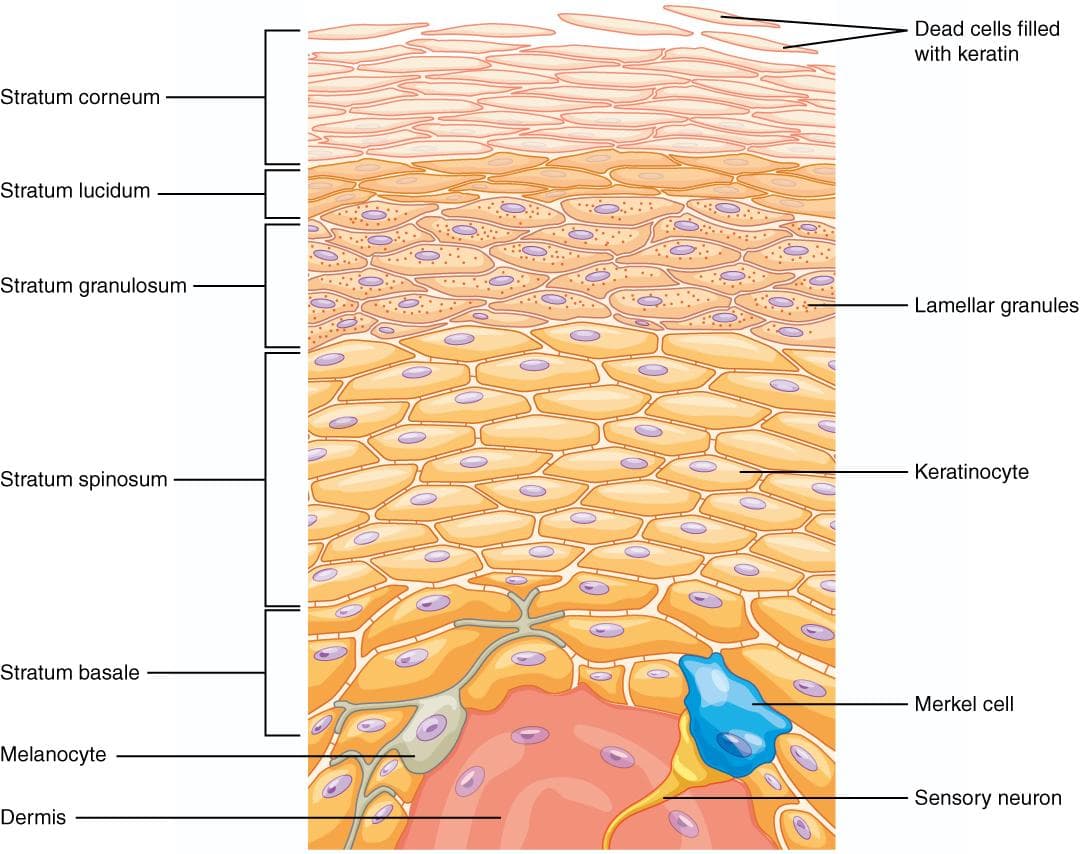
The skin presents a formidable barrier to most topically applied compounds. The stratum corneum the outermost layer of the epidermis is designed to exclude external molecules, particularly hydrophilic ones (Fig. 2). Why, then, has topical exosome application become a clinical focus?
The answer lies in two factors: vesicle size and membrane composition. At 30-150nm, exosomes fall within a size range that may allow passive diffusion through intercellular lipid channels in the stratum corneum, particularly in skin that has been permeabilized by aesthetic procedures such as microneedling or fractional laser. Their phospholipid bilayer is also compositionally similar to cell membranes, potentially facilitating fusion with keratinocytes and dermal fibroblasts.
A 2021 review in the Journal of Controlled Release examined exosome-based topical delivery across multiple tissue types and noted that exosomes demonstrate favorable penetration characteristics in disrupted or abraded epithelial barriers compared to intact skin. This has practical implications for the clinical sequencing of exosome application specifically, the rationale for applying them immediately following microneedling, laser resurfacing, or radiofrequency microneedling while the barrier remains transiently compromised.
What the Research Actually Shows
The published literature on exosomes in aesthetic and dermatologic applications is growing, though the field remains early relative to the pace of clinical adoption. The majority of peer-reviewed work has been conducted in vitro or in animal models, with a smaller and growing body of human clinical data.
A 2022 study published in the International Journal of Molecular Sciences examined the effects of exosome application on dermal fibroblast activity in vitro. The investigators observed modulation of fibroblast gene expression profiles related to extracellular matrix components, including collagen and elastin-associated genes. The authors were careful to note that in vitro findings do not directly predict in vivo outcomes, and called for controlled clinical trials to establish efficacy in human skin.
A 2026 systematic review in Dermatology Practical & Conceptual screened 1,032 records and included 21 studies of exosome preparations in skin aging research, drawn from adipose stem cell, platelet, plant and milk sources. The included studies measured skin elasticity, wrinkle depth, hydration and pigmentation, and the authors called for standardized trials with larger cohorts and longer follow-up.
Literature Note
The majority of exosome aesthetic research is preclinical. Topical exosome application is a topical aesthetic step, with no claim to treat any condition, and no exosome product is FDA-approved for any use.
Where Topical Application Sits in a Session
Where a topical application sits in a session, and how much is used, is the licensed practitioner's decision. ExaVeyra describes its formats by volume and never by a dose, and exosome material is a liquid formulation stored frozen per the manufacturer's handling instructions.
Characterization: What to Look for in a Supplier
The quality of an exosome preparation is entirely a function of its manufacturing and characterization. This is where the clinical and commercial landscape diverges sharply and where practitioners bear significant responsibility in their sourcing decisions.
The International Society for Extracellular Vesicles (ISEV) has published Minimal Information for Studies of Extracellular Vesicles (MISEV) guidelines that establish minimum reporting and characterization standards for EV research. While these are research guidelines rather than regulatory requirements for commercial products, they provide the most rigorous framework available for evaluating product documentation.
- Particle concentration and size distribution: Should be measured by nanoparticle tracking analysis (NTA) or tunable resistive pulse sensing (TRPS). Look for particle counts and size distribution histograms, not just a summary number.
- Tetraspanin marker confirmation: CD9, CD63, and/or CD81 expression should be confirmed by Western blot or flow cytometry to verify EV identity.
- Sterility testing: Endotoxin testing (LAL assay) and sterility culture should be documented per lot.
- Certificate of Analysis: Should include particle count, size, sterility, and identity markers not just a general product description.
- Manufacturing facility: Should be cGMP-compliant and named, so its registration can be checked. Establishment registration is not product approval.
- Lot-specific documentation: Each lot should have its own COA. Generic or undated documentation is a red flag.
The clinical outcome of any exosome protocol is bounded by the quality of the preparation. A poorly characterized product with inconsistent particle counts produces inconsistent results regardless of the protocol used.
Regulatory Context for Aesthetic Clinics
Practitioners should be aware of the current regulatory landscape before incorporating exosome treatments into their practice. As of 2026, the FDA has not approved any exosome product for therapeutic use. The agency has issued warning letters to several manufacturers making unsupported therapeutic claims, and has signaled increased enforcement attention on the EV space.
Compliant use of exosomes in the clinic context is limited to topical aesthetic application not injection, not systemic delivery, and not claims of treating any disease or condition. Practitioners should document their protocols clearly, describe the material to patients as a topical aesthetic product, and source only from suppliers who can provide complete regulatory and manufacturing documentation.
What This Means for Your Practice
Topical exosome application is a new category of aesthetic product, with a plausible mechanistic rationale, growing preclinical literature, and significant patient and practitioner interest. The science supports cautious optimism, particularly for post-procedure applications where the delivery barrier is transiently reduced.
The clinical opportunity is real. So is the quality gap between suppliers. For practitioners adding exosome protocols to their practice, the questions to ask are consistent: Who manufactured this, under what standards, and where is the documentation? A COA is not optional it is the minimum evidence of product identity and safety. Everything else is marketing.
Educational Disclaimer: This article is an educational literature summary for licensed healthcare practitioners and does not constitute medical advice. Exosome material discussed is supplied for topical aesthetic use by licensed practitioners and for laboratory and IND-authorized clinical research. No exosome product is FDA-approved for any use. Practitioners are responsible for compliance with applicable federal and state regulations governing the use of biologically derived aesthetic products.
References
- 1.Théry C, et al. Minimal information for studies of extracellular vesicles 2018 (MISEV2018). Journal of Extracellular Vesicles. 2018;7(1):1535750.
- 2.Antimisiaris SG, et al. Exosomes and exosome-inspired vesicles for targeted drug delivery. Pharmaceutics. 2021;13(5):585.
- 3.Herrmann IK, Wood MJA, Fuhrmann G. Extracellular vesicles as a next-generation drug delivery platform. Nature Nanotechnology. 2021;16:748-759.
- 4.Wortzel I, et al. Exosome-mediated metastasis: communication from a distance. Developmental Cell. 2019;49(3):347-360.
- 5.Alzahrani A, Alghamdi S, Alahmadi M, et al. Exosomes in skin rejuvenation: systematic review of anti-aging effects and clinical applications. Dermatology Practical & Conceptual. 2026;16(1):6462. doi:10.5826/dpc.1601a6462. PMID: 41912205.