It is the first question a serious clinic asks before sourcing exosomes, and the answer needs to be stated plainly because a lot of marketing blurs it. As of 2026, no exosome product is FDA-approved for the treatment of any disease or condition. That single fact shapes everything downstream: how these products can be sourced, how they can be described, and what a compliant program looks like.
The Short Answer
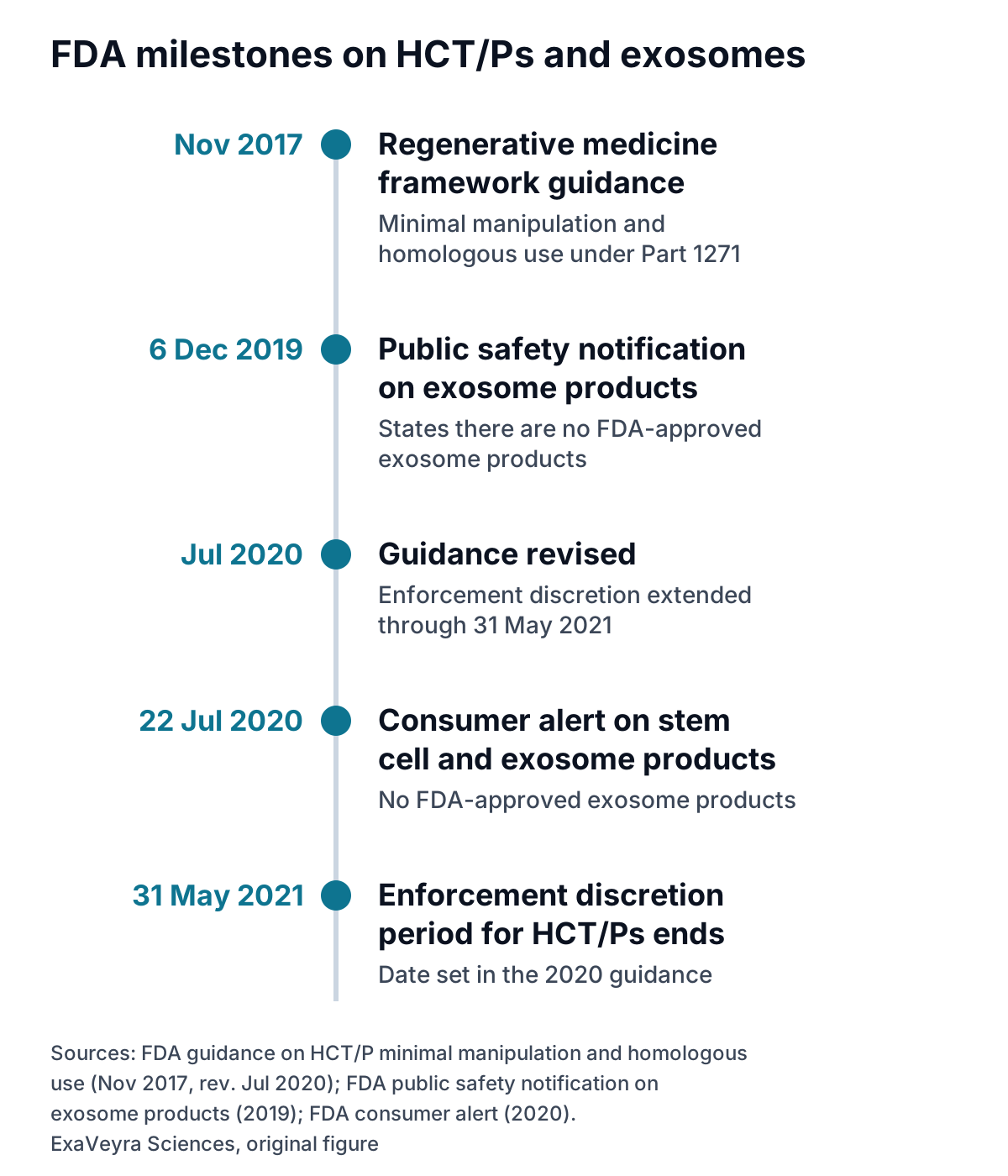
No. As of 2026, the FDA has not approved any exosome product to diagnose, treat, cure, or prevent any disease. The FDA has also issued consumer alerts and safety communications about unapproved exosome and cell-based products marketed for treatment.
What the FDA Has Actually Said

The FDA regulates products intended to treat disease as drugs or biologics, which require approval before marketing. The agency has repeatedly communicated that it has not approved exosome products for such uses, has warned about adverse events linked to unapproved products, and has taken enforcement steps where products were marketed with disease-treatment claims. None of this makes exosomes inherently unlawful to possess or study. It defines the boundary between research and treatment.
Why the Intended-Use Statement Matters
An intended-use statement is not a marketing softener. It is a real commitment with real obligations. Exosome material supplied for topical aesthetic use, or for laboratory and IND-authorized clinical research, is labeled accordingly and never marketed as a treatment. Confusing that status with an approved therapy is precisely the error that draws regulatory attention.
| Attribute | FDA-Approved Drug | Exosome Material (Topical Aesthetic Use) |
|---|---|---|
| Marketing claims | Within the approved labeling | No disease-treatment claims permitted |
| Intended use | Diagnose, treat, cure, or prevent | Topical aesthetic use; laboratory and IND research |
| Labeling | FDA-approved labeling | The manufacturer’s topical aesthetic labeling |
| Documentation | Approval file | COA, vesicle characterization, sterility data |
Where Exosomes Can Legitimately Be Used
The absence of an approval does not erase every permitted context. What it does is make the context and the claim decisive.
- Laboratory research, and clinical research conducted under an IND, with full characterization data.
- Registered clinical trials across several research areas, from dermatology to musculoskeletal research, conducted under an FDA investigational new drug application (IND).
- Topical cosmetic and aesthetic products on intact skin that stay above the dermis and make no claim to treat or cure disease, kept within cosmetic labeling rules.
The Line That Matters
The determining factors are the claim and the route of administration. A topical cosmetic on intact skin sits in a different regulatory place than an injected product marketed to treat a condition. Investigational indications belong in registered trials, not routine practice, until data and approvals support them.
Compliance is not a limit on a good exosome program. It is what makes the program defensible.
How to Describe Exosomes Without Crossing a Claims Line
- State the intended use (topical aesthetic use, or laboratory and IND research) clearly and consistently across every material.
- Describe exosomes by what they are (signaling vesicles studied in intercellular communication) rather than by outcomes they might produce.
- Keep cosmetic claims within appearance and skin-quality language, never disease language.
- Route investigational questions to registered trials and to the published literature, not to promotional copy.
- Require characterization data and certificates of analysis so the product’s identity is documented, not asserted.
Educational Disclaimer: This article is for educational purposes only and does not constitute medical or legal advice. Exosome material referenced is supplied for topical aesthetic use by licensed practitioners and for laboratory and IND-authorized clinical research, and is not FDA-approved to diagnose, treat, cure, or prevent any disease. Practitioners are responsible for compliance with all applicable state and federal regulations.
References
- 1.U.S. Food & Drug Administration. Consumer Alert on Regenerative Medicine Products Including Stem Cells and Exosomes. fda.gov/vaccines-blood-biologics/consumers-biologics/consumer-alert-regenerative-medicine-products-including-stem-cells-and-exosomes.
- 2.U.S. Food & Drug Administration. Public Safety Notification on Exosome Products. FDA.gov.
- 3.Kalluri R, LeBleu VS. The biology, function, and biomedical applications of exosomes. Science. 2020;367(6478):eaau6977.