TB-500 and Thymosin Beta-4: Not the Same Molecule
Animal and laboratory work only. A result in a rodent does not establish an effect in a person.
Most of what is claimed for TB-500 rests on research into thymosin beta-4. They are not the same molecule, and the difference is large enough to matter before any question of evidence quality arises.
This page separates the two, sets out what each literature actually covers, and states FDA’s position. It is an evidence summary, not a product page. ExaVeyra does not offer TB-500 for sale.
Also known as: thymosin beta-4 fragment, LKKTETQ.
Two different molecules
Thymosin beta-4 is a 43-residue protein found in most mammalian cells and in high concentration in platelets. Its principal established role is binding monomeric actin: it holds a pool of unpolymerized actin available for the cytoskeleton to draw on, which makes it a housekeeping protein of cell structure and motility rather than a signaling hormone.
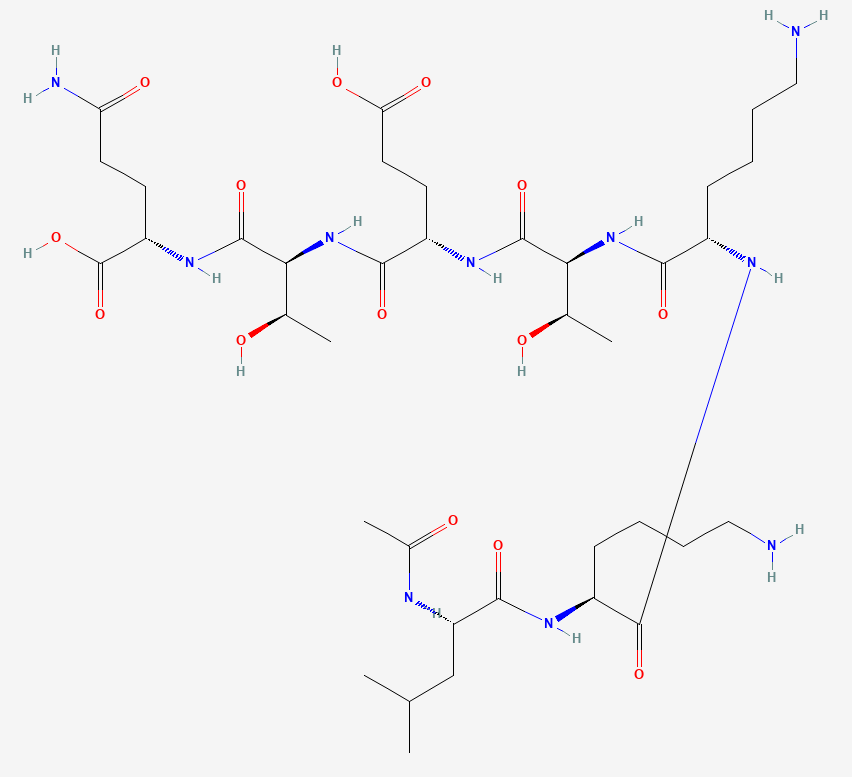
TB-500 is a seven-residue fragment, sequence LKKTETQ, corresponding to a short stretch within that protein and identified as part of its actin-binding region. Seven residues against forty-three is not a minor truncation. The fragment lacks most of the parent structure, and a fragment identified as necessary for one interaction is not therefore sufficient to reproduce the behavior of the whole.
FDA’s own listing preserves the distinction, naming the substance as thymosin beta-4, fragment LKKTETQ, also known as TB-500. Read alongside marketing that cites thymosin beta-4 research directly, that phrasing is the clearest available signal that the two are being conflated.
- Thymosin beta-4: 43 residues, roughly 4.9 kilodaltons, an actin-sequestering protein.
- TB-500: 7 residues, LKKTETQ, a fragment of its actin-binding region.
- Analytical work has characterized TB-500 and its metabolites separately from the parent protein.
- Claims sourced to thymosin beta-4 research do not transfer to the fragment without evidence that they do.
What each literature covers
The thymosin beta-4 literature is substantial and largely independent of the peptide market. It covers actin binding and cytoskeletal regulation, work in corneal and epithelial repair that reached clinical study, cardioprotection in animal models, effects on hepatic stellate cell activation, and expression across human organs during development. Reviews of that work appear in immunopharmacology and protein science journals and generally concern the full-length protein.
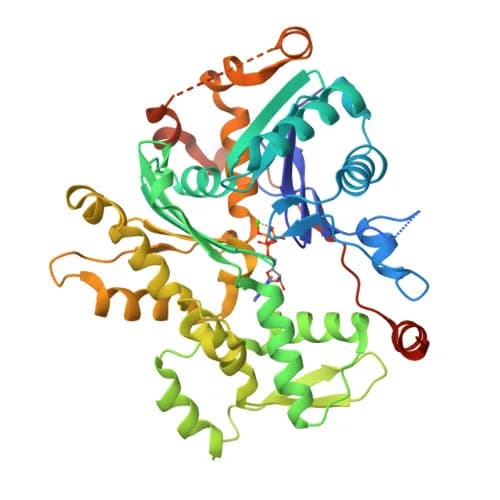
The literature on the fragment specifically is much smaller. Analytical chemistry work has quantified TB-500 and its metabolites and screened wound-healing activity in vitro, and a 2026 rat study examined it alongside BPC-157 in Achilles tendon healing. That is a different evidentiary situation from the parent protein, and it is the one that applies to a vial labeled TB-500.
The proposed rationale for the fragment is that if actin binding drives the parent protein’s effects, the sequence responsible might reproduce them. That is a reasonable hypothesis. It is not a finding, and the sports medicine reviews that have looked at these agents treat it accordingly.
How far the evidence has got
For the fragment, not far. There is no controlled human trial of TB-500. The specialty reviews published in 2025 and 2026, in Sports Medicine, the American Journal of Sports Medicine and JAAOS Global Research and Reviews, group it with other unapproved injectable peptides and describe the human evidence as insufficient to support use.
For the parent protein the picture is better but does not transfer. Thymosin beta-4 has been studied in humans in specific indications, notably ophthalmic, and that work is real. It is also work on a different molecule at different concentrations by different routes for different purposes, and citing it in support of a seven-residue fragment sold for tissue repair is the substitution this page exists to name.
- No controlled human trial of the LKKTETQ fragment.
- The parent protein has a genuine human literature, concentrated in ophthalmic and cardiac work.
- Recent specialty reviews group TB-500 with unapproved peptides and find the evidence insufficient.
- Analytical methods for the fragment exist, which matters for identity testing of supplied material.
Regulatory position
FDA placed the fragment in category 2 of its interim policy on bulk drug substances for compounding under section 503A, meaning the agency identified significant safety risks, and the nomination was withdrawn by the nominator in April 2026. FDA now carries the substance under nominations withdrawn and still publishes the rationale it wrote, and a withdrawn nomination leaves the substance on no 503A list for any route. The Pharmacy Compounding Advisory Committee recommended it for the 503A bulks list on 23 July 2026; that recommendation is advice to the agency, and inclusion requires rulemaking. This is FDA’s stated rationale in full:
“Compounded drugs containing thymosin Beta-4, Fragment (LKKTETQ) may pose risk for immunogenicity for certain routes of administration due to the potential for aggregation as well as peptide-related impurities. FDA has not identified any human exposure data drug products containing Thymosin Beta-4, Fragment. FDA lacks important information regarding any safety issues raised by this drug, including whether it would cause harm if administered to humans.”
FDA source , checked 2026-09-16
Aggregation is worth noting specifically. Short peptides with charged residues can associate into higher-order species, and aggregates are a recognized driver of immune response to injected peptides. That is a property of the preparation rather than of the sequence, which is why FDA’s concern attaches to characterization and impurity profile alongside the substance itself.
Thymosin alpha-1, a different molecule again despite the similar name, appears separately on the same FDA list. FDA revises the list; the access date is shown with the quotation above.
Common questions
- Is TB-500 the same as thymosin beta-4?
- No, and the difference is the most important thing on this page. Thymosin beta-4 is a full-length protein found in most mammalian cells and concentrated in platelets, where its established role is binding monomeric actin. TB-500 is a short fragment. Most of what is claimed for TB-500 rests on research into the parent protein, so evidence for one is routinely presented as evidence for the other.
- What does the human evidence show for the fragment?
- There is no controlled human trial of TB-500. Specialty reviews published in Sports Medicine, the American Journal of Sports Medicine and JAAOS Global Research and Reviews group it with other unapproved injectable peptides and describe the human evidence as absent.
- Why does FDA raise aggregation for this substance?
- Short peptides carrying charged residues can associate into higher-order species, and aggregates are a recognized driver of immune response to injected peptides. That is a property of the preparation rather than a claim about the parent protein’s biology, which is part of why evidence for thymosin beta-4 does not transfer to the fragment.
- Does the thymosin beta-4 literature support using TB-500?
- Not directly. That literature is substantial and largely independent of the peptide market, covering actin binding, corneal and epithelial repair that reached clinical study, and cardioprotection in animal models. None of that work tests the fragment, and a fragment can behave differently from the protein it was cut from.
- Does ExaVeyra supply TB-500?
- No. ExaVeyra does not supply TB-500 or thymosin beta-4, and this page is not an offer to sell either. The page exists because the two are conflated so routinely that a practitioner evaluating the fragment is usually reading evidence about the parent protein without being told so.
Sources
Every source is peer-reviewed and published within the last fifteen years. Each line states what that source is carrying, so nothing is here to pad a count.
- Mendias CL, Awan TM. Safety and efficacy of approved and unapproved peptide therapies for musculoskeletal injuries and athletic performance. Sports Medicine. 2026.PMID 41966639
Narrative review
Source 1 supports: The specialty assessment grouping TB-500 with other unapproved peptides.
- Mayfield CK, Bolia IK, Feingold CL. Injectable peptide therapy: a primer for orthopedic and sports medicine physicians. The American Journal of Sports Medicine. 2026.PMID 41476424
Narrative review
Source 2 supports: How clinicians are being advised to handle requests for these agents.
- Rahman OF, Lee SJ, Seeds WA. Therapeutic peptides in orthopedics: applications, challenges, and future directions. JAAOS Global Research and Reviews. 2026.PMID 41490200
Narrative review
Source 3 supports: Where the fragment sits among peptides discussed in orthopedics.
- Rahaman KA, Muresan AR, Min H. Simultaneous quantification of TB-500 and its metabolites in in-vitro experiments and rats by UHPLC-Q-Exactive orbitrap MS/MS and their screening by wound healing activities in-vitro. Journal of Chromatography B. 2024.PMID 38382158
Preclinical
Source 4 supports: Analytical work on the fragment specifically rather than the parent protein.
- Biçer O, Adanir O, Güleryüz Y. Effects of BPC-157 and TB-500 on Achilles tendon healing in rats: a histopathological and biomechanical study. Joint Diseases and Related Surgery. 2026.PMID 42542926
Preclinical
Source 5 supports: Recent animal work on the fragment in the tissue it is marketed for.
- Bock-Marquette I, Maar K, Maar S. Thymosin beta-4 denotes new directions towards developing prosperous anti-aging regenerative therapies. International Immunopharmacology. 2023.PMID 36709593
Narrative review
Source 6 supports: The parent protein literature that fragment claims are usually sourced to.
- Ying Y, Lin C, Tao N. Thymosin beta-4 and actin: binding modes, biological functions and clinical applications. Current Protein and Peptide Science. 2023.PMID 36464872
Narrative review
Source 7 supports: The actin-binding mechanism, and which part of the protein performs it.
- Faa G, Messana I, Coni P. Thymosin beta-4 and beta-10 expression in human organs during development: a review. Cells. 2024.PMID 38994967
Narrative review
Source 8 supports: That the parent protein is endogenous and widely expressed.
- Sosne G. Thymosin beta 4 and the eye: the journey from bench to bedside. Expert Opinion on Biological Therapy. 2018.PMID 30063853
Narrative review
Source 9 supports: The parent protein’s clinical work, in an indication unrelated to tendon repair.
- Belsky JB, Rivers EP, Filbin MR. Thymosin beta 4 regulation of actin in sepsis. Expert Opinion on Biological Therapy. 2018.PMID 29508629
Narrative review
Source 10 supports: The breadth of contexts in which the parent protein has been studied.
- Pipes GT, Yang J. Cardioprotection by thymosin beta 4. Vitamins and Hormones. 2016.PMID 27450736
Narrative review
Source 11 supports: Cardiac animal work on the parent protein, frequently cited for the fragment.
Figure sources
- [1]PubChem CID 62707662, TB-500. National Center for Biotechnology Information, PubChem. Public domain.
- [2]PDB 4PL7, Actin bound to a thymosin beta-4 hybrid. RCSB Protein Data Bank (rcsb.org). Image released under CC0. Structure publication: Xue B, et al. Structural basis of thymosin-β4/profilin exchange leading to actin filament polymerization. Proc Natl Acad Sci USA. 2014.
Related
Reviewed 2026-08-16 by Benn Bluestein-Veyra, M.Sc. Organic Chemistry. This page is an evidence summary, not medical advice, and not an offer to sell. ExaVeyra does not supply TB-500. Compounded medications are not FDA-approved finished drug products.