Kisspeptin-10: What the Evidence Actually Shows
Controlled human research has been published, whatever it concluded.
Kisspeptin is unusual among the peptides in this cluster: it is mainstream reproductive endocrinology, with a substantial human literature and reviews in the strongest journals in the field. It is also on FDA’s 503A category 2 list.
Those two facts are not in tension, and understanding why is the most useful thing on this page. This is an evidence summary, not a product page. ExaVeyra does not offer kisspeptin-10 for sale.
Also known as: KP-10, metastin fragment, KISS1 peptide.
Understanding the molecular properties
Kisspeptins are a family of peptides cleaved from a single precursor protein encoded by the KISS1 gene. The longest is 54 residues; shorter fragments of 14, 13 and 10 residues share the same C-terminal end and act at the same receptor. Kisspeptin-10 is that ten-residue fragment, and it is the shortest sequence retaining full activity at the receptor.
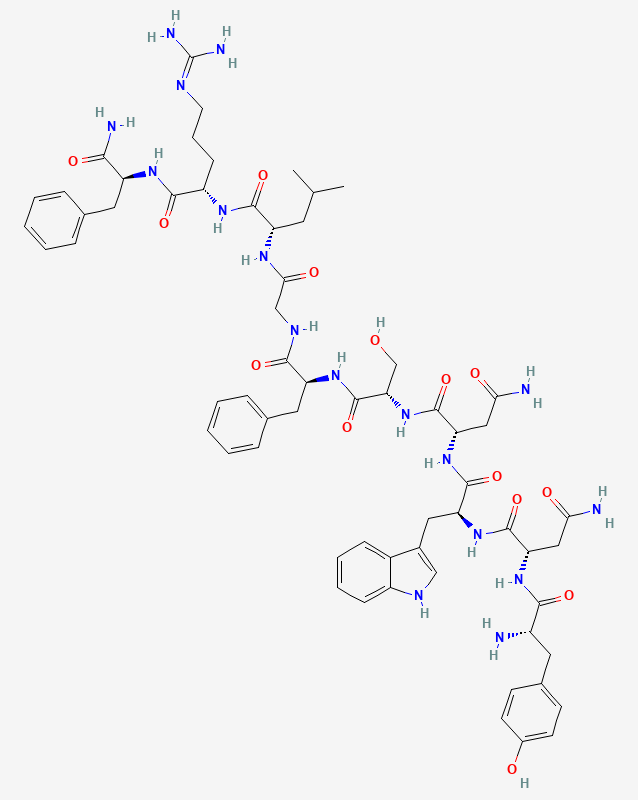
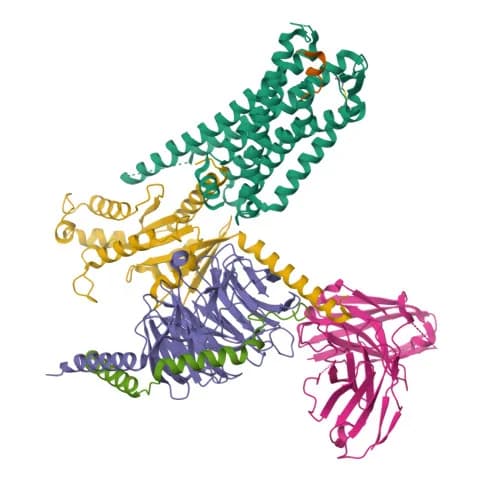
The receptor is KISS1R, a G protein-coupled receptor formerly called GPR54. Its discovery came through human genetics rather than pharmacology: loss-of-function mutations in KISS1R were found in families with a failure to enter puberty, which established the pathway as necessary for normal reproductive development before anyone had a molecule to give.
- Ten residues, cleaved from the KISS1 precursor, roughly 1.3 kilodaltons.
- Acts at KISS1R, a G protein-coupled receptor.
- Short circulating half-life, which shapes how it has been studied in people.
- Longer analogs and receptor agonists exist and are pharmacologically distinct from the native fragment.
Where it sits in the axis
Kisspeptin acts upstream of the reproductive axis rather than within it. Neurons in the hypothalamus release it onto GnRH neurons, which respond by releasing gonadotropin-releasing hormone, which drives pituitary release of LH and FSH, which act on the gonads. Kisspeptin is the switch that permits that cascade to run, which is why the human genetics showed up as absent puberty rather than as a subtler endocrine abnormality.
Much of the detail concerns a population usually abbreviated KNDy, for the kisspeptin, neurokinin B and dynorphin they co-express. That co-expression is what generates the pulsatile pattern the axis needs: the reproductive system responds to pulses rather than to steady concentrations, and a continuous signal produces a different result from an intermittent one.
The pathway also integrates signals that have nothing to do with reproduction directly. Reviews describe it as the point where energy balance and stress reach the reproductive axis, which is the mechanistic account behind functional hypothalamic amenorrhoea, where low energy availability or psychological stress suppresses the cycle.
How far the evidence has got
Further than for anything else in this cluster. Kisspeptin has been administered to humans in research settings for well over a decade, principally by groups working on reproductive endocrinology, and the results are published in general and specialty journals rather than only in peptide-specific ones. A 2025 study in EBioMedicine reported that intranasal administration rapidly stimulated gonadotropin release in people, which is notable because the intranasal route is the one compounded preparations frequently use.
The clinical directions under investigation are specific: diagnostic testing of the reproductive axis, work in hypothalamic amenorrhoea, and use as a trigger in assisted reproduction, where a shorter-acting stimulus is attractive. Reviews in Physiological Reviews and Nature Reviews Endocrinology set out the physiology, and a Lancet Diabetes and Endocrinology review covers the pathology of puberty in which the pathway is central.
What that literature does not establish is a general-purpose use. The studies are mechanistic and diagnostic, conducted with characterized material under research protocols, in defined populations, at defined doses. Evidence that a pathway is important and that a peptide engages it is not evidence that administering it outside those settings is useful or safe.
- Human administration studies exist, including by the intranasal route.
- Reviews appear in Physiological Reviews, Nature Reviews Endocrinology and The Lancet Diabetes and Endocrinology.
- Research use is concentrated in diagnosis and in assisted reproduction rather than in general prescribing.
- Pulsatility matters: continuous exposure to a pathway that signals in pulses is not the same intervention.
Regulatory position
Despite that literature, FDA places kisspeptin-10 in category 2 of its interim policy on bulk drug substances for compounding under section 503A, meaning the agency identified significant safety risks. This is FDA’s stated rationale in full:
“Compounded drugs containing Kisspeptin-10 may pose risk for immunogenicity for certain routes of administration and may have complexities with regard to peptide-related impurities and API characterization. FDA has no, or only limited, safety-related information for the proposed routes of administration. Therefore, the agency lacks sufficient information to know whether the drug would cause harm when administered to humans.”
FDA source , checked 2026-09-16
This is the distinction worth carrying away from the page. FDA’s concern is not that the biology is doubtful; the biology is well established. It is that a compounded peptide is a manufactured article, and the questions that attach to it are manufacturing questions: whether the material aggregates, what impurities the synthesis leaves behind, whether the active is characterized, and whether an injected or inhaled peptide provokes an immune response. A strong research literature about a molecule says nothing about the preparation in a particular vial.
FDA revises this list. The access date is shown with the quotation; confirm the current position directly before relying on it.
Common questions
- If kisspeptin has real human evidence, why is it in FDA category 2?
- Because the two questions are different. FDA’s category 2 concern is directed at the compounded article rather than at the underlying biology, which is well established reproductive endocrinology. A substance can carry a substantial peer-reviewed human literature and still present risks in a compounded preparation, where identity, purity and immunogenicity by a given route are the governing questions.
- How far has kisspeptin been studied in people?
- It has been administered to humans in research settings for well over a decade, principally by groups working on reproductive endocrinology, with results published in general and specialty journals rather than only in peptide-specific outlets. That literature is why kisspeptin sits differently from most substances in this cluster.
- How does kisspeptin act on the reproductive axis?
- It acts upstream of the axis rather than within it. Hypothalamic neurons release kisspeptin onto GnRH neurons, which release gonadotropin-releasing hormone, which drives pituitary release of LH and FSH, which act on the gonads. That upstream position is what makes its effects systemic rather than local.
- Is kisspeptin-10 interchangeable with longer kisspeptins?
- They are different lengths cleaved from a single precursor encoded by the KISS1 gene, and the shorter forms share a C-terminal end and act at the same receptor. Sharing a receptor does not make two preparations interchangeable, and the published human work does not use a single standard form.
- Does ExaVeyra supply kisspeptin-10?
- No. ExaVeyra does not supply kisspeptin-10, and nothing on this page is an offer to sell it. Kisspeptin is covered here because it is the clearest case in this cluster of a substance with genuine human evidence that FDA still restricts for compounding, and that distinction is worth understanding on its own terms.
Sources
Every source is peer-reviewed and published within the last fifteen years. Each line states what that source is carrying, so nothing is here to pad a count.
- Koysombat K, Tsoutsouki J, Patel AH. Kisspeptin and neurokinin B: roles in reproductive health. Physiological Reviews. 2025.PMID 39813600
Narrative review
Source 1 supports: The current authoritative account of the physiology described throughout this page.
- Mills EG, Silva MSB, Delli V. Intranasal kisspeptin administration rapidly stimulates gonadotropin release in humans. EBioMedicine. 2025.PMID 40215751
Randomized controlled trial
Source 2 supports: Human administration by the intranasal route, the route compounded preparations often use.
- Navarro VM. Metabolic regulation of kisspeptin: the link between energy balance and reproduction. Nature Reviews Endocrinology. 2020.PMID 32427949
Narrative review
Source 3 supports: How energy balance reaches the reproductive axis through this pathway.
- Argente J, Dunkel L, Kaiser UB. Molecular basis of normal and pathological puberty: from basic mechanisms to clinical implications. The Lancet Diabetes and Endocrinology. 2023.PMID 36620967
Narrative review
Source 4 supports: The genetics of puberty that established KISS1R as necessary for normal development.
- Mills EG, Dhillo WS. Translating kisspeptin and neurokinin B biology into new therapies for reproductive health. Journal of Neuroendocrinology. 2022.PMID 36262016
Narrative review
Source 5 supports: Which clinical directions are actually under investigation.
- Xie Q, Kang Y, Zhang C. The role of kisspeptin in the control of the hypothalamic-pituitary-gonadal axis and reproduction. Frontiers in Endocrinology. 2022.PMID 35837314
Narrative review
Source 6 supports: The axis description in the mechanism section.
- Moore AM, Coolen LM, Porter DT. KNDy cells revisited. Endocrinology. 2018.PMID 30010844
Narrative review
Source 7 supports: The KNDy population and the origin of pulsatile signaling.
- Meczekalski B, Niwczyk O, Bala G. Stress, kisspeptin, and functional hypothalamic amenorrhea. Current Opinion in Pharmacology. 2022.PMID 36103784
Narrative review
Source 8 supports: The stress and energy-availability route into axis suppression.
- Morrison AE, Fleming S, Levy MJ. A review of the pathophysiology of functional hypothalamic amenorrhoea in women subject to psychological stress, disordered eating, excessive exercise or a combination of these factors. Clinical Endocrinology. 2021.PMID 33345352
Narrative review
Source 9 supports: The clinical condition the pathway is most often investigated against.
- Mills EGA, O’Byrne KT, Comninos AN. Kisspeptin as a behavioral hormone. Seminars in Reproductive Medicine. 2019.PMID 31847025
Narrative review
Source 10 supports: Effects described beyond the reproductive axis itself.
- Aguirre RS, Eugster EA. Central precocious puberty: from genetics to treatment. Best Practice and Research Clinical Endocrinology and Metabolism. 2018.PMID 30086862
Narrative review
Source 11 supports: The opposite pathology, where the same pathway activates early.
- Fidecicchi T, Giannini A, Chedraui P. Neuroendocrine mechanisms of mood disorders during menopause transition: a narrative review and future perspectives. Maturitas. 2024.PMID 39111089
Narrative review
Source 12 supports: The KNDy pathway in the menopause transition.
Figure sources
- [1]PubChem CID 25240297, Kisspeptin-10. National Center for Biotechnology Information, PubChem. Public domain.
- [2]PDB 8ZJD, Kisspeptin receptor bound to KP-10. RCSB Protein Data Bank (rcsb.org). Image released under CC0. Structure publication: Shen S, et al. Structural basis for hormone recognition and distinctive Gq protein coupling by the kisspeptin receptor. Cell Rep. 2024.
Related
Reviewed 2026-08-16 by Benn Bluestein-Veyra, M.Sc. Organic Chemistry. This page is an evidence summary, not medical advice, and not an offer to sell. ExaVeyra does not supply Kisspeptin-10. Compounded medications are not FDA-approved finished drug products.