BPC-157: What the Evidence Actually Shows
Animal and laboratory work only. A result in a rodent does not establish an effect in a person.
BPC-157 is a synthetic fifteen-residue peptide that appears in a great deal of marketing and in comparatively little human research. This page sets out what the molecule is, what the published literature proposes about how it works, how far that literature has actually got, and what FDA has said about it.
It is an evidence summary rather than a product page. ExaVeyra does not offer BPC-157 for sale.
Also known as: Body Protection Compound 157, pentadecapeptide BPC 157, PL 14736.
Understanding the molecular properties
BPC-157 is a chain of fifteen amino acids, sequence GEPPPGKPADDAGLV. It is described in the literature as a partial sequence of body protection compound, a protein isolated from human gastric juice, which is where the name comes from. The peptide itself is synthetic; it is not extracted from anything.
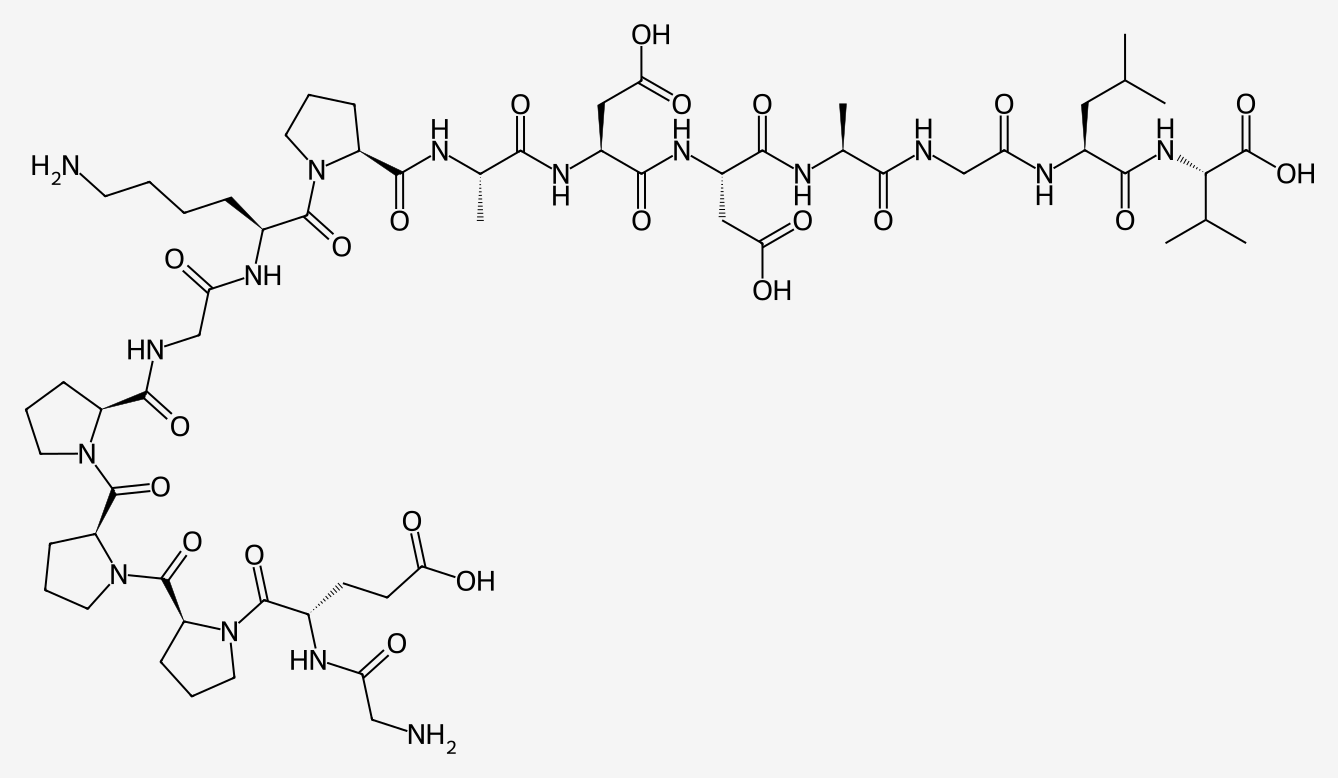
The property that gets it studied is stability. Most peptides are cleaved rapidly in the gut, which is why they are generally injected rather than swallowed. Published work describes BPC-157 as remaining intact in human gastric juice for hours, and papers routinely refer to it as the stable gastric pentadecapeptide for that reason. That stability is a chemical claim about the molecule and is separate from any claim about what it does.
- Fifteen residues, roughly 1.4 kilodaltons.
- Highly soluble in water, with no metal center and no unusual residues.
- Reported as stable in gastric juice, which is unusual for a peptide of this size.
- Studied by injection and by oral administration in animals.
What the literature proposes
The most consistently reported mechanism is angiogenic. Work in the Journal of Molecular Medicine associated the peptide with activation and upregulation of VEGFR2, the principal receptor for vascular endothelial growth factor, and downstream signaling through the VEGFR2 to Akt to eNOS pathway. Several groups describe promotion of endothelial cell proliferation and migration in vitro, and increased vessel formation in animal wound models.
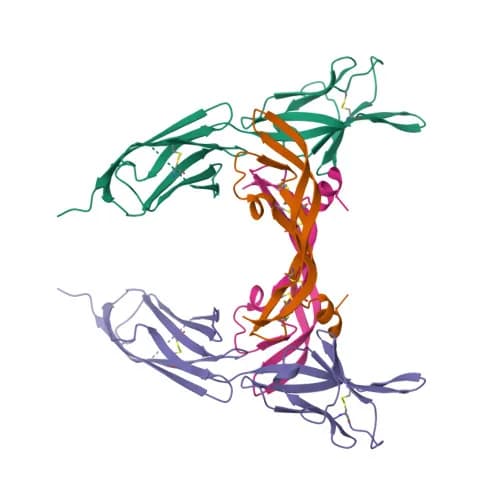
A second and related theme is interaction with the nitric oxide system. Much of the animal work is designed around agents that block or supply that pathway, and reports describe BPC-157 modifying the response to both. A third theme, developed mainly in rodent tendon and muscle models, concerns the FAK and paxillin pathway and the migration of fibroblasts.
These are proposed mechanisms drawn from animal and cell work. None of them has been confirmed in a controlled human trial, and a mechanism demonstrated in a rat tendon does not establish an effect in a person.
How far the evidence has actually got
The volume of literature is genuinely large and it is almost entirely preclinical. Searching the peer-reviewed index for BPC-157 returns several hundred records, dominated by rodent studies from a small number of groups, with reviews that summarize those studies rather than adding human data.
The clinical picture is much thinner. A systematic review published in HSS Journal in 2025 examined the use of BPC-157 in orthopedic sports medicine and found the human evidence base extremely limited. A narrative review in Current Reviews in Musculoskeletal Medicine the same year framed the question in its title as regeneration or risk. A 2026 review in Sports Medicine assessed approved and unapproved peptide therapies for musculoskeletal injury together, and a 2026 primer in the American Journal of Sports Medicine was written specifically because clinicians are being asked about these agents by patients who have already encountered them online.
That pattern is worth naming. When the specialty literature starts publishing primers and risk framings rather than trial results, it is describing a substance that has reached practice ahead of its evidence. A practitioner deciding what to do about a patient request is better served by that observation than by another summary of rodent tendon healing.
- Large preclinical literature, concentrated in a small number of research groups.
- No large randomized controlled trial in humans.
- Recent specialty reviews characterize the human evidence as limited and call for controlled work.
- Reported adverse effects in the published animal work are few, which is not the same as an established human safety profile.
Regulatory position
FDA placed BPC-157 in category 2 of its interim policy on bulk drug substances for compounding under section 503A, meaning the agency identified significant safety risks, and the nomination was withdrawn by the nominator in April 2026. FDA now carries the substance under nominations withdrawn and still publishes the rationale it wrote, and a withdrawn nomination leaves the substance on no 503A list for any route. The Pharmacy Compounding Advisory Committee recommended BPC-157 for the 503A bulks list on 23 July 2026; that recommendation is advice to the agency, and inclusion requires notice-and-comment rulemaking. This is FDA’s stated rationale, reproduced in full:
“Compounded drugs containing BPC-157 may pose risk for immunogenicity for certain routes of administration and may have complexities with regard to peptide-related impurities and active pharmaceutical ingredient (API) characterization. FDA has identified no, or only limited, safety-related information for the proposed routes of administration. Therefore, the agency lacks sufficient information to know whether the drug would cause harm when administered to humans.”
FDA source , checked 2026-09-16
Two things in that wording are easy to skip past. The concern is not a specific documented harm; it is that FDA has identified no, or only limited, safety information for the proposed routes, and therefore does not know whether the substance would cause harm in people. And immunogenicity, the risk that an injected peptide provokes an immune response, is a manufacturing and characterization question as much as a pharmacological one, which is why impurity profile and API characterization appear alongside it.
FDA maintains this list and revises it. The date this page checked the source is shown with the quotation above; confirm the current position directly before relying on it.
Common questions
- Is BPC-157 approved by FDA?
- No. BPC-157 has no FDA approval for any indication and no approved product contains it. FDA placed it in category 2 of its interim policy on bulk drug substances nominated for compounding under section 503A, the list for substances the agency evaluated and found to carry significant safety risks, and the nomination was withdrawn in April 2026, which leaves the substance on no 503A list. Neither the placement nor the withdrawal is a marketing authorization of any kind.
- Has BPC-157 been tested in controlled human trials?
- Not in any controlled trial that has been published. The literature runs to several hundred records and is dominated by rodent studies from a small number of research groups, with reviews that summarize those studies rather than adding human data. Specialty reviews in sports medicine journals describe the human evidence for injectable peptides of this class as absent rather than mixed.
- What mechanism does the published work propose?
- The most consistently reported mechanism is angiogenic. Studies associate the peptide with activation and upregulation of VEGFR2, the principal receptor for vascular endothelial growth factor, and with signaling downstream of it. That is a description of what preclinical work proposes, and a mechanism reported in animal tissue does not establish an outcome in people.
- Does category 2 mean the substance is banned?
- No. Category 2 is a compounding classification. It records that a substance was nominated with enough information for FDA to evaluate, and that the evaluation identified significant safety risks. FDA’s tables govern whether a 503A pharmacy may compound with the bulk substance, and FDA revises them: BPC-157 moved from the category 2 table to the withdrawn-nominations table in April 2026, which is why the quotation on this page carries the date it was accessed.
- Does ExaVeyra supply BPC-157?
- No. ExaVeyra does not supply BPC-157 and this page is not an offer to sell it. The page exists because practitioners ask what the evidence shows, and a supplier that only publishes about what it sells is not a useful source on that question.
Sources
Every source is peer-reviewed and published within the last fifteen years. Each line states what that source is carrying, so nothing is here to pad a count.
- Mayfield CK, Bolia IK, Feingold CL. Injectable peptide therapy: a primer for orthopedic and sports medicine physicians. The American Journal of Sports Medicine. 2026.PMID 41476424
Narrative review
Source 1 supports: That clinicians are fielding patient requests about these agents ahead of the evidence.
- Mendias CL, Awan TM. Safety and efficacy of approved and unapproved peptide therapies for musculoskeletal injuries and athletic performance. Sports Medicine. 2026.PMID 41966639
Narrative review
Source 2 supports: A specialty assessment treating approved and unapproved peptides together.
- Vasireddi N, Hahamyan H, Salata MJ. Emerging use of BPC-157 in orthopedic sports medicine: a systematic review. HSS Journal. 2025.PMID 40756949
Narrative review
Source 3 supports: The systematic review finding the human evidence base extremely limited.
- McGuire FP, Martinez R, Lenz A. Regeneration or risk? A narrative review of BPC-157 for musculoskeletal healing. Current Reviews in Musculoskeletal Medicine. 2025.PMID 40789979
Narrative review
Source 4 supports: The framing of the open question as benefit against risk.
- Rahman OF, Lee SJ, Seeds WA. Therapeutic peptides in orthopedics: applications, challenges, and future directions. JAAOS Global Research and Reviews. 2026.PMID 41490200
Narrative review
Source 5 supports: Where BPC-157 sits among peptides being discussed in orthopedics.
- DeFoor MT, Dekker TJ. Injectable therapeutic peptides: an adjunct to regenerative medicine and sports performance?. Arthroscopy. 2025.PMID 39265666
Narrative review
Source 6 supports: A second specialty perspective on injectable peptides in sports medicine.
- Yuan C, Demers A, Silva-Ortiz V. From regeneration to analgesia: the role of BPC-157 in tissue repair and pain management. International Journal of Molecular Sciences. 2026.PMID 41898733
Narrative review
Source 7 supports: A recent synthesis of the proposed repair and analgesic mechanisms.
- Józwiak M, Bauer M, Kamysz W. Multifunctionality and possible medical application of the BPC 157 peptide: literature and patent review. Pharmaceuticals. 2025.PMID 40005999
Narrative review
Source 8 supports: The breadth of proposed applications, and the patent landscape behind them.
- Seiwerth S, Milavic M, Vukojevic J. Stable gastric pentadecapeptide BPC 157 and wound healing. Frontiers in Pharmacology. 2021.PMID 34267654
Narrative review
Source 9 supports: The wound-healing model work, from the group that has published most of it.
- Gwyer D, Wragg NM, Wilson SL. Gastric pentadecapeptide body protection compound BPC 157 and its role in accelerating musculoskeletal soft tissue healing. Cell and Tissue Research. 2019.PMID 30915550
Narrative review
Source 10 supports: An independent review of the soft tissue literature.
- Hsieh MJ, Liu HT, Wang CN. Therapeutic potential of pro-angiogenic BPC157 is associated with VEGFR2 activation and up-regulation. Journal of Molecular Medicine. 2017.PMID 27847966
Preclinical
Source 11 supports: The VEGFR2 mechanism described in the mechanism section.
- Vukojevic J, Milavić M, Perović D. Pentadecapeptide BPC 157 and the central nervous system. Neural Regeneration Research. 2022.PMID 34380875
Narrative review
Source 12 supports: The breadth of organ systems the animal literature covers.
- Staresinic M, Japjec M, Vranes H. Stable gastric pentadecapeptide BPC 157 and striated, smooth, and heart muscle. Biomedicines. 2022.PMID 36551977
Narrative review
Source 13 supports: Muscle-model work underlying the musculoskeletal claims.
- Huang T, Zhang K, Sun L. Body protective compound-157 enhances alkali-burn wound healing in vivo and promotes proliferation, migration, and angiogenesis in vitro. Drug Design, Development and Therapy. 2015.PMID 25995620
Preclinical
Source 14 supports: An in vitro and in vivo angiogenesis result from an independent group.
Figure sources
- [1]PubChem CID 9941957, BPC-157. Structure data: National Center for Biotechnology Information, PubChem (public domain). Drawn by ExaVeyra Sciences with RDKit from the record's isomeric SMILES.
- [2]PDB 3V2A, VEGFR-2 bound to VEGF-A. RCSB Protein Data Bank (rcsb.org). Image released under CC0. Structure publication: Brozzo MS, et al. Thermodynamic and structural description of allosterically regulated VEGFR-2 dimerization. Blood. 2012.
Related
Reviewed 2026-08-16 by Benn Bluestein-Veyra, M.Sc. Organic Chemistry. This page is an evidence summary, not medical advice, and not an offer to sell. ExaVeyra does not supply BPC-157. Compounded medications are not FDA-approved finished drug products.