Exosome and extracellular vesicle biochemistry, mechanism by mechanism
Extracellular vesicles are assembled from defined molecules: sorted RNA, a specialized lipid membrane, a glycan coat and a selected set of proteins. Each of those layers has its own chemistry, and together they decide what a vesicle carries and which cells it reaches.
These references take one mechanism per page to the depth a researcher would cite, with numbered citations to the peer-reviewed literature, structure figures and a ready citation for every page.
The references, in reading order
3 of 10 published. The remainder are in review and will appear as they are completed.
How vesicles are built and loaded
Cargo selection, membrane lipids and surface glycans are set while a vesicle forms. These pages follow each layer from the enzymes that build it to the measurements that describe it.
Exosome Cargo Sorting: RNA-Binding Proteins and miRNA Motifs
RNA-binding proteins, sorting motifs and the two routes.
In review
The Syndecan, Syntenin and ALIX Pathway of Exosome Biogenesis
Three proteins that assemble an exosome.
In review
Extracellular Vesicle Lipid Composition and Membrane Biophysics
Lipid classes, membrane order and stability.
Extracellular Vesicle Glycosylation, Glycans and the Glycocalyx
The sugar coat and what it recognizes.
What the extracellular space contains
High-resolution separation has refined the map of what cells release, from vesicles of several origins to particles without a membrane, and the proteins that coat them in biological fluids.
Exomeres, Supermeres and the Revised Map of Exosome Composition
Non-vesicular particles and the composition reassessment.
Extracellular RNA Beyond MicroRNA: Y RNA and tRNA Fragments
The wider RNA repertoire and its carriers.
In review
The Extracellular Vesicle Protein Corona
What sticks to a vesicle, and why it matters.
In review
Migrasomes and Matrix-Bound Nanovesicles: New Vesicle Classes
Tetraspanin-built migrasomes and matrix vesicles.
In review
How vesicles reach and enter cells
Uptake, intracellular trafficking and distribution in the body decide whether cargo reaches its destination. These pages cover the routes and what quantitative studies measure.
Extracellular Vesicle Uptake, Endosomal Escape and Cargo Delivery
Entry routes, endosomal escape and delivery efficiency.
In review
Extracellular Vesicle Biodistribution, Half-Life and Clearance
Where vesicles travel and how long they last.
In review
Fuentes de las figuras
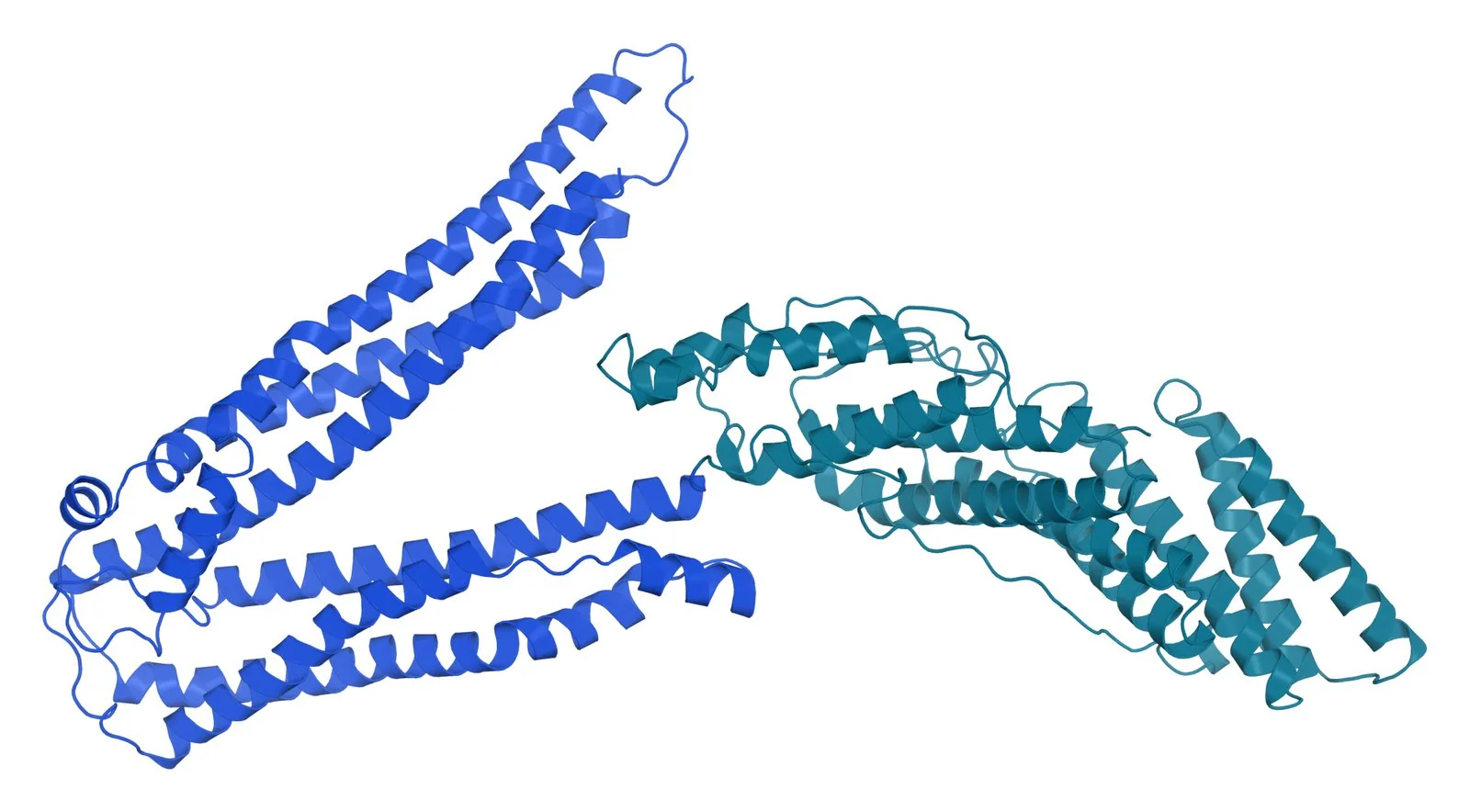
- [1]PDB 2OEV, ALIX (Bro1 and V domains). ExaVeyra Sciences, rendered in PyMOL from PDB 2OEV. Structure data: RCSB Protein Data Bank (rcsb.org), CC0. Publicación de la estructura: Fisher RD, Chung HY, Zhai Q, et al. Structural and biochemical studies of ALIX/AIP1 and its role in retrovirus budding. Cell. 2007;128(5):841-852.
These references describe protein biochemistry and normal cell biology for licensed practitioner education, and make no statement about the composition of any product. They are not medical advice or regulatory guidance. There are no FDA-approved exosome products. Biomolecular signaling vesicle products distributed by ExaVeyra Sciences are supplied for topical aesthetic use by licensed practitioners and for laboratory and IND-authorized clinical research, are not intended to diagnose, treat, cure, mitigate or prevent any disease, and are not tissue products as defined by FDA guidelines.