Compounded peptides are stored the way the dispensing pharmacy’s label states: at the temperature it names, protected from light and freezing if it says so, and used by the beyond-use date it prints. FDA’s 503A guidance records that the statute requires compounding in compliance with the USP chapters on pharmacy compounding, chapter 795 for nonsterile and chapter 797 for sterile preparations, and FDA defines the beyond-use date as the date beyond which a drug product should not be used [2, 4]. FDA states that compounded drugs are not FDA-approved, which means the agency does not verify their safety, effectiveness or quality before marketing [1], so the label and the pharmacy’s records serve as the practice’s reference.
The label comes first below, followed by the degradation pathways that explain its instructions, the handling of opened and reconstituted vials, the cold chain from pharmacy to clinic to home, and the steps to take when a refrigerator reads outside its range. ExaVeyra supplies licensed practices, and storage questions about a specific preparation go to the pharmacy that compounded it.
Storage summary
The storage temperature, light and freezing instructions and the beyond-use date on the pharmacy label govern each compounded preparation, and two preparations of the same peptide can carry different dates [2, 4]. When a preparation has been held outside its labeled conditions, CDC’s guidance for refrigerated vaccines, used here as a reference, is to label the product do not use, keep it at the correct temperature, document the event and ask the source for a determination [7]; for a compounded preparation that source is the dispensing pharmacy.
The pharmacy label is the storage instruction that governs
FDA’s 503A guidance records that the statute requires compounding in compliance with the USP chapters on pharmacy compounding, and that USP moved its compounding chapter to chapter 795 and added chapter 797 for sterile compounding [2]. Those chapters tie the beyond-use date to the type of preparation and the conditions it was made under. FDA’s insanitary conditions guidance of November 2020 gives a measure of how far the environment limits the date: among the conditions it sets out for a pharmacy compounding sterile preparations in a segregated compounding area is that the pharmacy assign beyond-use dates that, in the agency’s wording of that year, do not exceed 12 hours at room temperature and 24 hours “when refrigerated or frozen” [3]. Those figures are FDA’s 2020 statement, and the current text of chapter 797 is the reference for dating today.
The current revision of chapter 797 took effect on 1 November 2023, as Petersen noted in a 2025 review of its requirements [20]. Reynolds and colleagues surveyed the state boards of pharmacy on how they enforce the chapters and reported that 35 of 36 respondents implemented USP compounding standards at least in part, chapters 795 and 797 most often [21].
FDA’s repackaging guidance, written for repackaged approved drugs, sets out a labeling logic that helps a practice read any dispensed label: the container should be suitable for storage through the beyond-use date, and instructions such as protect from light, do not freeze, or keep at a specified temperature carry over to the label [4]. A receiving check that reads the beyond-use date, the storage conditions and the lot number from every label is the first entry in a practice’s storage record.
Published stability studies describe three main degradation pathways
D’Hondt and colleagues reviewed impurities in peptide medicines in 2014 and described impurities and degradation products formed by succinimide formation, the route of deamidation at asparagine residues, by beta-elimination, pyroglutamate and diketopiperazine formation, by oxidation of side chains, and by reactions with excipients in the finished preparation [11]. Each changes the molecule in the vial, and several are driven by the stresses a storage instruction is written to limit, which the next sections take in turn.
Zapadka and colleagues reviewed the physical side in 2017 and reported that peptides self-associate into amorphous aggregates or structured fibrils under the influence of sequence, concentration, pH, excipients, surfaces and interfaces, temperature, agitation and lyophilization [10]. Wang and Roberts reviewed protein aggregation in 2018 and stated that aggregates form during manufacturing, storage and administration and may affect quality, safety and efficacy [13].
Temperature limits on the label reflect measured heat and freezing stress
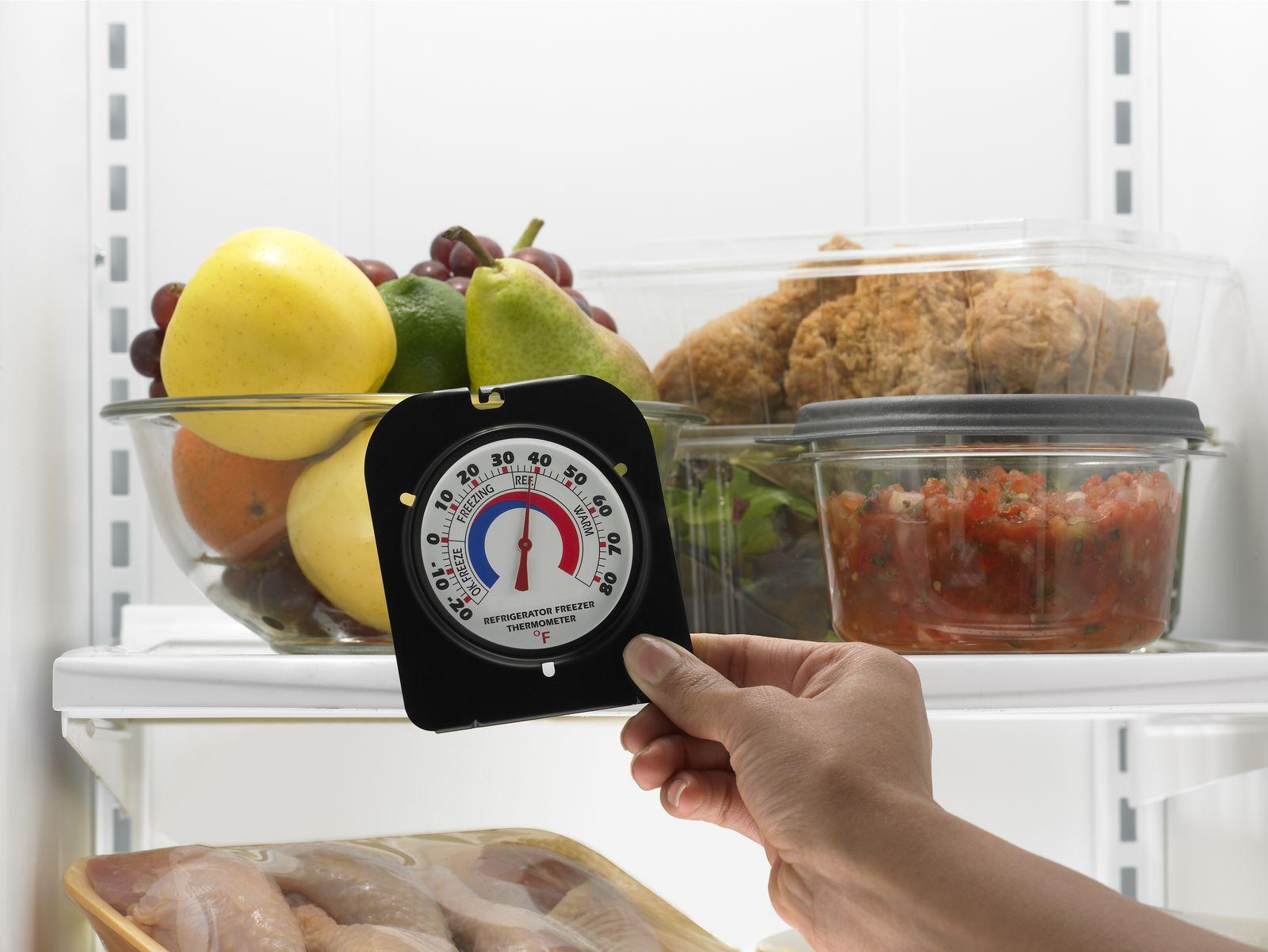
Hawe and colleagues reviewed the stresses used to probe protein and peptide stability and listed elevated temperature, freeze-thawing, mechanical stress, oxidation, light and contact with administration materials [12]. Temperature is the stress a storage unit controls, and a thermometer at the product’s shelf shows what the product experiences (Fig. 1). CDC’s vaccine storage toolkit, used here as a reference for refrigerated preparations, has clinics store vaccines away from door shelves, drawers and the air directly under cooling vents, and describes dormitory-style combined units as posing a significant risk of freezing vaccines, even when used temporarily [6].
Many labels address freezing separately because its effects may not be visible. CDC states that a single exposure to freezing temperatures can destroy the potency of a refrigerated vaccine and that appearance is not a reliable sign of proper storage, and FDA’s insulin page states that insulin that has been frozen should not be used [5, 6]. Those statements concern vaccines and insulin and serve here as reference points. A preparation labeled for refrigeration is kept in the refrigerator compartment, and the freezer is used where the label directs it.
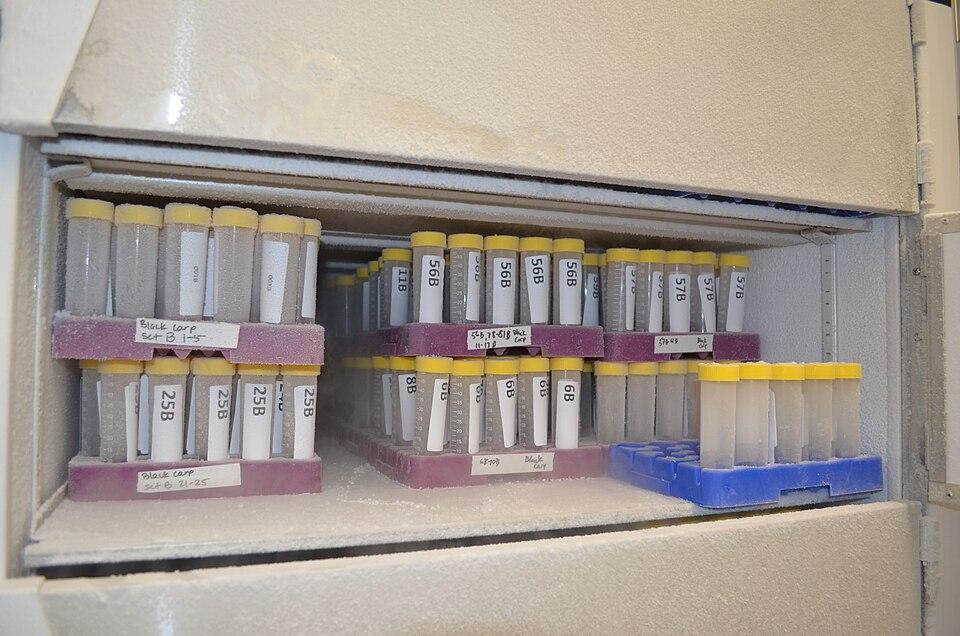
Some preparations, often lyophilized powders, are labeled for frozen or refrigerated storage before use, and the label states which (Fig. 2). Tolerance to heat is product-specific. Kongmalai and colleagues held opened insulin pens for 28 days in a refrigerator, at a mean room temperature of 29.7 °C or at 37 °C, and reported no statistically significant differences in insulin quantity by UHPLC [18]. That result belongs to the formulations tested, which is why the pharmacy sets dating from data on its own preparation.
Light and agitation are stresses the stability literature measures
Kerwin and Remmele reviewed photodegradation of protein biologics and reported that tryptophan, tyrosine, phenylalanine and cysteine residues undergo primary photo-oxidation, with possible changes to primary, secondary and tertiary structure [14]. Hawe and colleagues noted that photostability is the one forced degradation procedure with a standard method in regulatory guidelines [12]. Keeping a vial in its carton until use is the practical form of a protect from light instruction, and CDC reports that light exposure reduces the potency of some vaccines [6].
Agitation and air interfaces drive aggregation in the studies Zapadka and colleagues reviewed [10]. A vial that is shaken, or carried loose in a bag, takes on mechanical stress, so the handling instruction on a reconstituted preparation, where one is given, is part of its storage condition.
Opened and reconstituted vials carry an in-use date set by the pharmacy
CDC’s injection safety page states that a multi-dose vial typically contains an antimicrobial preservative, that the preservative has no effect on viruses and gives no complete protection against bacterial contamination, and that a multi-dose vial is dedicated to a single patient whenever possible [8]. The same page attributes to USP chapter 797 the dating of an opened vial and states that the beyond-use date stays within the manufacturer’s original expiration date [8].
For a compounded preparation the pharmacy states the in-use period, whether the preparation arrives as a solution or as a powder for reconstitution, and the diluent it specifies. For approved biologics, an industry and FDA working group described in 2024 how microbial challenge studies and physicochemical in-use stability data together set the in-use hold time printed in labeling [22]. Under the USP chapter 797 recommendation that CDC cites, an opened vial is dated at first entry [8], and the pharmacy’s label governs from there. The 2016 position paper of the Association for Professionals in Infection Control and Epidemiology, written by Dolan and colleagues, places vial handling within safe injection practice, which is why it sits beside temperature in a storage procedure [9].
Shipping validation documents the cold chain in transit
Chandler and colleagues packed regular, NPH and 70/30 insulin in insulated and noninsulated containers, exposed them to simulated summer and winter transit for 24 to 120 hours, and reported that all samples met USP potency limits by HPLC [15]. The study is a model of the evidence a pharmacy can show for a refrigerated shipment: logged temperatures, a defined packout and a stability assay after exposure.
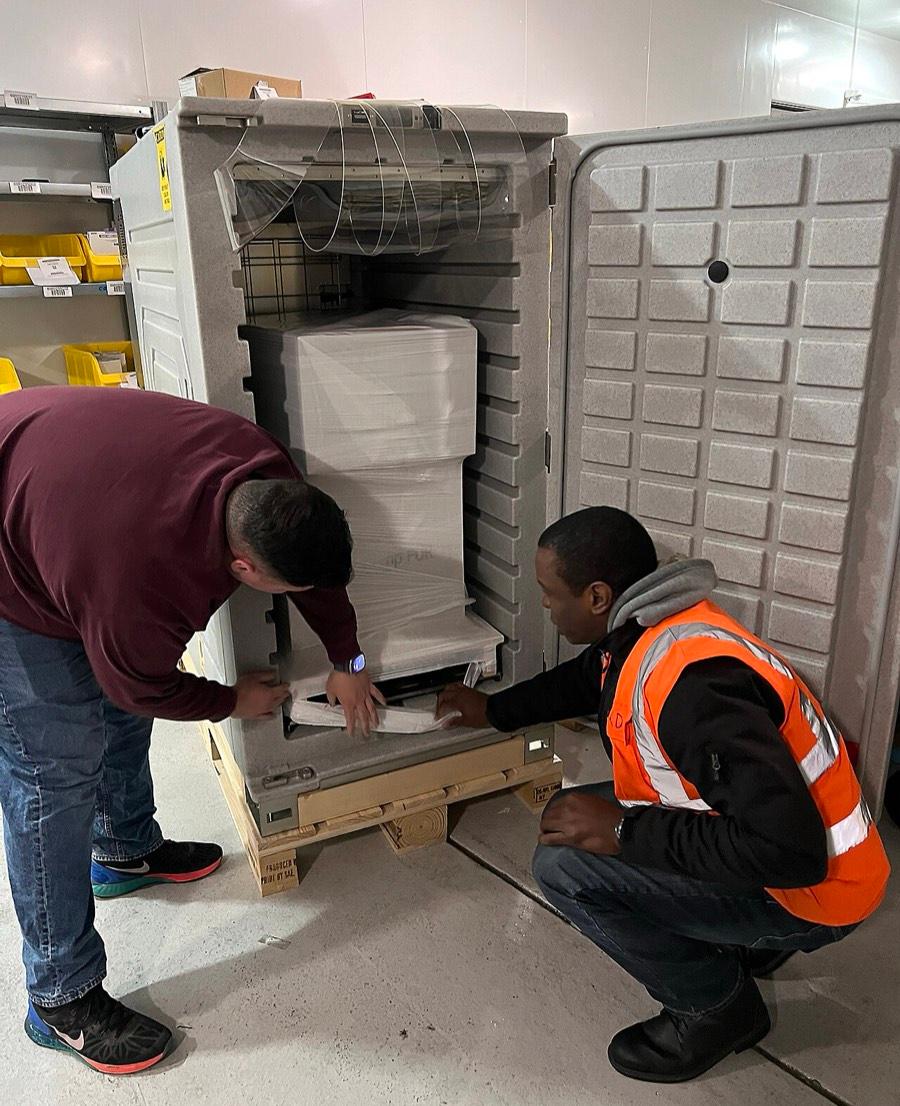
CDC’s vaccine guidance has a delivery checked, unpacked and placed in the storage unit on arrival, with the shipping container attended until it is unpacked (Fig. 3) [6]. The same receiving routine serves as a reference for a refrigerated compounded preparation, and a practice that keeps the packing slip, the arrival time and the receiving check together has the record a pharmacy will ask for if a question arises.
CDC vaccine guidance as a reference for a clinic refrigerator
CDC’s Vaccine Storage and Handling Toolkit, July 2026 edition, recommends digital data loggers because they monitor continuously and report how long a unit operated outside its range [6]. Leidner and colleagues at CDC simulated monitoring practices on data from 243 data loggers and reported that recording the current temperature twice a day without minimum and maximum readings detected 4.8 to 6.4 percent of excursions, while no non-continuous practice consistently detected every excursion [19].
For vaccines, CDC lists a suitable storage unit, with units that conform to NSF/ANSI Standard 456 preferred ahead of purpose-built and pharmaceutical-grade units, a calibrated data logger with a current certificate, a written procedure and a trained coordinator [6]. A practice can use the same elements as a reference for a refrigerator that holds compounded peptide preparations.
Sensor studies describe storage temperatures in home refrigerators
Braune and colleagues placed sensors beside insulin in the refrigerators and bags of 338 people, most of them in the United States and Europe, and analyzed 400 logs [16]. They reported deviations from the recommended range in every refrigerated log, out-of-range temperatures 11.3 percent of the time, about 2 hours 43 minutes a day, and readings below 0 °C on 17 percent of sensors [16].
Heinemann and colleagues reviewed insulin storage in 2021 and reported that little is known about storage after dispensing and that guidance from health organizations is inconsistent [17]. For a dispensed preparation kept at home, the label’s storage statement governs, and CDC’s placement guidance for clinic vaccine units offers a reference: a shelf in the main compartment, away from door shelves, drawers and the cooling vent, in the original packaging [6].
A temperature excursion is a question for the dispensing pharmacy
CDC’s job aid for vaccine storage units defines a temperature excursion as any reading outside the ranges in the manufacturers’ package inserts and sets four steps: notify the coordinator, document the event, correct the storage condition and contact the source [7]. Exposed vaccine is labeled do not use, moved to the correct storage conditions in a separate container and retained while the source gives its guidance [7].
The record CDC asks for after a vaccine excursion covers the date and time, minimum and maximum temperatures, the duration from the data logger and the lot numbers involved [7]. For a compounded peptide the dispensing pharmacy holds the stability data behind its dating, so it is the party that can say whether the preparation remains usable; FDA’s insulin page gives the same direction for an approved peptide, to the manufacturer [5].
A table of what governs each storage question
The table sets out, for the storage questions practices and patients ask most, which document answers it and where to find that answer. It covers compounded preparations dispensed by a 503A pharmacy.
| Storage question | What governs it | Where to find it | Source |
|---|---|---|---|
| How long a preparation can be used | The beyond-use date assigned under USP 795 or 797 | The pharmacy label | [2, 3, 4] |
| Refrigerate, freeze or room temperature | The storage conditions the pharmacy labels | The pharmacy label and any instruction sheet | [4] |
| Light protection | A protect from light instruction, supported by photodegradation data | The label; keep in the carton | [4, 14] |
| Opened or reconstituted vials | The in-use period the pharmacy states, within the beyond-use date | The label; date the vial at first entry | [8] |
| Shipping | The pharmacy’s packout and transit validation | Ask the pharmacy for its validation summary | [15] |
| Clinic refrigerator monitoring | CDC vaccine storage guidance as a reference: continuous data logger, suitable unit and placement | The practice’s storage procedure | [6, 19] |
| Temperature excursion | Determination by the dispensing pharmacy | Set the product aside, labeled do not use as in CDC’s vaccine job aid, and call the pharmacy | [7] |
Research questions the published record is still addressing
The storage rules are clear at the level of the label. The points below set out where published data on compounded peptide preparations are still developing as of November 2026.
- The degradation pathways are well described in reviews, and with few preparation-specific stability studies published, dating for an individual compounded preparation rests on each pharmacy’s own data or on the USP default limits [2, 11, 20].
- The federal statements closest to home storage of compounded peptides concern vaccines and insulin, and the pharmacy label is the instruction specific to each preparation [5, 6].
- The insulin heat-tolerance result applies to the formulations tested, and for any other peptide the label is the reference [18].
- Home refrigerator performance has been measured among insulin users, and the authors identify storage after dispensing as an area for further study [16, 17].
- The CDC authors’ simulation covered vaccine storage units, where adding minimum and maximum readings raised detection well above twice-daily readings alone; comparable data for small clinic units holding compounded preparations have yet to be published [19].
Each of these questions has a working answer today in the label and in the dispensing pharmacy that holds the data behind it.
Labeled storage and dating come with every catalog preparation
ExaVeyra supplies verified practices with preparations compounded by our 503A pharmacy partner on patient-specific prescriptions, each dispensed with its storage conditions and beyond-use date on the label. Storage questions about a specific lot go to that pharmacy, which holds the data behind its dating, and the scientific team can help a practice set up its receiving and refrigerator records.
Anyone may apply or ask the scientific team a question without an NPI, and NPI verification gives access to the practitioner portal, product documentation and pricing. A practice that reads every label on arrival, logs its refrigerator continuously and calls the pharmacy after any excursion keeps each preparation within the conditions its dating assumes.
Aviso Educativo: This article is for educational purposes only and does not constitute medical or legal advice. It does not identify any material, compound, device setting or protocol as safe, effective or appropriate for any patient, and it is not intended to diagnose, treat, cure, or prevent any disease. Questions about a treatment belong with the reader’s own licensed provider. Exosome material is supplied for topical aesthetic use by licensed practitioners. No exosome product is FDA-approved for any use, and ExaVeyra Sciences makes no statement about administration, route, or outcome. Compounded medications are not FDA-approved. They are prepared by a 503A compounding pharmacy licensed by the Texas State Board of Pharmacy for an individual patient against that patient’s prescription, and are available to NPI-verified licensed practitioners only, in the states where the pharmacy is licensed. Product, device and brand names mentioned are trademarks of their respective owners and are used only to identify the products discussed. Their mention is not an endorsement, and those owners have not reviewed or endorsed this article. ExaVeyra Sciences is a supplier and takes no part in any diagnosis, treatment decision, or plan of care. Findings described are attributed to the peer-reviewed literature, trial registries and agencies cited. The content of these guides is provided for general informational purposes only. It does not constitute legal, medical, or regulatory advice, and does not establish that any particular product or practice is compliant. Regulatory requirements vary by state and depend on the circumstances of each practice. Each practitioner should consult their own legal counsel and the applicable state licensing boards before acting on anything stated here.
Referencias
- 1.U.S. Food and Drug Administration. Compounding and the FDA: Questions and Answers. Content current as of 09/16/2025; accessed 8 November 2026. https://www.fda.gov/drugs/human-drug-compounding/compounding-and-fda-questions-and-answersAgency explainer page (CDER). Carries in this article: compounded drugs are not FDA-approved, so the agency does not verify their safety, effectiveness or quality before marketing, and state boards of pharmacy generally have primary responsibility for day-to-day oversight of state-licensed pharmacies that are not outsourcing facilities.
- 2.U.S. Food and Drug Administration, Center for Drug Evaluation and Research. Pharmacy Compounding of Human Drug Products Under Section 503A of the Federal Food, Drug, and Cosmetic Act: Guidance. June 2016; PDF accessed 8 November 2026. https://www.fda.gov/media/94393/downloadAgency guidance (11 pages). Carries in this article: section 503A requires that a drug be compounded in compliance with the United States Pharmacopeia chapters on pharmacy compounding, and the guidance records that USP moved its compounding chapter to chapter 795 and added chapter 797, which addresses sterile compounding.
- 3.U.S. Food and Drug Administration, Center for Drug Evaluation and Research, Office of Compliance. Insanitary Conditions at Compounding Facilities: Guidance for Industry. November 2020; PDF accessed 8 November 2026. https://www.fda.gov/media/124948/downloadAgency guidance (15 pages). Carries in this article: FDA describes sterile compounding environments as USP chapter 797 defines them, and for compounding in a segregated compounding area it states it generally does not intend to act on certain listed conditions when the facility meets the USP 797 criteria and assigns beyond-use dates that do not exceed 12 hours at room temperature and 24 hours “when refrigerated or frozen” (FDA’s November 2020 wording, which predates the chapter 797 revision effective 1 November 2023); the example shows how the compounding environment limits the dating a pharmacy may assign.
- 4.U.S. Food and Drug Administration, Center for Drug Evaluation and Research. Repackaging of Certain Human Drug Products by Pharmacies and Outsourcing Facilities: Guidance for Industry. January 2017; PDF accessed 8 November 2026. https://www.fda.gov/media/90978/downloadAgency guidance (14 pages). Carries in this article: the guidance defines the beyond-use date as the date beyond which a drug product should not be used, asks that the container be suitable for storage through that date, and asks that storage and handling instructions in the approved labeling, such as protect from light, do not freeze, or keep at a specified temperature, carry over to the repackaged product’s label.
- 5.U.S. Food and Drug Administration. Information Regarding Insulin Storage and Switching Between Products in an Emergency. Content current as of 09/28/2026; accessed 8 November 2026. https://www.fda.gov/drugs/emergency-preparedness-drugs/information-regarding-insulin-storage-and-switching-between-products-emergencyAgency information page for an approved peptide hormone. Carries in this article: the agency states that extreme temperatures make insulin less effective, that insulin that has been frozen should not be used, that insulin should be kept away from direct heat and out of direct sunlight, and that patients and providers with questions about a product’s suitability may contact its manufacturer; the closest official statement on temperature handling for a dispensed peptide.
- 6.Centers for Disease Control and Prevention. Vaccine Storage and Handling Toolkit, with Key Resources. July 2026 edition (41 pages); accessed 8 November 2026. https://www.cdc.gov/vaccines/hcp/downloads/storage-handling-toolkit.pdfFederal guidance document for clinics storing vaccines, used in this article as a reference for refrigerated preparations. Carries in this article: digital data loggers give continuous monitoring and the duration of a temperature excursion; dormitory-style combined units pose a significant risk of freezing vaccines, even in temporary storage; units that conform to NSF/ANSI Standard 456 are preferred, ahead of purpose-built and pharmaceutical-grade units; door shelves, drawers and the area under cooling vents are to be avoided; deliveries are unpacked and stored on arrival; a single freezing exposure can destroy the potency of a refrigerated vaccine, some vaccines lose potency with light exposure, and appearance is not a reliable sign of proper storage.
- 7.Centers for Disease Control and Prevention. Handling a Temperature Excursion in Your Vaccine Storage Unit (one-page job aid); accessed 8 November 2026. https://www.cdc.gov/vaccines/hcp/admin/storage/downloads/temperature-excursion-508.pdfFederal job aid for vaccine storage units, used in this article as a reference. Carries in this article: any reading outside the range in the package insert is an excursion; the four steps are notify, document, correct and contact; exposed product is labeled do not use, kept at the correct conditions in a separate container and not discarded; the record covers date and time, minimum and maximum temperatures, duration from the data logger and lot numbers; and the clinic contacts the manufacturer or program for a determination.
- 8.Centers for Disease Control and Prevention. Preventing Unsafe Injection Practices (Injection Safety, for health care providers). Last reviewed March 26, 2024; accessed 8 November 2026. https://www.cdc.gov/injection-safety/hcp/clinical-safety/index.htmlFederal infection-prevention guidance. Carries in this article: a multi-dose vial typically contains an antimicrobial preservative that has no effect on viruses and does not give complete protection against bacterial contamination; multi-dose vials are dedicated to a single patient whenever possible; and the page attributes to USP chapter 797 the dating of an opened vial, with a beyond-use date that stays within the manufacturer’s original expiration date.
- 9.Dolan SA, Arias KM, Felizardo G, Barnes S, Kraska S, Patrick M, et al. APIC position paper: Safe injection, infusion, and medication vial practices in health care. Am J Infect Control. 2016;44(7):750-757. PMID 27184207. doi:10.1016/j.ajic.2016.02.033Professional society position paper (Association for Professionals in Infection Control and Epidemiology), updating its 2010 paper. Carries in this article: the authors report that transmission of bloodborne viruses and other pathogens during routine care continues to occur through improper injection, infusion and medication vial practices, which is why vial handling rules sit beside storage rules. Disclosure: none stated in the PubMed record.
- 10.Zapadka KL, Becher FJ, Gomes Dos Santos AL, Jackson SE. Factors affecting the physical stability (aggregation) of peptide therapeutics. Interface Focus. 2017;7(6):20170030. PMID 29147559. PMC5665799. doi:10.1098/rsfs.2017.0030Narrative review (University of Cambridge with an industry formulation group). Carries in this article: the review sets out the intrinsic and external factors that drive peptide self-association into amorphous aggregates or fibrils, including sequence, concentration, pH, excipients, chemical degradation, surfaces and interfaces, temperature, agitation and lyophilization. Disclosure: the authors declared no competing interests.
- 11.D’Hondt M, Bracke N, Taevernier L, Gevaert B, Verbeke F, Wynendaele E, et al. Related impurities in peptide medicines. J Pharm Biomed Anal. 2014;101:2-30. PMID 25044089. doi:10.1016/j.jpba.2014.06.012Structured review (Ghent University). Carries in this article: the review sorts peptide-related impurities into synthesis-related impurities, degradation products formed by mechanisms such as beta-elimination, diketopiperazine, pyroglutamate and succinimide formation (the route of deamidation), oxidation of side chains, and products of reactions with excipients in the finished preparation. Disclosure: none stated in the PubMed record.
- 12.Hawe A, Wiggenhorn M, van de Weert M, Garbe JH, Mahler HC, Jiskoot W. Forced degradation of therapeutic proteins. J Pharm Sci. 2012;101(3):895-913. PMID 22083792. doi:10.1002/jps.22812Methods review. Carries in this article: the stresses used to probe protein and peptide stability are elevated temperature, freeze-thawing, mechanical stress, oxidation, light and contact with materials and devices used at administration, and the authors report that standard procedures exist in regulatory guidelines for photostability while most other forced degradation procedures remain unstandardized. Disclosure: none stated in the PubMed record.
- 13.Wang W, Roberts CJ. Protein aggregation: mechanisms, detection, and control. Int J Pharm. 2018;550(1-2):251-268. PMID 30145245. doi:10.1016/j.ijpharm.2018.08.043Narrative review (industry and University of Delaware authors). Carries in this article: aggregation arises during manufacturing, storage and administration, and the authors state that aggregates may affect product quality, safety and efficacy; the review covers mechanisms, influencing factors, detection and control. Disclosure: first author employed by a biologics manufacturer.
- 14.Kerwin BA, Remmele RL Jr. Protect from light: photodegradation and protein biologics. J Pharm Sci. 2007;96(6):1468-1479. PMID 17230445. doi:10.1002/jps.20815Review (industry authors). Carries in this article: the residues that undergo primary photo-oxidation in proteins are tryptophan, tyrosine, phenylalanine and cysteine or cystine, and the authors report that photodegradation can change primary, secondary and tertiary structure; the chemistry behind a protect from light statement on a label. Disclosure: authors employed by a biologics manufacturer.
- 15.Chandler C, Gryniewicz CM, Pringle T, Cunningham F. Insulin temperature and stability under simulated transit conditions. Am J Health Syst Pharm. 2008;65(10):953-963. PMID 18463345. doi:10.2146/ajhp070347Laboratory study of insulin shipped under simulated transit conditions, with temperature logging and stability testing by HPLC and size-exclusion chromatography. Carries in this article: regular, NPH and 70/30 insulin held potency within USP limits after 24 to 120 hours of simulated summer and winter transit in insulated and noninsulated packaging, a model of the shipping validation a pharmacy can show for a refrigerated preparation. Disclosure: pharmacy service authors; none stated in the PubMed record.
- 16.Braune K, Kraemer LA, Weinstein J, Zayani A, Heinemann L. Storage conditions of insulin in domestic refrigerators and when carried by patients: often outside recommended temperature range. Diabetes Technol Ther. 2019;21(5):238-244. PMID 31009254. doi:10.1089/dia.2019.0046Observational sensor study of 338 people with diabetes (46 percent in the US, 41 percent in the EU), 400 temperature logs (230 refrigerated, 170 carried). Carries in this article: every refrigerated log showed deviations from the recommended range, refrigerated insulin was out of range 11.3 percent of the time, about 2 hours 43 minutes a day, and 17 percent of sensors recorded temperatures below 0 °C. Disclosure: three authors employed by the sensor manufacturer.
- 17.Heinemann L, Braune K, Carter A, Zayani A, Krämer LA. Insulin storage: a critical reappraisal. J Diabetes Sci Technol. 2021;15(1):147-159. PMID 31994414. PMC7783014. doi:10.1177/1932296819900258Narrative review. Carries in this article: the authors describe insulin as a peptide hormone drug susceptible to changes in stability under storage, report that little is known about storage after dispensing and that guidance from health organizations is inconsistent, and call for clearer storage recommendations. Disclosure: two authors employed by a temperature sensor company; others report industry consulting.
- 18.Kongmalai T, Preechasuk L, Junnu S, Manocheewa S, Srisawat C, Sriwijitkamol A. The effect of temperature on the stability of in-use insulin pens. Exp Clin Endocrinol Diabetes. 2021;129(9):683-688. PMID 31634960. doi:10.1055/a-1010-5466Laboratory study of four basal insulins, five opened pens per storage condition, held 28 days in a refrigerator, at room temperature (mean 29.7 °C) or at 37 °C and assayed by UHPLC. Carries in this article: the authors reported no statistically significant differences in insulin quantity across conditions, with a trend toward different stability between clear analog and NPH formulations, an example of why tolerance to heat is product-specific and set by data for that product. Disclosure: university grant; the authors reported no commercial associations.
- 19.Leidner AJ, Lee CE, Tippins A, Messonnier ML, Stevenson JM. Evaluation of non-continuous temperature monitoring practices for vaccine storage units: a Monte Carlo simulation study. J Public Health (Berl). 2020;29(6):1253-1260. PMID 35923301. PMC9345596. doi:10.1007/s10389-020-01207-0Simulation study by CDC authors on data from 243 digital data loggers in provider vaccine storage units from a 2012 to 2015 pilot. Carries in this article: recording the current temperature twice a day without minimum and maximum readings detected 4.8 to 6.4 percent of excursions, adding minimum and maximum readings raised detection to as much as 96.7 percent, and no non-continuous practice consistently detected every excursion. Disclosure: the authors declared no conflict of interest.
- 20.Petersen MM. Allergen immunotherapy: How to stay current with USP 797 and practice guidelines. Allergy Asthma Proc. 2025;46(1):26-31. PMID 39741369. doi:10.2500/aap.2025.46.240078Narrative review of the revised USP chapter 797. Carries in this article: the latest revision of chapter 797 became effective on 1 November 2023, with requirements for personnel training and competency, facility maintenance, documentation and quality assurance. Disclosure: none stated in the PubMed record.
- 21.Reynolds KA, Ibrahim SA, Hellquist KA, Poon E, Alam M. Increased regulation of medication compounding by state boards of pharmacy. Arch Dermatol Res. 2022;314(8):787-790. PMID 34698896. doi:10.1007/s00403-021-02290-3Survey of state boards of pharmacy with qualitative analysis; 36 of 51 boards responded. Carries in this article: 35 of 36 responding boards implement USP compounding standards at least in part, chapters 795 and 797 are enforced more often than chapter 800, and most boards implement only finalized standards. Disclosure: academic dermatology authors; none stated in the PubMed record.
- 22.Zamiri C, Leiske DL, Hughes P, Kirwan JP, Der E, Cox E, et al. Best Practices for Microbial Challenge In-Use Studies to Evaluate the Microbial Growth Potential of Parenteral Biological Products; Industry and Regulatory Considerations. PDA J Pharm Sci Technol. 2024;78(4):475-500. PMID 37848203. doi:10.5731/pdajpst.2022.012806Consensus recommendations of a cross-industry and FDA in-use microbial working group, informed by a blinded member survey. Carries in this article: microbial challenge in-use studies, together with physicochemical in-use stability assessments, define the in-use hold times printed in prescribing information for preservative-free parenteral biologics after first puncture or reconstitution. Disclosure: most authors list biopharmaceutical company affiliations; one lists FDA (CDER).
Créditos de imágenes
- Fig. 1U.S. Department of Agriculture, Wikimedia Commons, Public domain. ↩
- Fig. 2Scott Covington, U.S. Fish and Wildlife Service, Wikimedia Commons, Public domain. ↩
- Fig. 3U.S. Army Medical Logistics Command, Wikimedia Commons, resized, Public domain. ↩