A new med spa can add exosomes once six things are in place: a licensed practitioner who oversees the service, a scope-of-practice check against the state practice act, a verified supplier account, a receiving procedure, a monitored freezer with a log, and consent and documentation that describe the same service the website does. Each of those can be finished before the first order arrives, and together they give the practice a service it can explain to a patient, a board or an insurer.
This guide works through that checklist, who may apply topical exosome material in a med spa, what the add-on costs a practice in material, session time and documentation, and where it usually sits on a menu. ExaVeyra Sciences supplies exosome material for topical aesthetic use by licensed practitioners, and every clinical decision described here belongs to the practitioner.

Regulatory status
The FDA stated in its 2019 public safety notification that there are currently no FDA-approved exosome products [15]. ExaVeyra supplies exosome material for topical aesthetic use by licensed practitioners, described by its available formats, and each order ships frozen from the manufacturing facility with the lot number printed on every vial; a certificate of analysis is generated for every lot, and that certificate, the characterization panel and the cold-chain records are available on request. The FDA microneedling page states that the devices are not approved for delivering cosmetics, topical medications or other products into the skin [16].
State practice acts set the frame for a med spa set up
Malik and colleagues reviewed state statutes, administrative codes, case law and board guidance in 2025 and reported significant variability in the rules on med spa ownership, the role of the supervising physician and the scope of practice for nonphysician providers [4]. Choudhry and colleagues interviewed 31 state medical boards and reported in 2012 that 20 allowed all minimally invasive cosmetic procedures to be delegated at the physician’s discretion to at least one category of nonphysician, while 13 required some form of on-site supervision [6].
The distance between the rules and daily practice is documented as well. Soares and colleagues surveyed the 1,038 independent med spas they identified in Florida and reported in 2025 that nonphysician practitioners made up 84 percent of providers, that core specialty medical director supervision was present at 22 percent of facilities, and that 25 percent appeared to disregard state directorship guidelines [5]. Hogan and colleagues ran a secret-shopper survey of 127 med spas in the Chicago area and reported in 2023 that a supervising physician was not on site at 81.1 percent of them [7].
Those findings are why a scope-of-practice check sits near the top of any med spa start up guide. The state guides on this site summarize the practice-act questions state by state, and the state medical and nursing boards remain the authority a practice confirms its answers against.
Six items belong in place before the first order
The table sets out the checklist with the person who usually owns each item and the rule or source behind it. A practice that completes it before opening week starts the exosome service with a record it can stand behind.
| Item | What it covers | Usual owner | Rule or source |
|---|---|---|---|
| Licensed practitioner oversight | A named supervising practitioner, a written protocol and a delegation record | Medical director | State practice act; Malik 2025 [4] |
| Scope-of-practice check | Who may perform the preceding procedure and apply topical material, and at what level of supervision | Owner with the medical director | State boards; Choudhry 2012 [6] |
| Account verification | NPI and state license verification of the ordering practitioner before an account opens | Ordering practitioner | Supplier onboarding |
| Receiving procedure | Dry ice check, arrival time, lot number and documents filed with the lot | Designated receiver | MISEV2023 headings [12]; Knauer 2026 [3] |
| Freezer and temperature log | Storage at the temperature on the handling instructions, a daily log and an excursion plan | Clinical lead | Manufacturer instructions; Görgens 2022 [13] |
| Consent and documentation | A consent form that matches the website, a session record with the lot number and an adverse event route | Medical director | FDA MedWatch [19] |
Licensed practitioner oversight anchors the service
The supervising practitioner signs the written protocol that says which procedures the service follows, who performs each step and how a reaction is escalated. Rossi and colleagues surveyed consumers and physicians in 2019 and reported more burns and discoloration among consumers seen by nonphysicians, more often in a spa setting, with improper technique the most cited reason [8].
A protocol that names the supervising practitioner and the delegation for each step answers the question those findings raise. It also gives a new team one document to train against before the first patient is booked.
Account verification confirms who may order
ExaVeyra opens an account after verifying the ordering practitioner’s NPI and state license, and ships only to that verified practice. A med spa that applies for a verified account before its opening date can have its documents on file and its receiving procedure rehearsed well ahead of the first booking.
A receiving procedure turns each delivery into a record
Each exosome order from ExaVeyra ships frozen from the manufacturing facility, every vial carries its lot number, and the certificate of analysis generated for that lot can be requested together with its characterization panel and cold-chain records. The receiving procedure checks that dry ice remains, records the arrival time and the lot number, moves the vials into the freezer before anything else happens, and then requests the lot documents for the file.
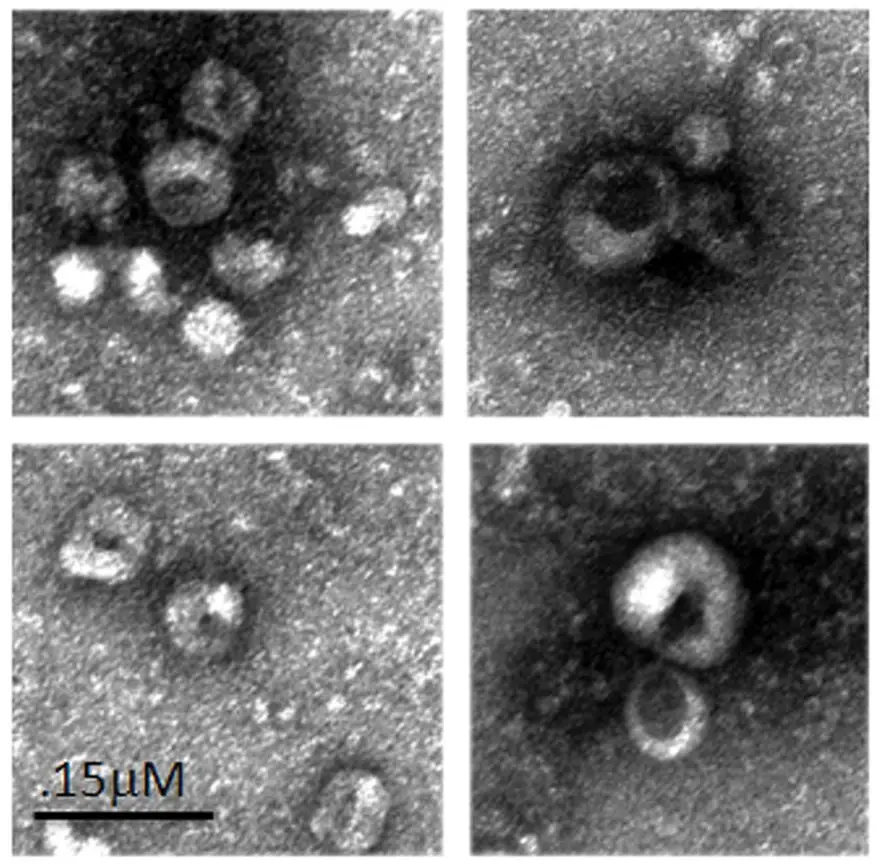
Knauer and colleagues surveyed 20 commercial topical exosome products in 2026 and reported that they carried minimal information on isolation, processing or shelf life [3]. Reading the documents requested for a lot against the MISEV2023 reporting headings for separation, particle size and concentration, marker proteins and morphology gives the receiver a neutral checklist [12]. Morphology is usually reported as electron micrographs like those in Fig. 1.
A monitored freezer and a log protect the material between orders
Following the manufacturer’s handling instructions, the exosome material ExaVeyra supplies is stored at minus 20 degrees Celsius for the long term and at 4 degrees once thawed. The freezer log records the temperature on every working day, and any excursion is logged with the affected lot numbers.
Görgens and colleagues studied vesicle storage for up to two years and reported in 2022 that plain phosphate-buffered saline reduced vesicle recovery, while buffer with human albumin and trehalose preserved vesicles at minus 80 degrees and across freeze-thaw cycles [13]. The practical reading for a med spa is to follow the handling instructions exactly, avoid repeated thawing and keep the log current.
Consent and documentation describe one service
The consent form, the session record and the website should describe the same service in the same words. When the three agree, a patient reads one description of the service wherever it appears, and the session record ties that description to the lot used.
The session record carries the lot number of the material used, so any reaction can be traced to its lot. An adverse event can be reported to the FDA through MedWatch, the agency’s reporting program for health professionals, patients and consumers [19].
Who may apply topical exosome material is a practice-act question
ExaVeyra supplies exosome material for topical aesthetic use by licensed practitioners, and which member of the team applies it after a procedure is set by the state practice act and the supervising practitioner’s written protocol. The procedure that comes first, such as microneedling or a laser session, carries its own delegation and supervision rules, and those rules usually decide who stands at the chair.
Valiga and colleagues described in 2022 how med spas outnumber physician-based cosmetic practices in 73 percent of major US cities and rely on nonphysician operators with variable training, a lack of uniform oversight they wrote may contribute to adverse events [9]. A practice that settles the delegation question in writing before launch removes that uncertainty from its own service.
- Which license types may perform the preceding procedure in this state, and which may apply topical material afterward
- What level of supervision applies to each step: on site, available by phone, or general
- Whether a good-faith examination is required before a new patient’s first procedure, and who may perform it
- How the delegation is recorded in the protocol and reviewed by the supervising practitioner
An exosome add-on carries material, time and documentation costs
Med spa start up costs for an exosome add-on fall into a handful of lines that a practice prices from its own quotes, payroll and agreements. ExaVeyra does not publish prices in this article; a verified account sees pricing for each available format, and the practice sets its own fees.
| Cost line | What drives it | Where the figure comes from |
|---|---|---|
| Exosome material | The available format chosen and the quantity the practitioner’s protocol calls for per session | Supplier quote for a verified account |
| Session time | Minutes added for thawing, application and charting | Practice payroll and booking template |
| Consumables | Sterile applicators, gloves and aftercare supplies chosen by the practitioner | Practice purchasing |
| Freezer and monitoring | A dedicated freezer, a thermometer or data logger and a backup plan for outages | Equipment quotes |
| Oversight | Medical director time for the protocol, delegation and chart review | Director agreement |
| Consent and documentation | Consent drafting, legal review and the session record template | Counsel and practice manager |
| Insurance | Policy review to confirm the added service is covered | The practice’s carrier |
| Wastage | Thawed material discarded under the handling instructions and any freezer excursion | Freezer log and receiving records |
Two lines are easy to miss. Wastage follows from the handling instructions, so an ordering rhythm matched to the booking calendar keeps it small, and documentation time is real staff time that belongs in the session price.
The add-on sits after a procedure on most menus
Practices that offer exosome material usually list it as a post-procedure step after microneedling or a laser session, and the published studies follow that sequence. Kwon and colleagues ran a double-blind randomized split-face trial in 25 adults in 2020, applying an adipose stem cell exosome gel after each of three fractional CO2 laser sessions, and reported greater improvement on the exosome side with milder erythema and shorter downtime; the gels were supplied by their manufacturer [10].
Park GH and colleagues randomized 28 adults in 2023 to an exosome solution or saline on opposite sides of the face across three microneedling sessions, and reported higher aesthetic improvement scores and instrument-measured gains in wrinkles, elasticity, hydration and pigmentation on the exosome side [11]. Both studies used one named product, so their results describe that material and that protocol.
The device carries its own regulatory status. The FDA classified aesthetic microneedling devices through the De Novo authorization of the SkinPen Precision System in 2018 [17], and its microneedling page lists the appearance uses the agency has authorized in adults aged 22 or older while stating that the devices are not approved for delivering topical products into the skin [16]. SkinPen is a trademark of its owner and is named here only to identify the device.
On the menu, the session is described by its procedure and the topical step as part of the aftercare the practitioner chooses, in the same words the consent form uses. The FDA explains that a product’s regulatory category follows its intended use, established in part by the claims made for it, so menu copy that describes appearance and names no condition keeps the service consistent [18].
Published timing differs by procedure
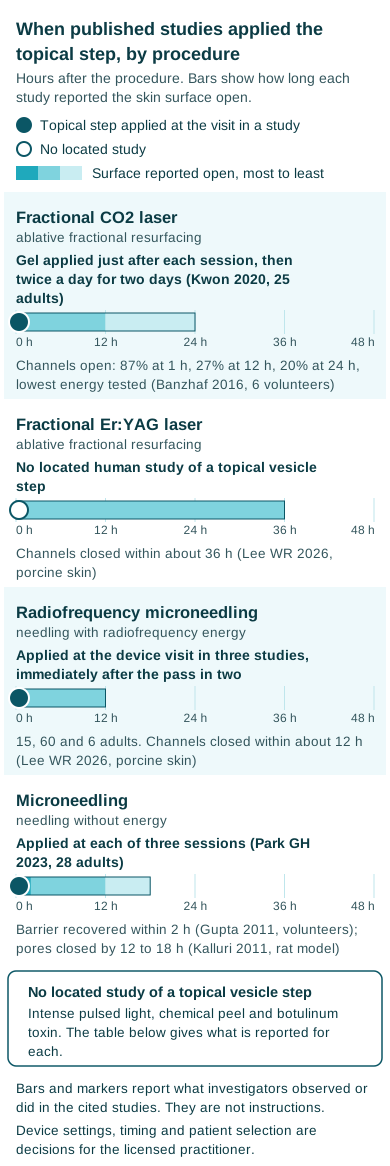
A med spa menu usually pairs the topical step with a device or an injectable, so the first question a new team asks is where the step belongs in the visit. The published studies answer that for three procedure classes and leave it open for the others (Fig. 2). Device settings, timing and patient selection are practitioner decisions this guide does not make.
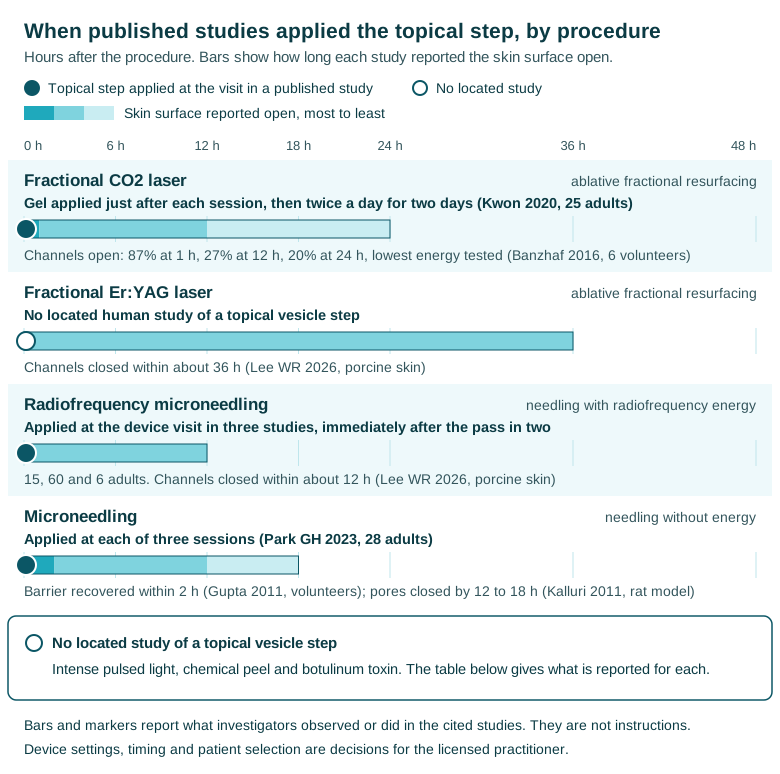
After fractional CO2 laser, Kwon and colleagues applied the exosome gel just after each session and then twice a day for two days at a lower concentration [10]. Banzhaf and colleagues imaged the channels a fractional CO2 laser leaves in six volunteers in 2016 and reported that 87 percent were open at 1 hour, 27 percent at 12 hours and 20 percent at 24 hours at the lowest energy tested [20]. Lee WR and colleagues reported in 2026, on porcine skin, that channels closed within about 36 hours after a fractional Er:YAG laser [21].
Radiofrequency microneedling is the class that includes Morpheus8, Potenza and Sylfirm X. Estupiñan and colleagues applied adipose stem cell exosomes to one half of the face immediately after each of three sessions in 15 adults in 2025 [22], Huang and colleagues applied a plant-derived vesicle formulation immediately after needling radiofrequency in 6 adults in 2026 [24], and Yen and colleagues applied a topical vesicle preparation at the device visit in 60 adults in 2026 [23]. None of the three tested an application on a later day, and Lee WR and colleagues reported channel closure within about 12 hours after the device on porcine skin [21]. Morpheus8, Potenza and Sylfirm X are trademarks of their respective owners and are named only to identify the device class.
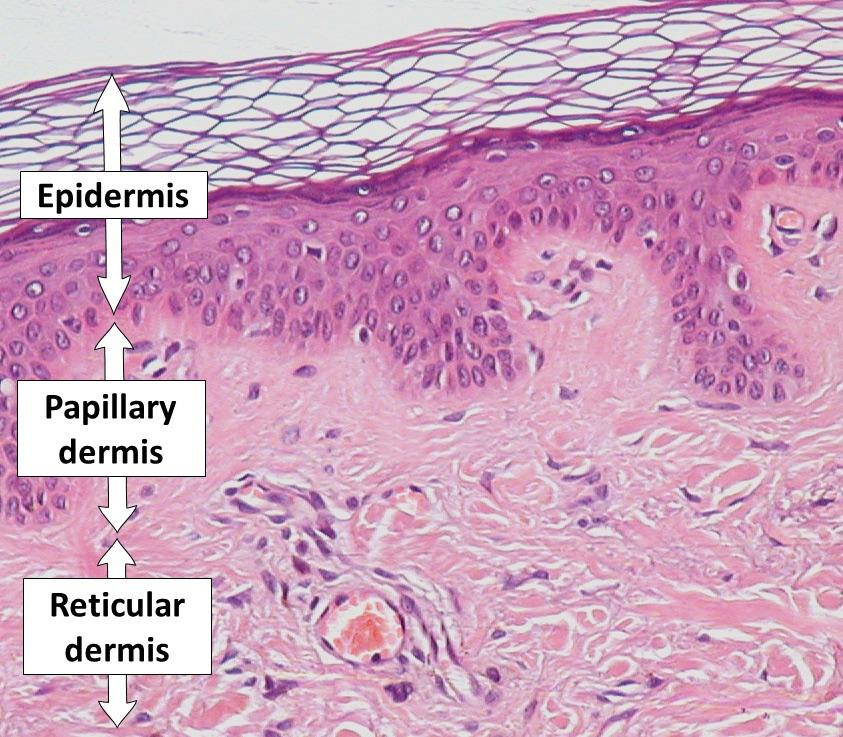
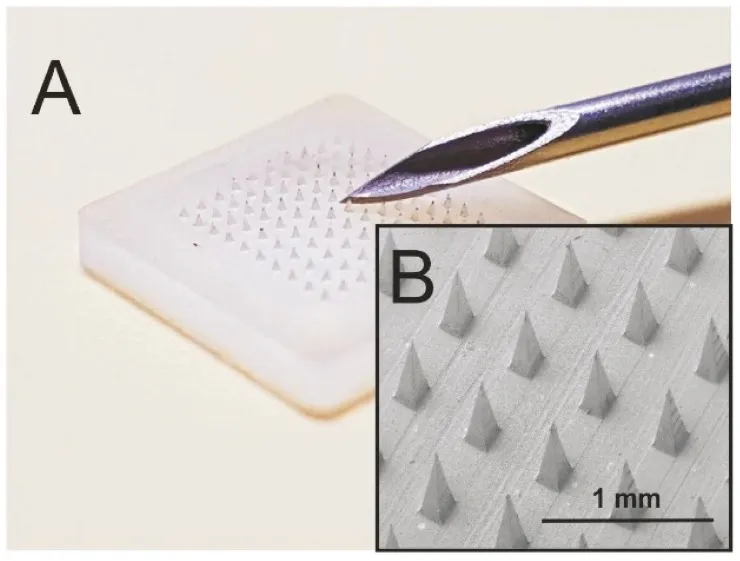
After microneedling, Park GH and colleagues applied the exosome solution at each of three sessions [11]. Gupta and colleagues reported in 2011 that unoccluded microneedle sites in human volunteers recovered their barrier properties within 2 hours [25], and Kalluri and colleagues reported in 2011, in a rat model, that pores closed by 12 to 18 hours depending on needle length [26]. Fig. 3 shows the skin layers these studies describe, and Fig. 4 the scale of a microneedle array beside a hypodermic needle.
Three common menu items have no published answer. Intense pulsed light leaves the skin surface in place, and no located study compares a topical vesicle step on the day of a session with a later one. For chemical peels, a 2025 consensus of six practitioners described which topicals are commonly used after peeling and did not address vesicle material [27]. For botulinum toxin, sold under names that include Botox, no located human study has paired the injection with topical exosome material in either order; a 2016 expert consensus described spacing combined sessions 1 to 2 weeks apart [29], and a 2026 review reported that same-day energy devices did not reduce the effect of the toxin, with the stated exceptions of fractional radiofrequency microneedling and high-intensity focused ultrasound [28]. Botox is a registered trademark of its owner and is named only to identify the product.
| Procedure | When the published studies applied the topical step | What is reported about the skin surface | Sources |
|---|---|---|---|
| Fractional CO2 laser | Just after each session, then twice a day for two days (25 adults) | 87, 27 and 20 percent of channels open at 1, 12 and 24 hours at the lowest energy tested | Kwon 2020 [10]; Banzhaf 2016 [20] |
| Fractional Er:YAG laser | No located human study of a topical vesicle step | Channels closed within about 36 hours on porcine skin | Lee WR 2026 [21] |
| Radiofrequency microneedling | At the device visit in all three located studies, immediately after the pass in two (15, 60 and 6 adults) | Channels closed within about 12 hours on porcine skin | Estupiñan 2025 [22]; Yen 2026 [23]; Huang 2026 [24]; Lee WR 2026 [21] |
| Microneedling | At each of three sessions (28 adults) | Barrier recovered within 2 hours in volunteers; pores closed by 12 to 18 hours in a rat model | Park GH 2023 [11]; Gupta 2011 [25]; Kalluri 2011 [26] |
| Intense pulsed light | No located study | Skin surface left in place | None located |
| Chemical peel | No located study of vesicle material | Not reported for this purpose | McDonald 2025 [27] |
| Botulinum toxin | No located human study pairs the two | An injection, so no surface channels | Fritz 2026 [28]; Carruthers 2016 [29] |
For the session record, the practical reading is to write down the procedure, the minutes between the last device pass and the topical step, the lot number and who applied the material. That record lets a practice describe its own protocol accurately, and it is the record a supervising practitioner reviews.
The CuraCator applies the material as an even layer
Where the practitioner’s protocol calls for a topical step, the material has to travel from a syringe to the skin. The CuraCator is a sterile, single-use, needle-free tip for Luer-lock syringes that applies PRP, exosome preparations, serums and topicals as an even layer after microneedling, radiofrequency and resurfacing procedures. It fits Luer-lock syringes up to 5 mL and works best with 1 mL or 3 mL syringes (Fig. 5).
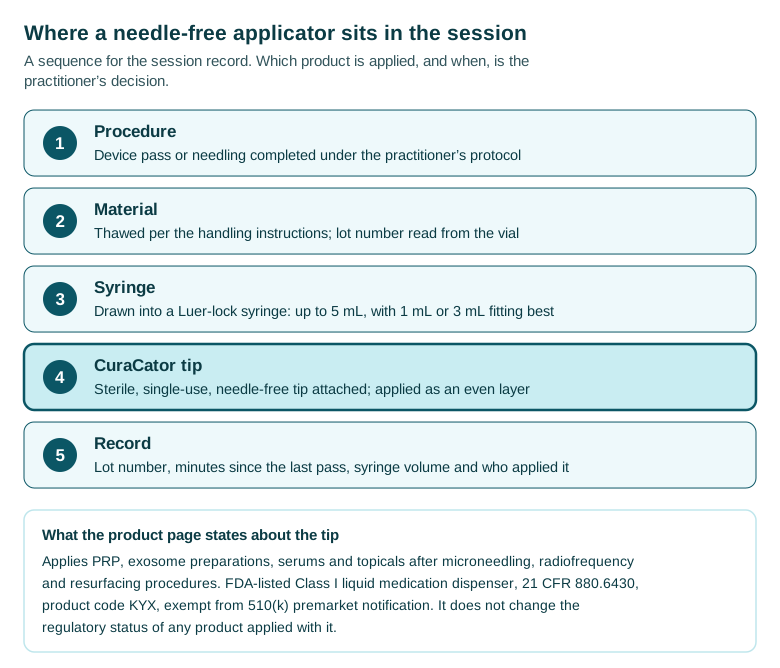
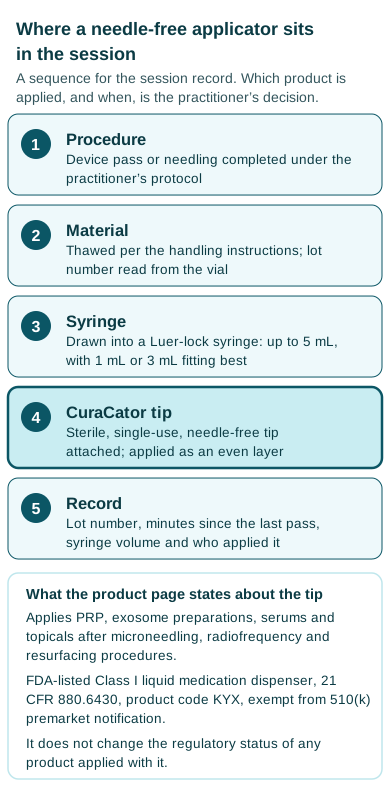
The device is listed with the FDA as a Class I liquid medication dispenser under 21 CFR 880.6430, product code KYX, and is exempt from 510(k) premarket notification. It does not change the regulatory status of any product applied with it, and which product is applied, and when, is the practitioner’s decision.
No published measurement of the volume or coverage the tip delivers was located, so this guide states none. What the applicator gives a new service is a repeatable step: one tip per patient, opened at the chair, with the syringe volume and the lot number written on the same line of the session record. CuraCator is a trademark of Trinnovations.
Several questions remain open in the published evidence
A new service is easier to explain when its limits are stated alongside its literature. The points below set out what the published evidence does not yet show.
- Certainty is low: Gaebe and colleagues rated the evidence across 16 studies and 503 participants as low or very low certainty, with risk of bias moderate to critical, while reporting no serious adverse events [1].
- Protocols are not standardized: Stack and colleagues pooled 39 human studies in 2026 and reported an average facial wrinkle reduction of 20.2 percent alongside heterogeneity and nonstandardized protocols [2], so no single sequence, interval or quantity has been established.
- Products differ: Knauer and colleagues reported minimal information on isolation, processing and shelf life across 20 commercial products [3], so a result for one product may not transfer to another.
- Industry ties are common: the exosome and control gels in the Kwon 2020 trial were supplied by the exosome manufacturer [10].
- Timing is untested: for every procedure in the timing chart, no located study compares application at the visit with application on a later day, so the published timing describes what investigators did.
- Setting is unstudied: none of the located studies compares outcomes by practice setting, staffing model or level of supervision.
- Costs are unpublished: no peer-reviewed cost analysis of an exosome add-on was located, so the cost table above is a framework for a practice’s own figures.
- Route matters: Park KY described four people in 2025 with persistent erythema, nodules and granulomatous inflammation after intradermal injection of exosome-containing cosmetic products sold for topical use, in nonclinical settings [14], a use outside the labeled topical workflow.
Questions to settle before the first order
These questions turn the checklist into answers a practice can file. Each one has an owner in the table above.
- Is each vial labeled with its lot number, and can the supplier provide the certificate of analysis, characterization panel and cold-chain records for that lot on request?
- Does the characterization map to the MISEV2023 headings for separation, particle size and concentration, marker proteins and morphology?
- What are the manufacturer’s storage and thaw instructions, and how long may thawed material be held before use?
- Who in this practice may perform the preceding procedure and apply the material under our state practice act and our written protocol?
- Does our consent form describe the same service our website and menu describe?
- Who records an adverse event with the lot number and reports it through MedWatch?
- Has our insurance carrier confirmed that the added service is covered?
Opening the service on a documented footing
A med spa that completes the six items before opening week launches its exosome service with oversight, scope, receiving, storage and consent already on file, and each patient record then ties back to a lot. ExaVeyra supplies exosome material to verified practices with the lot number on every vial and a certificate of analysis generated for every lot, and the certificate, characterization panel and cold-chain records the checklist asks for are available on request.
Applying for a verified account early lets a new practice see the available formats and pricing, rehearse its receiving procedure and have its freezer log running before the first booking. The practices that build that record from the start are well placed to grow the service with confidence as the evidence matures.
Aviso Educativo: This article is for educational purposes only and does not constitute medical or legal advice. It does not identify any material, compound, device setting or protocol as safe, effective or appropriate for any patient, and it is not intended to diagnose, treat, cure, or prevent any disease. Questions about a treatment belong with the reader’s own licensed provider. Exosome material is supplied for topical aesthetic use by licensed practitioners. No exosome product is FDA-approved for any use, and ExaVeyra Sciences makes no statement about administration, route, or outcome. Compounded medications are not FDA-approved. They are prepared by a 503A compounding pharmacy licensed by the Texas State Board of Pharmacy for an individual patient against that patient’s prescription, and are available to NPI-verified licensed practitioners only, in the states where the pharmacy is licensed. Product, device and brand names mentioned are trademarks of their respective owners and are used only to identify the products discussed. Their mention is not an endorsement, and those owners have not reviewed or endorsed this article. ExaVeyra Sciences is a supplier and takes no part in any diagnosis, treatment decision, or plan of care. Findings described are attributed to the peer-reviewed literature, trial registries and agencies cited. The content of these guides is provided for general informational purposes only. It does not constitute legal, medical, or regulatory advice, and does not establish that any particular product or practice is compliant. Regulatory requirements vary by state and depend on the circumstances of each practice. Each practitioner should consult their own legal counsel and the applicable state licensing boards before acting on anything stated here.
Referencias
- 1.Gaebe K, Lowe K, Bosnalie D, Khoury S, Villemure Poliquin N, Nichols A. Effectiveness and Safety of Extracellular Vesicle-Based Therapies for Nonsurgical Facial Rejuvenation: A Systematic Review. Facial Plast Surg Aesthet Med. 2026. Published online ahead of print. PMID 42487416. doi:10.1177/26893614261457879PRISMA systematic review with risk-of-bias and GRADE assessment, searches to June 2025; 16 studies, 503 participants. Carries in this article: most studies reported improvement in at least one skin-quality outcome, no serious adverse events were reported, risk of bias was moderate to critical and certainty was low or very low. Disclosure: academic authors (Canada); no COI statement in the PubMed record.
- 2.Stack ER, Spongberg C, Braud SC, Stanton WN, Elway M. Clinical Advances in Exosome-Based Therapies for Aesthetic Medicine: A Systematic Review and Meta-analysis of Human Clinical Trials. Aesthet Surg J. 2026;46(12 Suppl 2):S13-S25. PMID 41800726. doi:10.1093/asj/sjaf178Systematic review and random-effects meta-analysis, searches to February 2025; 39 human studies. Carries in this article: a pooled facial wrinkle reduction of 20.2 percent, with heterogeneity and nonstandardized protocols noted by the authors, the reason no single sequence or quantity is established. Disclosure: published in a journal supplement on exosomes; no funding or COI statement in the PubMed record.
- 3.Knauer G, Chang A, Gupta A, Brownstone N, Mejia N, Bauman S, et al. Clinical Evidence and Commercial Landscape of Topical Exosomes for Skin Rejuvenation: A Scoping Review. Aesthet Surg J. 2026. Published online ahead of print. PMID 42411735. doi:10.1093/asj/sjag141Scoping review of 18 human studies plus a market survey of 20 commercial topical exosome products. Carries in this article: the products carried minimal information on isolation, processing or shelf life, which is why the receiving procedure reads lot documents and why wastage belongs in the cost estimate. Disclosure: academic authors (USA); no COI statement in the PubMed record.
- 4.Malik AM, Ferrante AM, Booker BM, Council ML, Michalski-McNeely BM. Medical Spa Legislation, Regulations, and Guidelines in the United States. Dermatol Surg. 2025;51(8):785-790. PMID 40304398. doi:10.1097/DSS.0000000000004648Legal review of state statutes, administrative codes, case law and professional board guidance, with a stakeholder toolkit; no participants. Carries in this article: significant state variability in med spa ownership rules, the role of the supervising physician and nonphysician scope of practice, the basis for a state-specific scope check. Disclosure: academic dermatology and law school authors; no funding statement in the PubMed record.
- 5.Soares DJ, Bowhay A, Fakhre F, Hynes SD, Lee A, Yi CH. The Shifting Face of Aesthetic Care: A Systematic Survey of Independent Medical Spa Directorship and Practitioner Trends in Florida. Plast Reconstr Surg. 2025;155(1):66e-74e. PMID 38722589. doi:10.1097/PRS.0000000000011511Statewide cross-sectional survey of independent med spas in Florida using business, corporate and Department of Health licensing records; 1,038 med spas. Carries in this article: nonphysician practitioners made up 84 percent of providers, core specialty medical director supervision was present at 22 percent of facilities, and 25 percent appeared to disregard state directorship guidelines. Disclosure: none stated in the PubMed record.
- 6.Choudhry S, Kim NA, Gillum J, Ambavaram S, Williamson E, Yoo S, et al. State medical board regulation of minimally invasive cosmetic procedures. J Am Acad Dermatol. 2012;66(1):86-91. PMID 21798624. doi:10.1016/j.jaad.2011.01.009Structured interviews with officials of US allopathic state medical boards; 31 of 50 boards took part. Carries in this article: 20 boards reported that all minimally invasive cosmetic procedures could be delegated at the physician’s discretion to at least one category of nonphysician, 14 required general supervision and 13 some form of on-site supervision. Disclosure: non-US government research support listed in the PubMed record.
- 7.Hogan S, Wood E, Mishra V. Who Is Holding the Syringe? A Survey of Truth in Advertising Among Medical Spas. Dermatol Surg. 2023;49(11):1001-1005. PMID 37774041. doi:10.1097/DSS.0000000000003929Descriptive secret-shopper telephone survey of med spas in Chicago and its suburbs; 127 med spas. Carries in this article: a supervising physician was not on site at 81.1 percent of the facilities, and callers were told so at 64.6 percent. Disclosure: none stated in the PubMed record.
- 8.Rossi AM, Wilson B, Hibler BP, Drake LA. Nonphysician Practice of Cosmetic Dermatology: A Patient and Physician Perspective of Outcomes and Adverse Events. Dermatol Surg. 2019;45(4):588-597. PMID 30946699. PMC6450566. doi:10.1097/DSS.0000000000001829Internet surveys of consumers and of American Society for Dermatologic Surgery physician members; 2,116 consumers began the survey, 401 had had a cosmetic procedure, and 50 adverse events were reported. Carries in this article: more burns and discoloration in the group seen by nonphysicians, more often in a spa setting, with improper technique the most cited reason; recall bias noted by the authors. Disclosure: NIH extramural support listed in the PubMed record.
- 9.Valiga A, Albornoz CA, Chitsazzadeh V, Wang JV, Saedi N, Geronemus RG, et al. Medical spa facilities and nonphysician operators in aesthetics. Clin Dermatol. 2022;40(3):239-243. PMID 34838654. doi:10.1016/j.clindermatol.2021.11.007Narrative review. Carries in this article: med spas outnumber physician-based cosmetic practices in 73 percent of major US cities and rely on nonphysician operators with variable training, a lack of uniform training and oversight the authors wrote may contribute to adverse events. Disclosure: authors are practicing dermatologists; no funding statement in the PubMed record.
- 10.Kwon HH, Yang SH, Lee J, Park BC, Park KY, Jung JY, et al. Combination Treatment with Human Adipose Tissue Stem Cell-derived Exosomes and Fractional CO2 Laser for Acne Scars: A 12-week Prospective, Double-blind, Randomized, Split-face Study. Acta Derm Venereol. 2020;100(18):adv00310. PMID 33073298. PMC9309822. doi:10.2340/00015555-3666Prospective, double-blind, randomized, split-face trial over 12 weeks with three fractional CO2 sessions (Korea); n = 25. Carries in this article: the published sequence of a topical exosome gel applied after a laser session, with milder erythema and shorter downtime reported on the exosome side. Disclosure: the exosome and control gels were manufactured and supplied by the exosome manufacturer; the authors declared no conflicts of interest.
- 11.Park GH, Kwon HH, Seok J, Yang SH, Lee J, Park BC, et al. Efficacy of combined treatment with human adipose tissue stem cell-derived exosome-containing solution and microneedling for facial skin aging: A 12-week prospective, randomized, split-face study. J Cosmet Dermatol. 2023;22(12):3418-3426. PMID 37377400. doi:10.1111/jocd.15872Prospective, randomized, split-face study over 12 weeks, three microneedling sessions three weeks apart, saline control side (Korea); n = 28. Carries in this article: the published sequence after microneedling, with higher aesthetic improvement scores and instrument-measured gains in wrinkles, elasticity, hydration and pigmentation on the exosome side. Disclosure: National Research Foundation of Korea grants listed in the PubMed record.
- 12.Welsh JA, Goberdhan DCI, O'Driscoll L, Buzas EI, Blenkiron C, Bussolati B, et al; MISEV Consortium; Théry C, Witwer KW. Minimal information for studies of extracellular vesicles (MISEV2023): From basic to advanced approaches. J Extracell Vesicles. 2024;13(2):e12404. PMID 38326288. PMC10850029. doi:10.1002/jev2.12404International Society for Extracellular Vesicles reporting guideline, compiled with ISEV task forces and more than 1,000 researchers. Carries in this article: the reporting headings (separation, particle size and concentration, marker proteins, morphology) a receiving procedure reads a certificate of analysis against. Disclosure: many consortium authors list EV company affiliations, declared in full in the article.
- 13.Görgens A, Corso G, Hagey DW, Jawad Wiklander R, Gustafsson MO, Felldin U, et al. Identification of storage conditions stabilizing extracellular vesicles preparations. J Extracell Vesicles. 2022;11(6):e12238. PMID 35716060. PMC9206228. doi:10.1002/jev2.12238In vitro stability study over up to 2 years across buffers and temperatures, EVs from several cell sources. Carries in this article: plain phosphate-buffered saline reduced vesicle recovery while buffer with human albumin and trehalose preserved vesicles at minus 80 degrees and across freeze-thaw cycles, the reason the freezer log and handling instructions matter. Disclosure: several authors list affiliation with an EV therapeutics company.
- 14.Park KY. Adverse Reactions Following Intradermal Injection of Exosome-Based Formulations: A Case Series. J Cosmet Dermatol. 2025;24(10):e70520. PMID 41097876. PMC12528963. doi:10.1111/jocd.70520Case series; adult women after intradermal injection of exosome-containing cosmetic products in nonclinical settings (South Korea); n = 4. Carries in this article: persistent erythema, nodules and granulomatous inflammation reported when products sold for topical use were used by another route, the reason the written protocol keeps to the labeled topical use. Disclosure: the author declared no conflicts of interest.
- 15.U.S. Food and Drug Administration. Public Safety Notification on Exosome Products. December 6, 2019 (content current as of 12/06/2019; verified 7 October 2026). https://www.fda.gov/vaccines-blood-biologics/safety-availability-biologics/public-safety-notification-exosome-productsAgency safety notification (CBER). Carries in this article: the agency statement that there are currently no FDA-approved exosome products, and that exosomes used to treat diseases and conditions in humans are regulated as drugs and biological products, the reason supplier and menu copy name no condition.
- 16.U.S. Food and Drug Administration. Microneedling Devices. Content current as of 10/15/2025; verified 7 October 2026. https://www.fda.gov/medical-devices/aesthetic-cosmetic-devices/microneedling-devicesAgency device information page (CDRH). Carries in this article: the FDA has authorized microneedling devices for specific appearance uses in adults aged 22 or older, and the page states the devices are not approved for delivery of cosmetics, topical medications, drugs or blood products into the skin.
- 17.U.S. Food and Drug Administration. De Novo Classification Request DEN160029, SkinPen Precision System (powered microneedle device, 21 CFR 878.4430, product code QAI). Decision date March 1, 2018; record verified 7 October 2026. https://www.accessdata.fda.gov/scripts/cdrh/cfdocs/cfpmn/denovo.cfm?id=DEN160029Agency De Novo database record (CDRH). Carries in this article: the device authorization through which the FDA classified aesthetic microneedling devices at 21 CFR 878.4430, an example of the device record a practice files alongside its protocol. The device name is a trademark of its owner.
- 18.U.S. Food and Drug Administration. Is It a Cosmetic, a Drug, or Both? (Or Is It Soap?). Content current as of 09/11/2024; verified 7 October 2026. https://www.fda.gov/cosmetics/cosmetics-laws-regulations/it-cosmetic-drug-or-both-or-it-soapAgency guidance page on the FD&C Act definitions. Carries in this article: a product’s regulatory category follows its intended use, established in part by the claims made for it, which is why menu and consent copy describe appearance and name no condition.
- 19.U.S. Food and Drug Administration. MedWatch: The FDA Safety Information and Adverse Event Reporting Program. Content current as of 10/06/2026; verified 7 October 2026. https://www.fda.gov/safety/medwatch-fda-safety-information-and-adverse-event-reporting-programAgency reporting program page. Carries in this article: the voluntary reporting route for health professionals, patients and consumers covering biologics, medical devices and cosmetics, the route a practice documents for any adverse event recorded with its lot number.
- 20.Banzhaf CA, Wind BS, Mogensen M, Meesters AA, Paasch U, Wolkerstorfer A, et al. Spatiotemporal closure of fractional laser-ablated channels imaged by optical coherence tomography and reflectance confocal microscopy. Lasers Surg Med. 2016;48(2):157-65. PMID 26266688. doi:10.1002/lsm.22386In vivo imaging study (OCT and reflectance confocal microscopy) after 10,600 nm fractional CO2 at 5, 15 and 25 mJ per microbeam on the inner forearm of healthy volunteers; n = 6. Carries in this article: the authors reported 87, 27 and 20 percent of channels open at 1, 12 and 24 hours at 5 mJ, the lowest energy tested, which is the bar drawn for fractional CO2 in the timing chart. Disclosure: academic authors; no COI statement in the PubMed record.
- 21.Lee WR, Alalaiwe A, Tsai MT, Hu S, Chang FH, Chien MY, et al. Fractional microporation-guided delivery of nanoencapsulated drugs for enhanced cutaneous and follicular absorption: a comparison of ablative laser and radiofrequency microneedling. Drug Deliv Transl Res. 2026;16(1):248-267. PMID 40439860. doi:10.1007/s13346-025-01885-xPreclinical study (porcine skin permeation plus a mouse model) comparing fractional Er:YAG laser with RF microneedling. Carries in this article: by water-loss measurement the authors reported channel closure within about 36 hours after the laser and within about 12 hours after RF microneedling, the two bars drawn for those rows; the data are from porcine skin, which the chart states. Disclosure: the authors declared no competing interests.
- 22.Estupiñan B, Ly K, Goldberg DJ. Adipose Mesenchymal Stem Cell-Derived Exosomes Versus Platelet-Rich Plasma Treatment for Photoaged Facial Skin: An Investigator-Blinded, Split-Face, Non-Inferiority Trial. J Cosmet Dermatol. 2025;24(5):e70208. PMID 40414798. PMC12104007. doi:10.1111/jocd.70208Investigator-blinded, split-face, non-inferiority trial; three full-face RF microneedling sessions four weeks apart, with topical adipose MSC exosomes on one half of the face and PRP on the other, both applied immediately after the device pass; adults aged 44 to 68 (USA); n = 15 enrolled, 14 completed. Carries in this article: the same-session timing after RF microneedling. Disclosure: see the full text for funding and product supply.
- 23.Yen C, Huang H, Lin C. Radiofrequency Microneedling Combined With Topical Extracellular Vesicle Preparation for Facial Rejuvenation: A Randomized Split-Face Controlled Study. J Craniofac Surg. 2026. Published online ahead of print. PMID 42635327. doi:10.1097/SCS.0000000000013266Randomized split-face controlled study, unblinded, assessed at baseline, week 4 and week 12; adults (Taiwan), mean age 43.6; n = 60. Carries in this article: the largest located split-face study of RF microneedling with a topical vesicle preparation applied at the device visit. Disclosure: the authors reported no conflicts of interest.
- 24.Huang PP, Chih PL, OuYang SY. Preliminary Insights From a Split-Face Study on Skin Quality Changes After Needling Radiofrequency With or Without a Plant-Derived Exosome-Based Formulation Over 6 Months. Aesthet Surg J. 2026;46:S62-S72. PMID 41800727. doi:10.1093/asj/sjaf253Prospective split-face pilot with random side assignment and follow-up at 1, 3 and 6 months; Asian adults, Fitzpatrick III to IV; n = 6. Carries in this article: a plant-derived vesicle formulation applied immediately after needling RF. Disclosure: published in a journal supplement on exosomes; the PubMed record carries no funding or COI statement.
- 25.Gupta J, Gill HS, Andrews SN, Prausnitz MR. Kinetics of skin resealing after insertion of microneedles in human subjects. J Control Release. 2011;154(2):148-55. PMID 21640148. PMC3164267. doi:10.1016/j.jconrel.2011.05.021Human in vivo study using electrical impedance spectroscopy across microneedle geometries, with and without occlusion. Carries in this article: unoccluded sites recovered barrier properties within 2 hours, the first segment of the microneedling bar. Disclosure: academic authors (Georgia Institute of Technology); no COI statement in the PubMed record.
- 26.Kalluri H, Kolli CS, Banga AK. Characterization of microchannels created by metal microneedles: formation and closure. AAPS J. 2011;13(3):473-81. PMID 21732220. PMC3160154. doi:10.1208/s12248-011-9288-3Preclinical study in a hairless rat model with a handheld roller carrying 370 and 770 micrometer metal needles. Carries in this article: calcein imaging showed pores closing by 12 hours with the shorter needles and 18 hours with the longer ones, the end of the microneedling bar; the model is a rat, which the chart states. Disclosure: academic authors (Mercer University); no COI statement in the PubMed record.
- 27.McDonald C, Yip L, Sullivan J, Liu W, Lin F, Goodman G. A Guide to Periprocedural Skin Care Regimen for Injectable and Nonenergy Cosmetic Procedures Based on a Consensus of 6 Aesthetic Practitioners. Aesthet Surg J Open Forum. 2025;7:ojaf121. PMID 41230112. PMC12602870. doi:10.1093/asjof/ojaf121Expert consensus of six Australian practitioners (five dermatologists, one plastic surgeon); level of evidence 5. Carries in this article: the consensus describes which topicals are commonly used after chemical peeling and does not address vesicle material, which is why the chemical peel row has no marker.
- 28.Fritz K, Salavastru C, Eren S, Tiplica GS. [Botulinumtoxin A in simultaneous combination with lasers and energy-based devices (EBD)]. Dermatologie (Heidelb). 2026;77(3):169-175. PMID 41543534. doi:10.1007/s00105-025-05637-3Narrative literature review in German (Germany and Romania) of studies applying lasers and energy-based devices on the same day as toxin. Carries in this article: the reviewed studies reported that close timing did not reduce the effect of the toxin, with the stated exceptions of fractional RF microneedling and high-intensity focused ultrasound. Disclosure: the authors declared no conflicts of interest.
- 29.Carruthers J, Burgess C, Day D, Fabi SG, Goldie K, Kerscher M, et al. Consensus Recommendations for Combined Aesthetic Interventions in the Face Using Botulinum Toxin, Fillers, and Energy-Based Devices. Dermatol Surg. 2016;42(5):586-97. PMID 27100962. doi:10.1097/DSS.0000000000000754Expert consensus of 15 specialists from North America, Europe and Korea under a moderator. Carries in this article: the panel described spacing consecutive sessions 1 to 2 weeks apart. Disclosure: funding and disclosures are not stated in the PubMed record; check the full text.
Créditos de imágenes
- Fig. 1Gallo A, Tandon M, Alevizos I, Illei GG, PLoS ONE, via Wikimedia Commons, CC0 1.0. Gallo A, Tandon M, Alevizos I, Illei GG. The majority of microRNAs detectable in serum and saliva is concentrated in exosomes. PLoS One. 2012;7(3):e30679. DOI article. Fig 1a. ↩
- Fig. 2Original chart by ExaVeyra Sciences, exaveyra.com, All rights reserved. ↩
- Fig. 3Kilbad; labeled derivative by Mikael Häggström, M.D., Wikimedia Commons, CC0 1.0. ↩
- Fig. 4Aaron McConville, Catherine Hegarty and James Davis, Medicines (Basel), via Wikimedia Commons, CC BY 4.0. McConville A, Hegarty C, Davis J. Mini-Review: Assessing the Potential Impact of Microneedle Technologies on Home Healthcare Applications. Medicines (Basel). 2018;5(2):50. DOI article. Fig 3. ↩
- Fig. 5Original chart by ExaVeyra Sciences, exaveyra.com, All rights reserved. ↩
- Foto 1bloggeratlarge, Flickr, CC0 1.0. ↩