FDA’s Drug Safety Communication of 9 November 2026 describes a potential increased risk of NAION, a rare optic nerve condition, with use of GLP-1 receptor agonists (Fig. 1). [1] The agency is requiring the application holders for all of these medications to add the risk to the Warnings and Precautions section of their labeling. [1, 18]
The decision follows a question that opened in July 2024 with a single-center study from a neuro-ophthalmology service [1, 2], followed by cohort studies in several countries [3, 4, 5, 9, 10, 11, 12, 13] and a series of meta-analyses [6, 7, 8], summarized below. This guide is written for prescribers, practice managers and pharmacists who need the evidence and the agency’s wording in one place.
Regulatory Status
The labeling requirement applies to FDA-approved GLP-1 receptor agonists and their application holders. [1] Compounded preparations of semaglutide or tirzepatide are not FDA-approved, carry no FDA-approved labeling and have not been reviewed by FDA for safety, effectiveness or quality. [19] ExaVeyra Sciences is a supplier; decisions about starting, continuing or stopping any medication belong to the prescriber and the patient.
FDA Found a Potential Small Excess Risk in Trials, Sentinel Data and the Literature
FDA drew on three lines of evidence. The first pooled 126 randomized trials across the class, with 78,217 patients on a GLP-1 receptor agonist and 56,036 on a comparator, because individual trials recorded too few events to analyze. [1] The agency identified 15 probable NAION events and reported 6.4 per 100,000 person-years with GLP-1 receptor agonists against 3.8 with placebo or other glucose-lowering drugs. [1]
The second was a cohort study in FDA’s Sentinel network of adults with type 2 diabetes who started a GLP-1 receptor agonist, a sodium-glucose cotransporter-2 (SGLT-2) inhibitor or a dipeptidyl peptidase-4 (DPP-4) inhibitor between 2019 and 2024. [1] The agency reported no statistically significant difference against SGLT-2 inhibitors, with a hazard ratio (HR) of 1.19 and a 95% confidence interval (CI) of 0.91 to 1.54. [1] Against DPP-4 inhibitors it reported an increased risk (HR 1.43, 95% CI 1.02 to 2.01). [1]
The published literature formed the third line of evidence. FDA stated that methodologically rigorous observational studies consistently reported an increased risk in people with type 2 diabetes who started GLP-1 receptor agonists. [1] Its animal review identified no mechanism, and NAION cases have been reported for every marketed product in the class. [1]
| Evidence FDA reviewed | Population | Result FDA reported |
|---|---|---|
| Meta-analysis of 126 randomized trials | 134,253 patients, 288,879 person-years | 6.4 vs 3.8 NAION events per 100,000 person-years |
| Sentinel cohort, 2019 to 2024 | Adults with type 2 diabetes starting a new drug | HR 1.19 vs SGLT-2 inhibitors; HR 1.43 vs DPP-4 inhibitors |
| Published observational studies | Mainly type 2 diabetes cohorts | Consistent increase in rigorous studies |
| Animal data | Nonclinical studies | No mechanism identified |
Understanding the Condition the Warning Describes
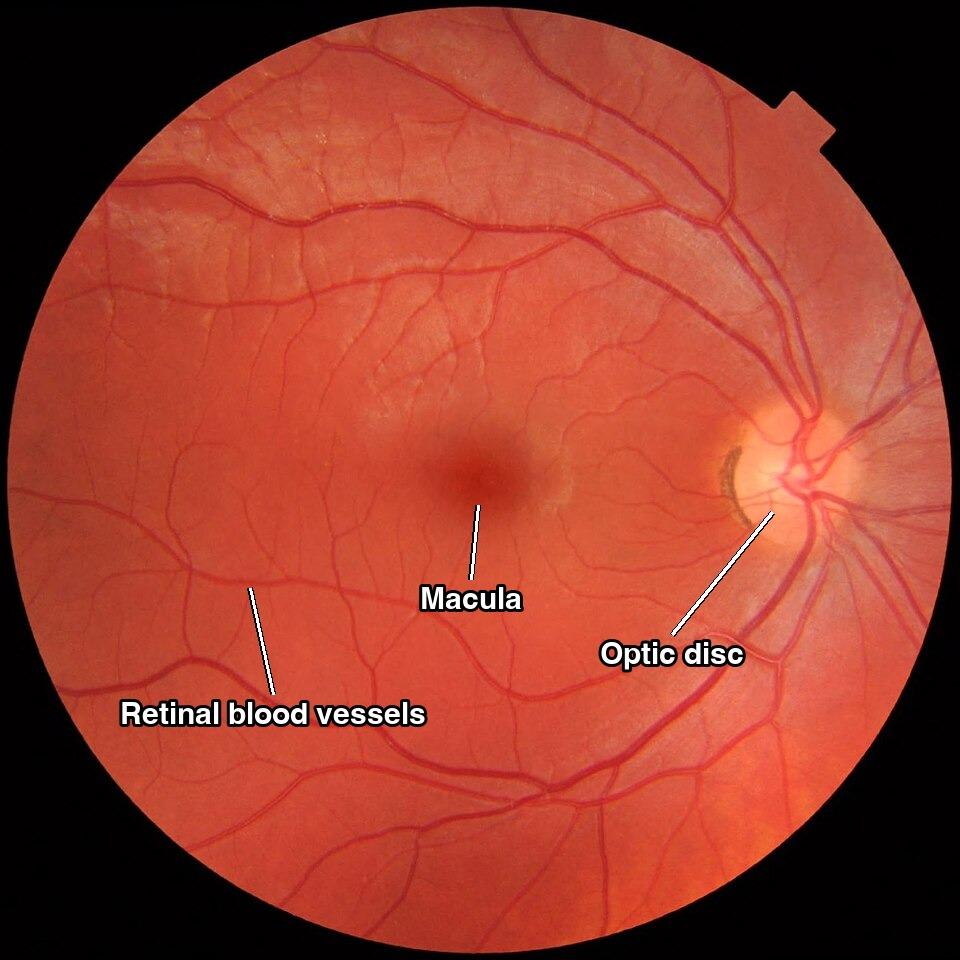
NAION results from reduced blood flow to the front of the optic nerve, the optic disc (Fig. 2), and typically presents as sudden, painless vision loss in one eye that may be noticed on waking. [1, 15] FDA lists blurred or missing areas of vision, distorted color and reduced central sharpness as symptoms. [1] It names smoking, diabetes, high blood pressure, sleep apnea, anemia and kidney disease as possible risk factors. [1]
Background incidence sets the scale. FDA cites 2.3 to 10.2 cases per 100,000 adults over 50 each year. [1] A Rochester Epidemiology Project study by Foster and colleagues recorded 10.19 per 100,000 in that age group in Olmsted County, Minnesota, with the second eye involved in 21.2% of patients. [16]
Several of those risk factors are common in the people GLP-1 receptor agonists are prescribed for. A 2016 meta-analysis by Wu and colleagues reported an odds ratio of 6.18 for NAION with obstructive sleep apnea. [17] Overlap of risk factors like this is the reason FDA gave for finding its adverse event reports challenging to interpret. [1]
Most Published Studies Report an Increased Risk and Low Absolute Rates
The Index Study and the National Registries
Hathaway and colleagues reported in JAMA Ophthalmology in July 2024 that, among patients seen at one neuro-ophthalmology service, semaglutide was associated with a hazard ratio of 4.28 for NAION in type 2 diabetes and 7.64 in overweight or obesity. [2] FDA cited the study as the starting point for its review and noted several limitations. [1, 2]
National registries followed. Among 424,152 Danes with type 2 diabetes, the hazard ratio was 2.19 (Grauslund and colleagues). [9] A Danish and Norwegian registry study with an SGLT-2 inhibitor comparator, by Simonsen and colleagues, gave a pooled hazard ratio of 2.81 and an excess of 1.41 cases per 10,000 person-years. [4]
Large Network Studies and Target Trial Emulations
The largest study, by Cai and colleagues, drew on 14 databases in the Observational Health Data Sciences and Informatics (OHDSI) network covering 37.1 million people with type 2 diabetes. [3] It recorded 14.5 NAION cases per 100,000 person-years among new semaglutide users. [3]
Under the study’s broader NAION definition, cohort comparisons against empagliflozin, sitagliptin and glipizide were not statistically significant. [3] A stricter definition gave a hazard ratio of 2.27 against empagliflozin, and the self-controlled case series gave an incidence rate ratio of 1.32. [3]
Reynolds and colleagues emulated a randomized trial in US claims data for adults aged 18 to 65 with type 2 diabetes and reported an 18-month excess of 3.0 ischemic optic neuropathy cases per 10,000 against SGLT-2 inhibitors and 3.6 against DPP-4 inhibitors. [5] The authors translated those figures into one additional case over 18 months for every 3,333 and 2,778 patients started, respectively. [5]
Results from TriNetX, a US electronic health record network, vary with design. Hsu and colleagues found a hazard ratio of 2.39 at two years in diabetes. [10] Wang and colleagues estimated 1.76 for semaglutide or tirzepatide against other glucose-lowering drugs, including other GLP-1 receptor agonists. [11]
In the analysis by Abbass and colleagues, also in TriNetX, there was no increase, with a relative risk of 0.70 for semaglutide in type 2 diabetes. [13]
Meta-Analyses and the Randomized Trial Record
| Synthesis | Studies pooled | Result reported |
|---|---|---|
| Nogueira et al., Diabetes Care 2026 [6] | 15 studies, 8 of them randomized, more than 1.5 million patients | Odds ratio 1.70 (95% CI 1.23 to 2.36); absolute risk 0.09%; risk difference 0.037%, about 2,700 patients per additional case |
| Liu et al., Ophthalmology 2026 [7] | 8 randomized trials and 8 observational studies of semaglutide | Observational hazard ratio 1.85 in diabetes; randomized relative risk 1.76 in diabetes, not statistically significant |
| Silverii et al., Diabetes Obes Metab 2025 [8] | 69 randomized trials of at least 12 months | 8 vs 4 ischemic optic neuropathy events; odds ratio 1.53, not statistically significant |
Across the three syntheses the direction is consistent and the randomized data carry wide uncertainty, because individual trials were not designed or powered to detect an event this rare. [6, 7, 8] FDA’s own 126-trial pool is larger by number of trials than any of the published trial pools above, the largest of which, by Silverii and colleagues, combined 69 trials. [1, 6, 7, 8]
One study addresses tirzepatide directly, comparing it with other GLP-1 receptor agonists in type 2 diabetes (Hong and colleagues). [12] It reported a lower NAION hazard with tirzepatide, a comparison within the class whose design did not measure risk relative to non-users. [12] FDA’s requirement applies to tirzepatide and every other listed product. [1]
The Clinical Actions FDA Describes
FDA asks health care professionals to tell patients to report sudden, painless vision loss, visual field defects or other visual disturbances in one eye immediately, and to refer a suspected case promptly to an ophthalmologist. [1, 18] The agency advises considering discontinuation of the GLP-1 receptor agonist in a patient who develops NAION unless the benefits clearly outweigh the risk. [1] It also notes that patients with a history of NAION are at increased risk of recurrence. [1]
The North American Neuro-Ophthalmology Society (NANOS) and the American Academy of Ophthalmology (AAO) reached a similar position in their 2026 consensus statement. [14] The statement notes that many studies report a small possible increase while some find none and that the overall magnitude of the risk remains low, and it recommends shared decision-making with patients. [14]
FDA describes NAION as a rare but serious condition and asks that sudden vision changes in one eye be reported immediately.
Implications for Practices Prescribing Compounded Preparations
The labeling change reaches patients through the approved products’ labeling. [1] Compounded preparations are made with semaglutide or tirzepatide as the active ingredient and have no FDA-approved labeling. [19] FDA’s notice does not address them, and FDA states that unapproved versions do not undergo its review for safety, effectiveness or quality. [1, 19]
FDA’s notice does not say how the information reaches patients who receive compounded preparations. The points below are ones a practice may wish to raise with its own clinical leadership and counsel, each drawn from FDA’s published statements.
- FDA asks health care professionals to instruct patients to report sudden vision changes in one eye immediately. [1, 18]
- FDA states that patients with a history of NAION are at increased risk of recurrence, and it names smoking, diabetes, high blood pressure, sleep apnea, anemia and kidney disease as possible risk factors. [1]
- FDA advises prompt referral to an ophthalmologist when NAION is suspected. [1, 18]
- FDA encourages health care professionals, patients and compounders to report adverse events with these medications through MedWatch. [19, 20]
- FDA states that compounded drugs are not FDA-approved. [19]
ExaVeyra’s scientific team can point practices to the regulatory and literature sources cited in this guide. The related guides below cover the compounding rules that apply after the shortages ended.
Educational Disclaimer: This article is for educational purposes only and does not constitute medical or legal advice. It does not identify any material, compound, device setting or protocol as safe, effective or appropriate for any patient, and it is not intended to diagnose, treat, cure, or prevent any disease. Questions about a treatment belong with the reader’s own licensed provider. Exosome material is supplied for topical aesthetic use by licensed practitioners. No exosome product is FDA-approved for any use, and ExaVeyra Sciences makes no statement about administration, route, or outcome. Compounded medications are not FDA-approved. They are prepared by a 503A compounding pharmacy licensed by the Texas State Board of Pharmacy for an individual patient against that patient’s prescription, and are available to NPI-verified licensed practitioners only, in the states where the pharmacy is licensed. Product, device and brand names mentioned are trademarks of their respective owners and are used only to identify the products discussed. Their mention is not an endorsement, and those owners have not reviewed or endorsed this article. ExaVeyra Sciences is a supplier and takes no part in any diagnosis, treatment decision, or plan of care. Findings described are attributed to the peer-reviewed literature, trial registries and agencies cited. The content of these guides is provided for general informational purposes only. It does not constitute legal, medical, or regulatory advice, and does not establish that any particular product or practice is compliant. Regulatory requirements vary by state and depend on the circumstances of each practice. Each practitioner should consult their own legal counsel and the applicable state licensing boards before acting on anything stated here.
References
- 1.U.S. Food and Drug Administration. FDA Requires Safety Labeling Changes for Glucagon-Like Peptide-1 Receptor Agonists (GLP-1 RAs) Due to Potential Increased Risk of Rare But Serious Eye Condition. Drug Safety Communication, 9 November 2026. https://www.fda.gov/drugs/drug-safety-communications/fda-requires-safety-labeling-changes-glucagon-peptide-1-receptor-agonists-glp-1-ras-due-potentialAgency drug safety communication. Carries in this article: the class-wide labeling requirement, FDA’s meta-analysis of 126 randomized trials (134,253 patients, 15 probable NAION events, 6.4 against 3.8 per 100,000 person-years), its Sentinel cohort results, the symptoms and risk factors it lists, the background incidence it cites and the clinical actions it describes.
- 2.Hathaway JT, Shah MP, Hathaway DB, Zekavat SM, Krasniqi D, Gittinger JW Jr, et al. Risk of Nonarteritic Anterior Ischemic Optic Neuropathy in Patients Prescribed Semaglutide. JAMA Ophthalmol. 2024;142(8):732-739. PMID 38958939. doi:10.1001/jamaophthalmol.2024.2296Retrospective matched cohort from one academic neuro-ophthalmology service, December 2017 to November 2023. Carries in this article: hazard ratios for NAION with semaglutide of 4.28 (95% CI 1.62 to 11.29) in type 2 diabetes and 7.64 (95% CI 2.21 to 26.36) in overweight or obesity, in a referral-center population. Disclosure: the study reported partial funding from Research to Prevent Blindness, which had no role in the study, and no conflicts of interest.
- 3.Cai CX, Hribar M, Baxter S, Goetz K, Swaminathan SS, Flowers A, et al. Semaglutide and Nonarteritic Anterior Ischemic Optic Neuropathy. JAMA Ophthalmol. 2025;143(4):304-314. PMID 39976940. doi:10.1001/jamaophthalmol.2024.6555Retrospective network study across 14 databases in the OHDSI network, covering 37.1 million adults with type 2 diabetes including 810,390 new semaglutide users, with a self-controlled case series. Carries in this article: 14.5 NAION cases per 100,000 person-years on semaglutide; cohort comparisons that were not statistically significant under the broader definition; a hazard ratio of 2.27 (95% CI 1.16 to 4.46) against empagliflozin under the stricter definition; and an incidence rate ratio of 1.32 (95% CI 1.14 to 1.54). Disclosure: supported by National Institutes of Health grants and Veterans Affairs resources; several authors are employees or shareholders of Johnson & Johnson.
- 4.Simonsen E, Lund LC, Ernst MT, Hjellvik V, Hegedüs L, Hamann S, et al. Use of semaglutide and risk of non-arteritic anterior ischemic optic neuropathy: A Danish-Norwegian cohort study. Diabetes Obes Metab. 2025;27(6):3094-3103. PMID 40098249. doi:10.1111/dom.16316Active-comparator new-user cohort in the national registries of Denmark and Norway, 61,377 semaglutide initiators with type 2 diabetes compared with SGLT-2 inhibitor initiators. Carries in this article: a pooled adjusted hazard ratio of 2.81 (95% CI 1.67 to 4.75) and an incidence rate difference of 1.41 (95% CI 0.53 to 2.29) per 10,000 person-years. Disclosure: funded by the Independent Research Fund Denmark; several authors report regulator-mandated studies funded by Novo Nordisk and others, and one unrestricted Novo Nordisk grant, all declared unrelated to this work.
- 5.Reynolds KR, O’Malley KM, Roy JA, Dave CV. Glucagon-like Peptide-1 Receptor Agonists and Risk for Ischemic Optic Neuropathy: A Target Trial Emulation. Ann Intern Med. 2026;179(9):1244-1253. PMID 42441967. doi:10.7326/ANNALS-25-00860Target trial emulation in US commercial claims, January 2017 to December 2022, in adults aged 18 to 65 with type 2 diabetes; the outcome was ischemic optic neuropathy. Carries in this article: 18-month risk differences of 3.0 (95% CI 0.4 to 5.7) per 10,000 against SGLT-2 inhibitors and 3.6 (95% CI 1.1 to 6.1) against DPP-4 inhibitors, and the authors’ figures of one additional case per 3,333 and 2,778 patients. Disclosure: funded by the National Institutes of Health.
- 6.Nogueira A, Rassi TNO, Iqbal A, Felix N, Alghaith O, Khan A, et al. Association Between GLP-1 Receptor Agonists and Ischemic Optic Neuropathy: A Meta-analysis. Diabetes Care. 2026;49(5):724-729. PMID 41498755. doi:10.2337/dc25-1238Systematic review and meta-analysis of 15 longitudinal studies, 8 of them randomized trials, with more than 1.5 million patients. Carries in this article: an odds ratio of 1.70 (95% CI 1.23 to 2.36), an absolute NAION risk of 0.09% and a risk difference of 0.037%, about 2,700 patients per additional case.
- 7.Liu Z, Raveendran D, Fourlanos S, Chong EW. Rate and Risk of Nonarteritic Anterior Ischemic Optic Neuropathy with Semaglutide Use for Diabetes and Weight Loss: A Systematic Review and Meta-Analysis. Ophthalmology. 2026;133(5):589-598. PMID 41475544. doi:10.1016/j.ophtha.2025.12.022Systematic review and meta-analysis of 8 randomized trials and 8 observational studies of semaglutide. Carries in this article: an observational hazard ratio of 1.85 (95% CI 1.20 to 2.85) in diabetes and a randomized relative risk of 1.76 (95% CI 0.43 to 7.25) in diabetes that was not statistically significant.
- 8.Silverii GA, Pala L, Cresci B, Mannucci E. Glucagon-like peptide 1 (GLP1) receptor agonists and risk for ischemic optic neuropathy: A meta-analysis of randomised controlled trials. Diabetes Obes Metab. 2025;27(2):1005-1009. PMID 39563616. doi:10.1111/dom.16076Meta-analysis of 69 randomized trials of at least 12 months, published as a letter and read in full text. Carries in this article: 8 ischemic optic neuropathy events with GLP-1 receptor agonists against 4 with comparators, an odds ratio of 1.53 (95% CI 0.53 to 4.44), and the authors’ finding that the trials were underpowered for an event this rare. Disclosure: the senior author’s unit received research grants from Abbott, Eli Lilly and Novo Nordisk, and the senior author received fees from Novo Nordisk, Eli Lilly and others, outside the submitted work.
- 9.Grauslund J, Taha AA, Molander LD, Kawasaki R, Möller S, Højlund K, et al. Once-weekly semaglutide doubles the five-year risk of nonarteritic anterior ischemic optic neuropathy in a Danish cohort of 424,152 persons with type 2 diabetes. Int J Retina Vitreous. 2024;10(1):97. PMID 39696569. doi:10.1186/s40942-024-00620-xNationwide Danish registry cohort of 424,152 people with type 2 diabetes, 2018 to 2024. Carries in this article: an adjusted hazard ratio of 2.19 (95% CI 1.54 to 3.12) for NAION with semaglutide. Disclosure: the authors declare no competing interests.
- 10.Hsu AY, Kuo HT, Wang YH, Lin CJ, Shao YC, Chiang CC, et al. Semaglutide and Nonarteritic Anterior Ischemic Optic Neuropathy Risk Among Patients With Diabetes. JAMA Ophthalmol. 2025;143(5):400-407. PMID 40146102. doi:10.1001/jamaophthalmol.2025.0349Retrospective matched cohort in TriNetX, 174,584 patients with diabetes on semaglutide and 174,584 matched patients on other antidiabetic drugs. Carries in this article: a hazard ratio of 2.39 (95% CI 1.37 to 4.18) at two years. Disclosure: no conflicts of interest reported.
- 11.Wang L, Volkow ND, Kaelber DC, Xu R. Semaglutide or Tirzepatide and Optic Nerve and Visual Pathway Disorders in Type 2 Diabetes. JAMA Netw Open. 2025;8(8):e2526327. PMID 40788646. doi:10.1001/jamanetworkopen.2025.26327Target trial emulation in a US electronic health record network (TriNetX), 79,699 patients with type 2 diabetes prescribed semaglutide or tirzepatide and 79,699 matched patients on other antidiabetic drugs, including other GLP-1 receptor agonists. Carries in this article: a hazard ratio of 1.76 (95% CI 1.01 to 3.07) for NAION. Disclosure: supported by National Institutes of Health grants; no conflicts of interest reported.
- 12.Hong AT, Lin F, Keenan JD, Stewart JM. Ocular Outcomes with Tirzepatide versus Glucagon-like Peptide-1 Receptor Agonists in Type 2 Diabetes. Ophthalmol Retina. 2026;10(6):625-632. PMID 41655764. doi:10.1016/j.oret.2026.02.002Retrospective matched cohort in a US electronic health record network, adults with type 2 diabetes starting tirzepatide or another GLP-1 receptor agonist, 102,590 per group. Carries in this article: a lower NAION hazard with tirzepatide than with other GLP-1 receptor agonists, a comparison within the class that does not estimate risk against non-users.
- 13.Abbass NJ, Nahlawi R, Shaia JK, Allan KC, Kaelber DC, Talcott KE, et al. The Effect of Semaglutide and GLP-1 RAs on Risk of Nonarteritic Anterior Ischemic Optic Neuropathy. Am J Ophthalmol. 2025;274:24-31. PMID 40015592. doi:10.1016/j.ajo.2025.02.025Retrospective matched cohort in TriNetX of patients with type 2 diabetes or with overweight or obesity. Carries in this article: no increase in NAION, with a five-year relative risk of 0.70 (95% CI 0.52 to 0.94) for semaglutide in type 2 diabetes. Disclosure: the study reported funding from the National Institutes of Health, Research to Prevent Blindness and the Cleveland Eye Bank Foundation; some authors report fees from ophthalmic companies.
- 14.DeParis SW, Oke I, Gaier ED, Moss HE, MacIntosh PW, Gilbert AL, et al. Glucagon-Like Peptide-1 Receptor Agonists and the Risk of Non-Arteritic Anterior Ischemic Optic Neuropathy: A Consensus Statement by the North American Neuro-Ophthalmology Society and the American Academy of Ophthalmology. Ophthalmology. 2026;133(8):1029-1035. PMID 42132708. doi:10.1016/j.ophtha.2026.04.008Consensus statement of the North American Neuro-Ophthalmology Society and the American Academy of Ophthalmology. Carries in this article: that many studies report a small possible increase in NAION risk while some report none, that the overall magnitude of the risk remains low, and the recommendation for shared decision-making. Disclosure: the authors report no proprietary or commercial interest.
- 15.Biousse V, Newman NJ. Ischemic Optic Neuropathies. N Engl J Med. 2015;372(25):2428-2436. PMID 26083207. doi:10.1056/NEJMra1413352Narrative review in the New England Journal of Medicine. Carries in this article: the definition and clinical presentation of NAION; no figures are taken from it.
- 16.Foster RC, Bhatti MT, Crum OM, Lesser ER, Hodge DO, Chen JJ. Reexamining the Incidence of Nonarteritic Anterior Ischemic Optic Neuropathy: A Rochester Epidemiology Project Study. J Neuroophthalmol. 2024;44(3):337-341. PMID 38358828. doi:10.1097/WNO.0000000000002102Population-based incidence study in the Rochester Epidemiology Project, Olmsted County, Minnesota, 1990 to 2016. Carries in this article: an incidence of 10.19 per 100,000 (95% CI 8.15 to 12.23) at age 50 and over, and second-eye involvement in 21.2% of patients. Disclosure: the authors report no conflicts of interest.
- 17.Wu Y, Zhou LM, Lou H, Cheng JW, Wei RL. The Association Between Obstructive Sleep Apnea and Nonarteritic Anterior Ischemic Optic Neuropathy: A Systematic Review and Meta-Analysis. Curr Eye Res. 2016;41(7):987-992. PMID 26443989. doi:10.3109/02713683.2015.1075221Systematic review and meta-analysis of five studies of obstructive sleep apnea and NAION. Carries in this article: a pooled odds ratio of 6.18 (95% CI 2.00 to 19.11).
- 18.U.S. Food and Drug Administration. MedWatch Alert: FDA Requires Safety Labeling Changes for Glucagon-Like Peptide-1 Receptor Agonists (GLP-1 RAs) Due to Potential Increased Risk of Rare But Serious Eye Condition: FDA Safety Communication. MedWatch Safety Alert, 9 November 2026. https://www.fda.gov/safety/medical-product-safety-information/medwatch-alert-fda-requires-safety-labeling-changes-glucagon-peptide-1-receptor-agonists-glp-1-rasAgency MedWatch alert summarizing the Drug Safety Communication, current as of 9 November 2026. Carries in this article: the labeling requirement and the clinical actions FDA describes, including prompt referral to an ophthalmologist.
- 19.U.S. Food and Drug Administration. FDA’s Concerns with Unapproved GLP-1 Drugs Used for Weight Loss. Drug Alerts and Statements, updated 1 October 2026. https://www.fda.gov/drugs/drug-alerts-and-statements/fdas-concerns-unapproved-glp-1-drugs-used-weight-lossAgency statement on compounded and other unapproved GLP-1 drugs, current as of 1 October 2026. Carries in this article: that unapproved versions do not undergo FDA review for safety, effectiveness or quality, and FDA’s encouragement to report adverse events with these medications through MedWatch.
- 20.U.S. Food and Drug Administration. MedWatch: The FDA Safety Information and Adverse Event Reporting Program. Updated 20 November 2026. https://www.fda.gov/safety/medwatch-fda-safety-information-and-adverse-event-reporting-programAgency reporting program page, current as of 20 November 2026. Carries in this article: where health care professionals and patients report suspected adverse events to FDA.
Image credits
- Fig. 1U.S. Food and Drug Administration, Wikimedia Commons, resized, Public domain. ↩
- Fig. 2Mikael Häggström, Wikimedia Commons, resized and labeled, CC0 1.0. Häggström M. Medical gallery of Mikael Häggström 2014. WikiJournal of Medicine. 2014;1(2). DOI article ↩