GHK-Cu Biocosmetic Cream (GHK-Cu 3% / Estriol 0.003%)
Solo para consultorios con licencia
Crema tópica de GHK-Cu y estriol
- Presentación
- Crema tópica
- Especificación
- 30 g
- Origen
- Una farmacia 503A con licencia de su Junta Estatal de Farmacia
Formulaciones disponibles
Preparadas a pedido por nuestra farmacia asociada 503A; no es una recomendación de dosis. Las fechas límite de uso se asignan al momento de la preparación y se imprimen en cada etiqueta, y rige el límite aplicable más corto.
| Concentración y tamaño | Fecha límite de uso | Cantidad por despacho |
|---|---|---|
| (GHK-Cu 3% / Estriol 0.3%) 30 g | 180 días | Hasta 5 unidades |
- Norma de preparación
- USP <795>, no estéril
- Precios
- Disponibles al aprobarse la cuenta verificada
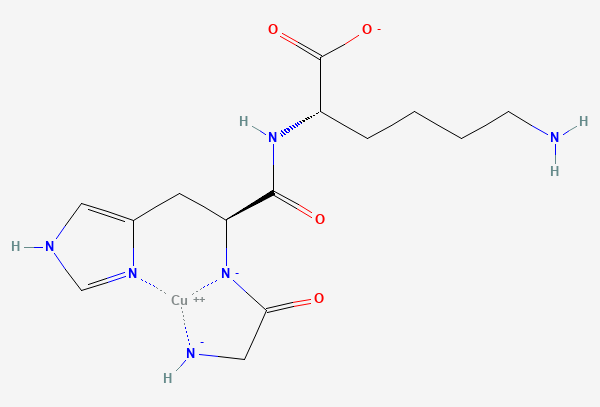
Mecanismo y función fisiológica
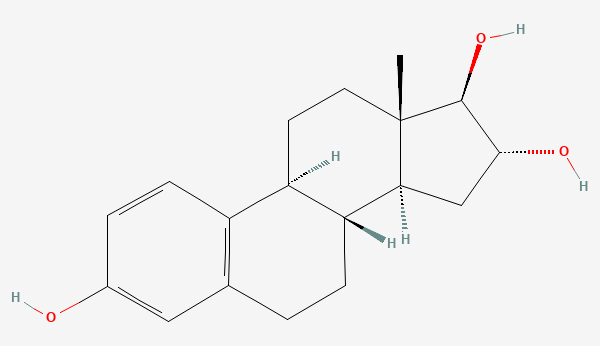
GHK-Cu combinado con estriol en un porcentaje bajo. El estriol es 16-alfa-hidroxiestradiol, y ese tercer hidroxilo acorta el tiempo que ocupa el receptor de estrógenos, que es la mayor parte de lo que lo distingue del estradiol.
Aplicaciones clínicas y de investigación
Se analiza en la literatura dermatológica sobre los estrógenos tópicos y en la literatura endocrina sobre las preparaciones hormonales magistrales, donde las declaraciones de consenso describen conjuntamente la base de evidencia y la situación regulatoria.
Biosíntesis, manejo y origen
El estriol es el tercero de los estrógenos clásicos, y su nombre es su fórmula: tres grupos hidroxilo, en el carbono 3, en 16-alfa y en 17-beta. El estradiol tiene dos de ellos, y la estrona uno junto con una cetona. Ese hidroxilo adicional en 16-alfa es un cambio pequeño y decisivo, porque disminuye la afinidad por ambos subtipos de receptor de estrógenos y, lo que tiene más consecuencias, acorta el tiempo que la molécula permanece unida una vez que llega. El tiempo de ocupación, y no solo la afinidad, rige la respuesta transcripcional; por eso la literatura endocrina describe el estriol como de acción corta y no simplemente como débil.
De ello se derivan dos consecuencias fáciles de pasar por alto. Como el estriol compite por el mismo sitio y produce una respuesta más breve, puede comportarse como antagonista parcial cuando también hay estradiol presente, de modo que lo que hace depende de lo que haya en el sistema y no es fijo. Su contexto natural es el embarazo: la unidad fetoplacentaria produce estriol en cantidad a partir del sulfato de DHEA suprarrenal fetal, que se hidroxila en 16-alfa en el hígado fetal antes de que la placenta lo aromatice. La misma DHEA descrita en la página de DHEA es el sustrato de origen.
La situación regulatoria debe exponerse con claridad y no dejarse a la inferencia. No existe ningún producto farmacéutico de estriol aprobado por la FDA en los Estados Unidos. El estriol está aprobado y se comercializa en partes de Europa, pero no aquí, por lo que cualquier preparación de estriol dispensada en los EE. UU. es, por definición, una preparación magistral. Las declaraciones de consenso profesional sobre la terapia hormonal bioidéntica magistral, incluida la del American College of Obstetricians and Gynecologists, describen la base de evidencia como limitada y señalan que las preparaciones magistrales no están sujetas a las normas de fabricación y etiquetado que deben cumplir los productos aprobados. Una crema que contiene un estrógeno funciona como un medicamento, se comercialice como se comercialice, y ese es el marco que debe aplicarse al decidir si se mantiene en inventario.
Lo que hace el estrógeno tópico en la piel tiene su propia literatura, pequeña. Una revisión sistemática publicada en 2026 examinó el estrógeno tópico en el envejecimiento cutáneo y caracterizó la evidencia disponible como limitada tanto en cantidad como en calidad. La concentración aquí es muy baja, tres milésimas de uno por ciento, y la concentración es toda la cuestión para saber si una hormona tópica permanece local: cuanto más baja, menor la exposición sistémica y, por la misma aritmética, menor todo lo demás. Esa disyuntiva corresponde al prescriptor y no a la formulación.
El manejo depende del cobre y no del esteroide, y esa química funciona igual en todas las preparaciones de GHK-Cu: los agentes quelantes compiten por el metal, los agentes reductores cambian su estado de oxidación y el tono azul de un complejo intacto es una comprobación visible. Se explica por completo en la página de la solución capilar GHK-Cu y no se repite aquí. Es una crema tópica no estéril elaborada conforme al Capítulo General 795 de la USP, con una fecha límite de uso asignada en el momento de la preparación. Esta composición no está aprobada por la FDA, los medicamentos magistrales no son productos farmacéuticos terminados aprobados por la FDA, y nada en esta página afirma que alguna preparación sea adecuada para un paciente determinado.
Referencias revisadas por pares
Topical estrogen for skin aging: a systematic review of safety and efficacy
Farkas E, Goldblatt A, Nehorayan I
Journal of the American Academy of Dermatology · 2026 · PMID: 40854497
Perkins MS, Louw-du Toit R, Africander D
Journal of Steroid Biochemistry and Molecular Biology · 2017 · PMID: 28743541
Compounded bioidentical menopausal hormone therapy: ACOG clinical consensus no. 6
American College of Obstetricians and Gynecologists
Obstetrics and Gynecology · 2023 · PMID: 37856860
Concerns about safety and efficacy of compounded bioidentical hormone therapy
Pinkerton JV
Menopause · 2021 · PMID: 34127630
Fuentes de las figuras
- [1]PubChem CID 139035031, GHK-Cu. National Center for Biotechnology Information, PubChem. Public domain.
- [2]PubChem CID 5756, Estriol. National Center for Biotechnology Information, PubChem. Public domain.
¿Desea incorporar GHK-Cu Biocosmetic Cream a su protocolo?
Las formulaciones magistrales son dispensadas por nuestra farmacia asociada 503A, con licencia de la Junta Estatal de Farmacia de Texas, con una receta específica para cada paciente. ¿Prefiere una cotización formal? Solicite precios para una formulación específica.