Semax and Selank: Reading an Unreplicated Literature
Case reports or small series only. No controlled trial of meaningful size.
Semax and selank are short synthetic peptides developed in Russia, used clinically there, and largely unknown to regulators elsewhere. Both have a real published literature. Almost none of it has been replicated outside the research tradition that produced it.
How to read a literature in that position is the most useful thing this page can offer. It is an evidence summary, not a product page. ExaVeyra does not offer either for sale.
Also known as: semax, selank, ACTH(4-10) analog, tuftsin analog.
Understanding the molecular properties
Semax is a heptapeptide, sequence MEHFPGP. It corresponds to residues 4 to 7 of adrenocorticotropic hormone, methionine-glutamate-histidine-phenylalanine, with a proline-glycine-proline tail in place of the natural residues 8 to 10. It is conventionally described as an ACTH(4-10) analog for that reason, though it is a substitution rather than an extension: seven residues in, seven residues out. The tail is the design. The natural fragment is cleared very quickly, and the substitution slows degradation without restoring the hormonal activity of the parent, so the molecule retains the fragment’s reported neuroactive properties without acting as a corticotropin.
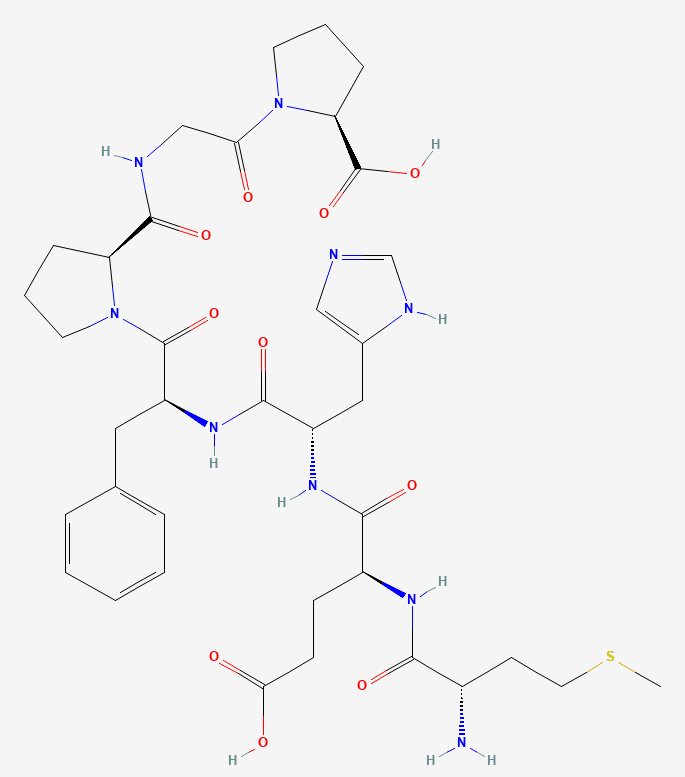
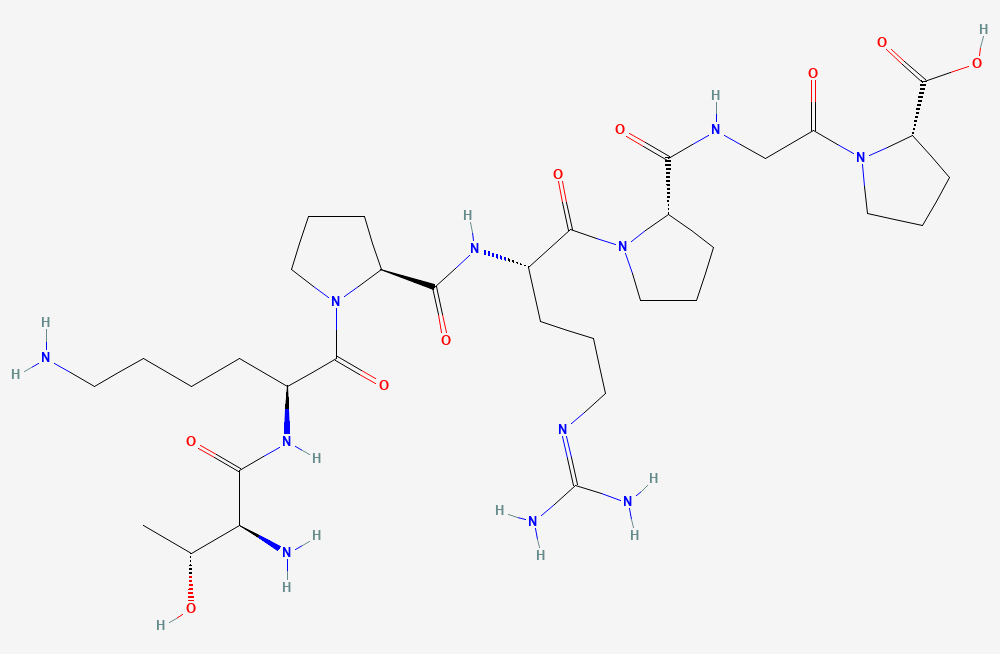
Selank is a heptapeptide, sequence TKPRPGP, and here the construction genuinely is an extension: tuftsin, a four-residue fragment released from immunoglobulin G, carrying the same proline-glycine-proline tail for the same reason. Tuftsin itself is an immunomodulatory fragment, which is why selank appears in literature on cytokines as well as on anxiety.
- Both are heptapeptides, roughly 750 to 900 daltons.
- Both carry a proline-glycine-proline tail to resist degradation, but reach it differently: selank extends tuftsin, while semax substitutes for the last three residues of its parent fragment.
- Semax derives from ACTH; selank from tuftsin.
- Both are administered intranasally in most published work, which is unusual and relevant to how they are compounded.
What the literature proposes
For semax the recurring theme is neurotrophic signaling, with reported effects on BDNF expression and on outcomes in animal models of ischemia and neurodegeneration. Recent work extends this in directions that are chemically specific rather than general: a 2025 study in the British Journal of Pharmacology reports the peptide acting on the mu opioid receptor gene in a spinal cord injury model, and separate work examines its interaction with copper-induced amyloid aggregation.
For selank the reported activity is anxiolytic and immunomodulatory, consistent with its tuftsin origin, with published work on cytokine profiles under stress and on attenuating signs of opioid withdrawal in animals.
Both are given intranasally in most of this work, which raises a question the literature does not settle: how much of a heptapeptide reaches the brain by that route, and by what path. Nasal administration is often described as bypassing the blood-brain barrier, and the quantitative support for that in humans is considerably thinner than the frequency of the claim suggests.
How to read this literature
The volume is real. Searching either name returns well over a hundred records, and the work is not obviously poor: it includes mechanistic studies, animal models with controls, and some human work. Both compounds are registered medicines in Russia and have been used clinically there for years.
The problem is structural. A large share appears in journals with limited circulation outside the region, some in Russian, and the findings have rarely been reproduced by groups without a connection to the original programs. That is a different situation from a literature that has been tested elsewhere and failed, and it should not be treated as equivalent to one. It is also different from a Western drug approval, which requires evidence generated to a specified standard and reviewed by a regulator that publishes its reasoning.
The honest position is that these compounds are neither disproven nor established by the standard a prescriber in the United States would normally apply, and that the reason is a gap in replication rather than a negative result. Recent appearances in journals such as the British Journal of Pharmacology are the beginning of independent attention, not the conclusion of it.
- Substantial published literature, concentrated in a single research tradition.
- Registered as medicines in Russia; not evaluated by FDA or EMA.
- Little independent replication outside the originating programs.
- Intranasal delivery is assumed more often than it is quantified.
Regulatory position
FDA placed both in category 2 of its interim policy on bulk drug substances for compounding under section 503A, meaning FDA identified significant safety risks, and both nominations were withdrawn by the nominators in April 2026. FDA now carries each under nominations withdrawn, which leaves them on no 503A list for any route, and it still publishes both rationales, reproduced in full:
“Compounded drugs containing semax (heptapeptide) may pose risk for immunogenicity for certain routes of administration due to the potential for aggregation and peptide-related impurities. FDA has no, or limited, safety-related information for proposed routes of administration. Therefore, the agency lacks sufficient information to know whether the drug would cause harm if administered to humans.”
FDA source , checked 2026-09-16
“Compounded drugs containing selank acetate may pose risk for immunogenicity for certain routes of administration due to the potential for aggregation and peptide-related impurities. FDA lacks important information regarding any safety issues raised by selank acetate administered to humans.”
FDA source , checked 2026-09-16
The phrasing in both cases turns on absent information rather than on documented harm, which is consistent with the replication gap described above: a literature FDA cannot readily evaluate produces a finding that FDA has not been able to evaluate it. Registration in another jurisdiction does not substitute, because the evidence and the review that supported it are not available to be assessed on the same terms.
FDA revises this list. The access date appears with each quotation.
Common questions
- Why is the semax and selank literature difficult to assess?
- Because almost none of it has been replicated outside the research tradition that produced it. Both were developed in Russia and are used clinically there, and both have a real published literature. A literature that is real but unreplicated poses a different problem from one that is simply thin, and it calls for different reading.
- What does the published work describe for semax?
- The recurring theme is neurotrophic signaling, with reported effects on BDNF expression and on outcomes in animal models of ischemia and neurodegeneration. More recent work extends this in directions that are chemically specific rather than general.
- Are semax and selank approved outside Russia?
- Neither carries FDA approval, and both are largely unknown to regulators outside the tradition that developed them. This page quotes FDA’s position in full for the substances the agency has evaluated, with the date the wording was accessed.
- How should a practitioner read an unreplicated literature?
- As a hypothesis with support rather than a finding with consensus. Independent replication is what converts one into the other, and its absence is a statement about the state of knowledge rather than about the honesty of the original work.
- Does ExaVeyra supply semax or selank?
- No. ExaVeyra does not supply semax or selank, and nothing on this page is an offer to sell them. They are covered because an unreplicated literature is a specific and recurring problem in this market, and learning to read one is a transferable skill.
Sources
Every source is peer-reviewed and published within the last fifteen years. Each line states what that source is carrying, so nothing is here to pad a count.
- Liu R, Chen Y, Huang H. Semax peptide targets the mu opioid receptor gene Oprm1 to promote deubiquitination and functional recovery after spinal cord injury in female mice. British Journal of Pharmacology. 2025.PMID 40692165
Preclinical
Source 1 supports: Recent independent attention in a mainstream Western pharmacology journal.
- Radchenko AI, Kuzubova EV, Apostol AA. The potential of the peptide drug semax and its derivative for correcting pathological impairments in the animal model of Alzheimer’s disease. Acta Naturae. 2025.PMID 41479572
Preclinical
Source 2 supports: Current work from within the originating research tradition.
- Sciacca MFM, Naletova I, Giuffrida ML. Semax, a synthetic regulatory peptide, affects copper-induced abeta aggregation and amyloid formation in artificial membrane models. ACS Chemical Neuroscience. 2022.PMID 35080861
Clinical study
Source 3 supports: A chemically specific mechanism rather than a general neuroprotective claim.
- Glazova NY, Manchenko DM, Volodina MA. Semax, synthetic ACTH(4-10) analogue, attenuates behavioral and neurochemical alterations following early-life fluvoxamine exposure in white rats. Neuropeptides. 2021.PMID 33418449
Preclinical
Source 4 supports: The ACTH(4-10) derivation described in the identity section.
- Konstantinopolsky MA, Chernyakova IV, Kolik LG. Selank, a peptide analog of tuftsin, attenuates aversive signs of morphine withdrawal in rats. Bulletin of Experimental Biology and Medicine. 2022.PMID 36322304
Preclinical
Source 5 supports: Selank’s tuftsin origin and a representative animal result.
- Leonidovna YA, Aleksandrovna SM, Aleksandrovna TA. The influence of selank on the level of cytokines under the conditions of social stress. Current Reviews in Clinical and Experimental Pharmacology. 2021.PMID 32621722
Preclinical
Source 6 supports: The immunomodulatory strand consistent with a tuftsin analogue.
- Panikratova YR, Lebedeva IS, Sokolov OY. Functional connectomic approach to studying selank and semax effects. Doklady Biological Sciences. 2020.PMID 32342318
Clinical study
Source 7 supports: Human imaging work, and an example of the venues most of this literature occupies.
- Siebert A, Gensicka-Kowalewska M, Cholewinski G. Tuftsin: properties and analogs. Current Medicinal Chemistry. 2017.PMID 28745220
Narrative review
Source 8 supports: The parent fragment selank is built from.
- Vyunova TV, Andreeva LA, Shevchenko KV. Synacton and individual activity of synthetic and natural corticotropins. Journal of Molecular Recognition. 2017.PMID 27921334
Preclinical
Source 9 supports: Why an ACTH fragment can be neuroactive without acting as a corticotropin.
- Mavrych V, Shypilova I, Bolgova O. Therapeutic peptides in gerontology: mechanisms and applications for healthy aging. Frontiers in Aging. 2026.PMID 42021992
Narrative review
Source 10 supports: A recent survey placing these among peptides marketed for aging.
Figure sources
- [1]PubChem CID 9811102, Semax. National Center for Biotechnology Information, PubChem. Public domain.
- [2]PubChem CID 11765600, Selank. National Center for Biotechnology Information, PubChem. Public domain.
Related
Reviewed 2026-08-16 by Benn Bluestein-Veyra, M.Sc. Organic Chemistry. This page is an evidence summary, not medical advice, and not an offer to sell. ExaVeyra does not supply Semax and selank. Compounded medications are not FDA-approved finished drug products.