Fragment Peptides: AOD-9604 and PEG-MGF
Animal and laboratory work only. A result in a rodent does not establish an effect in a person.
A recurring pattern in the peptide market is the fragment: a short piece of a well-studied endogenous protein, sold on the strength of research into the whole. AOD-9604 and PEG-MGF are two examples, and TB-500 is a third covered separately.
This page separates parent from fragment in each case. It is an evidence summary, not a product page. ExaVeyra does not offer either for sale.
Also known as: AOD-9604, PEG-MGF, mechano growth factor, hGH 176-191.
What each fragment is
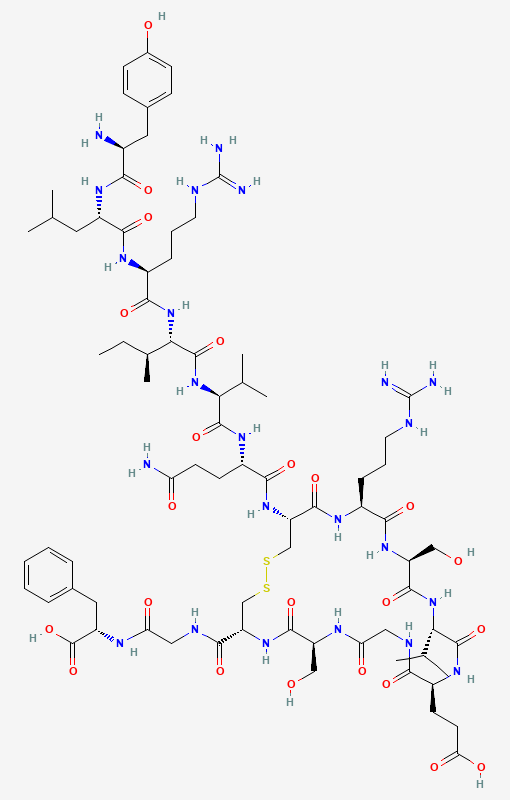
AOD-9604 is a modified fragment corresponding to residues 176 to 191 at the C-terminal end of human growth hormone, with a tyrosine added. Human growth hormone is 191 residues; this is sixteen of them. The rationale offered was that the lipolytic activity attributed to that region might be separable from the growth-promoting activity of the whole hormone, giving a molecule that affected fat metabolism without the rest of growth hormone’s effects.
MGF, mechano growth factor, is not a synthetic fragment but a naturally occurring splice variant of insulin-like growth factor 1, formally IGF-1Ec, produced in muscle in response to mechanical loading and damage. PEG-MGF is that variant with polyethylene glycol attached to slow clearance. Pegylation is a well-established pharmaceutical technique and it changes the molecule’s behavior substantially, so PEG-MGF is not interchangeable with endogenous MGF either.
- AOD-9604: 16 residues from a 191-residue hormone, plus an added tyrosine.
- PEG-MGF: a pegylated form of the IGF-1Ec splice variant, itself distinct from mature IGF-1.
- Both are analytically distinguishable from their parents, and anti-doping laboratories have developed methods to do so.
- Neither inherits the parent’s evidence base by virtue of sharing a sequence with it.
Parent and fragment
The IGF-1 splice variant literature is genuinely substantial and largely independent of the peptide market. Work describes MGF generation under mechanical stimulus in osteoblasts, protective effects in growth plate chondrocytes under overload, a role in neurogenesis in the aging mouse brain, and expression changes in intestinal muscle in fibrostenotic Crohn’s disease. That is real biology about an endogenous splice variant.
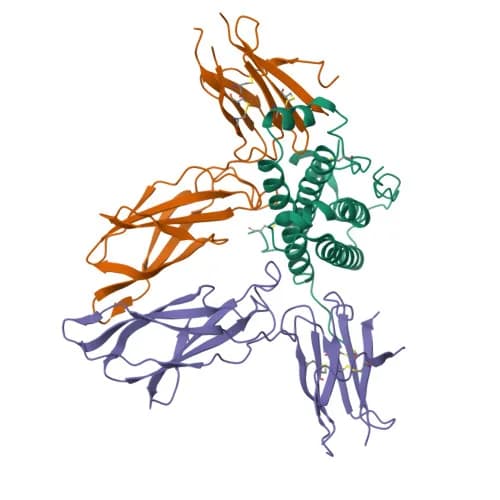
What it is not is a body of evidence about an injected pegylated synthetic version in people. The step from "this variant is produced locally in loaded muscle and does something" to "administering a pegylated analog systemically produces a useful result" is the entire question, and the literature does not take it.
For AOD-9604 the fragment-specific literature is thinner still: analytical work characterizing the compound and its metabolism for doping control, and an animal study of intra-articular injection in a rabbit osteoarthritis model. The lipolysis hypothesis that motivated it has not produced a body of controlled human evidence.
How far the evidence has got
For both fragments, not far, and the reason is instructive. Much of the fragment-specific literature that exists comes from anti-doping science rather than from therapeutic development: laboratories have characterized these compounds because they needed to detect them, not because a development program generated efficacy data. That is a telling provenance for a molecule being sold clinically.
The 2026 specialty reviews in Sports Medicine and JAAOS Global Research and Reviews group both with other unapproved injectable peptides and find the human evidence insufficient.
- No controlled human trial supporting either fragment for the uses claimed.
- Parent literatures are substantial and do not transfer without evidence that they do.
- Much fragment-specific work originates in doping-control analysis.
- Pegylation makes PEG-MGF pharmacologically distinct from the endogenous variant it is named for.
Regulatory position
FDA placed both in category 2 of its interim policy on bulk drug substances for compounding under section 503A, meaning FDA identified significant safety risks, and both nominations were withdrawn by the nominators in April 2026. FDA now carries each under nominations withdrawn, which leaves them on no 503A list for any route, and it still publishes both rationales, reproduced in full:
“Compounded drugs containing AOD-9604 may pose significant risk for immunogenicity for certain routes of administration and may have complexities with regard to peptide-related impurities and API characterization. FDA has identified no, or only limited, safety-related information. Therefore, the agency lacks sufficient information to know whether the drug would cause harm when administered to humans. FDA has also identified serious adverse events that may be associated with AOD-9604, though causality is not clear.”
FDA source , checked 2026-09-16
“Compounded drugs containing Mechano Growth Factor Pegylated (PEG-MGF) may pose significant risk for immunogenicity for certain routes of administration and may have complexities with regard to peptide-related impurities and API characterization. FDA has not identified any human exposure data on drug products containing PEG-MGF administered via any route of administration. FDA lacks important information regarding any safety issues raised by PEG-MGF, including whether it would cause harm if administered to humans.”
FDA source , checked 2026-09-16
Both entries reference characterization difficulty alongside immunogenicity, which is worth connecting back to the chemistry. A fragment can be synthesized with truncations, deletions or sequence errors that are hard to detect and that change immunological behavior, and a pegylated product adds heterogeneity in the degree and position of attachment. These are exactly the properties FDA is describing when it refers to complexities in API characterization.
FDA revises this list. The access date appears with each quotation.
Common questions
- What is a fragment peptide?
- A short piece of a well-studied endogenous protein, marketed on the strength of research into the whole. AOD-9604 corresponds to a short stretch at the C-terminal end of human growth hormone, and PEG-MGF is a modified form of a splice variant of IGF-1. The pattern is common enough in this market to be worth recognizing on sight.
- Does evidence for the parent protein carry over to the fragment?
- Not on its own. A fragment can be synthesized with truncations, deletions or sequence errors that are hard to detect and that change what is actually in the vial, and the biology of a piece does not necessarily follow the biology of the whole. FDA’s rationales for both reference characterization difficulty alongside immunogenicity.
- Where does the fragment-specific research come from?
- Much of it comes from anti-doping science rather than from therapeutic development. Laboratories characterized these compounds because they needed to detect them, not because a development program was pursuing an indication. That origin explains why detection methods can be well described while clinical evidence is absent.
- What does the MGF literature actually cover?
- The IGF-1 splice variant literature is substantial and largely independent of the peptide market, describing generation under mechanical stimulus in osteoblasts, protective effects in growth plate chondrocytes under overload, and a role in neurogenesis. That work concerns the splice variant rather than the pegylated fragment sold under the name.
- Does ExaVeyra supply AOD-9604 or PEG-MGF?
- No. ExaVeyra does not supply AOD-9604 or PEG-MGF, and this page is not an offer to sell them. Both are covered because the fragment pattern recurs across the peptide market, and recognizing the pattern is more useful than assessing any single fragment in isolation.
Sources
Every source is peer-reviewed and published within the last fifteen years. Each line states what that source is carrying, so nothing is here to pad a count.
- Cox HD, Smeal SJ, Hughes CM. Detection and in vitro metabolism of AOD9604. Drug Testing and Analysis. 2015.PMID 25208511
Clinical study
Source 1 supports: Fragment-specific characterization, and its origin in doping-control science.
- Kwon DR, Park GY. Effect of intra-articular injection of AOD9604 with or without hyaluronic acid in rabbit osteoarthritis model. Annals of Clinical and Laboratory Science. 2015.PMID 26275694
Preclinical
Source 2 supports: Representative animal work on the fragment itself.
- Schänzer W, Thevis M. Human sports drug testing by mass spectrometry. Mass Spectrometry Reviews. 2017.PMID 26213263
Narrative review
Source 3 supports: Why these fragments are analytically characterized at all.
- Kasprzak A, Szaflarski W. Role of alternatively spliced messenger RNA isoforms of the insulin-like growth factor 1 (IGF1) in selected human tumors. International Journal of Molecular Sciences. 2020.PMID 32977489
Narrative review
Source 4 supports: That IGF-1 splice variants are a distinct biology from mature IGF-1.
- Yi Q, Liu H, Feng J. Splicing factor-modulated generation of mechano growth factor regulates physiological processes in osteoblasts under mechanical stimuli. Cell Adhesion and Migration. 2019.PMID 31680616
Preclinical
Source 5 supports: MGF as a locally generated response to loading, not a systemic agent.
- Jing X, Ye Y, Bao Y. Mechano-growth factor protects against mechanical overload induced damage and promotes migration of growth plate chondrocytes through RhoA/YAP pathway. Experimental Cell Research. 2018.PMID 29470961
Preclinical
Source 6 supports: The parent variant’s mechanism in cartilage, frequently cited for the pegylated form.
- Tang JJ, Podratz JL, Lange M. Mechano growth factor, a splice variant of IGF-1, promotes neurogenesis in the aging mouse brain. Molecular Brain. 2017.PMID 28683812
Preclinical
Source 7 supports: The breadth of the parent literature that fragment marketing draws on.
- Li C, Vu K, Hazelgrove K. Increased IGF-IEc expression and mechano-growth factor production in intestinal muscle of fibrostenotic Crohn’s disease and smooth muscle hypertrophy. American Journal of Physiology: Gastrointestinal and Liver Physiology. 2015.PMID 26428636
Clinical study
Source 8 supports: Endogenous MGF in human tissue, in a context unrelated to muscle building.
- Mendias CL, Awan TM. Safety and efficacy of approved and unapproved peptide therapies for musculoskeletal injuries and athletic performance. Sports Medicine. 2026.PMID 41966639
Narrative review
Source 9 supports: The specialty finding that the human evidence is insufficient.
- Rahman OF, Lee SJ, Seeds WA. Therapeutic peptides in orthopedics: applications, challenges, and future directions. JAAOS Global Research and Reviews. 2026.PMID 41490200
Narrative review
Source 10 supports: Where these fragments sit among peptides discussed clinically.
Figure sources
- [1]PubChem CID 71300630, AOD-9604. National Center for Biotechnology Information, PubChem. Public domain.
- [2]PDB 3HHR, Human growth hormone bound to its receptor. RCSB Protein Data Bank (rcsb.org). Image released under CC0. Structure publication: de Vos AM, Ultsch M, Kossiakoff AA. Human growth hormone and extracellular domain of its receptor: crystal structure of the complex. Science. 1992.
Related
Reviewed 2026-08-16 by Benn Bluestein-Veyra, M.Sc. Organic Chemistry. This page is an evidence summary, not medical advice, and not an offer to sell. ExaVeyra does not supply Fragment peptides. Compounded medications are not FDA-approved finished drug products.