MOTS-c: A Peptide Encoded by Mitochondrial DNA
Case reports or small series only. No controlled trial of meaningful size.
MOTS-c belongs to a small group of peptides encoded within mitochondrial DNA rather than in the nucleus, which is unusual enough to be worth understanding before anything else about it.
This page covers where it comes from, what the metabolic literature describes, how far the human evidence has got, and FDA’s position. It is an evidence summary, not a product page. ExaVeyra does not offer MOTS-c for sale.
Also known as: mitochondrial ORF of the 12S rRNA type-c.
Where the molecule comes from
MOTS-c is a sixteen-residue peptide, and the interesting part is its address. It is encoded in a short open reading frame inside the 12S ribosomal RNA gene of mitochondrial DNA. The name records this: mitochondrial open reading frame of the twelve S rRNA type-c.
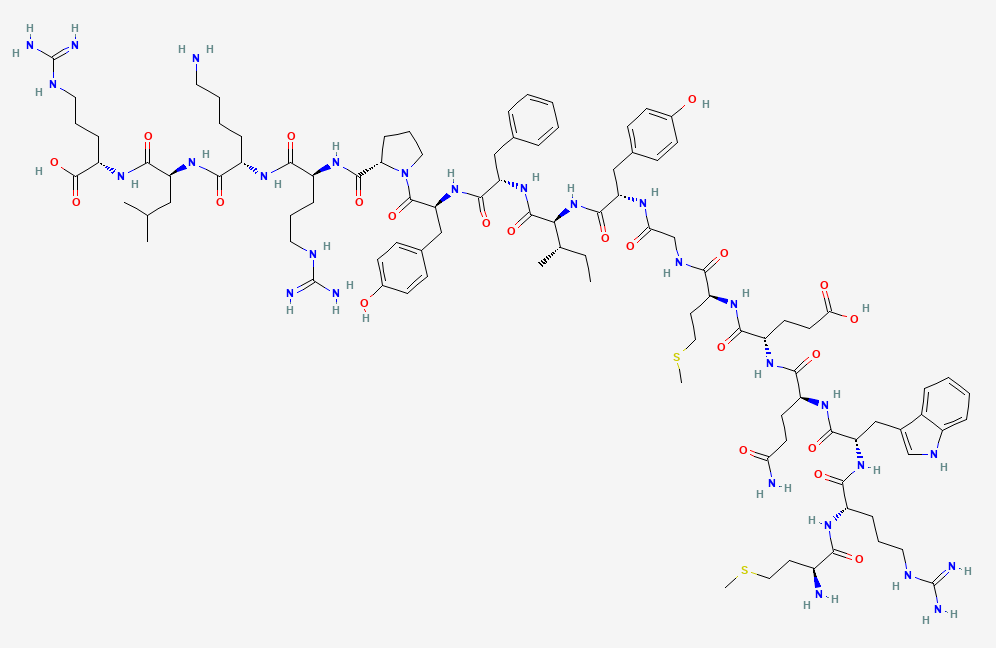
That matters because mitochondrial DNA is a separate, circular genome of about sixteen and a half thousand bases, inherited maternally, and long assumed to encode only the handful of respiratory chain subunits plus the RNAs needed to translate them. Peptides read from within those genes were not part of the picture. MOTS-c is one of a small set, the mitochondrial-derived peptides, that revised it.
- Sixteen residues, encoded within the mitochondrial 12S rRNA gene.
- One of a small family of mitochondrial-derived peptides.
- Detectable in circulation, with reported concentrations varying by age and metabolic state.
- Distinct from nuclear-encoded peptides in origin, which is why it is studied as a mitochondrial signal.
What the literature describes
The consistent theme is metabolic signaling from the mitochondrion outward. Work in this area describes MOTS-c acting on AMP-activated protein kinase, the cell’s principal energy sensor, and on the folate and one-carbon pathway upstream of it. The framing that recurs across reviews is retrograde signaling: information passing from mitochondria to the nucleus, rather than the more familiar direction.
A second theme is exercise. Several groups report that circulating concentrations change with exercise and that expression responds to metabolic stress, which has led to it being discussed as an exercise-associated signal and, in some reviews, in the context of mitohormesis, where a mild stress produces an adaptive response.
A Journal of Clinical Investigation review of mitochondria-derived peptides in aging and healthspan places this work in context, and further reviews extend it into cardiovascular disease, diabetes, bone metabolism and pulmonary fibrosis. The breadth is worth reading carefully: a peptide implicated in a central energy-sensing pathway will appear in many disease literatures, and that is a consequence of where it sits rather than independent evidence of usefulness in each.
How far the evidence has got
The mechanistic literature is substantial and largely from independent groups, which is a real strength relative to some peptides in this cluster. What it is not is a clinical literature. Human work is dominated by association studies, measuring circulating concentrations across ages, fitness levels and metabolic states, rather than trials administering the peptide and measuring what happens.
That distinction is easy to lose. Finding that a molecule is lower in people with a condition establishes an association and says nothing about whether supplying it changes the condition. Reviews in this area are generally careful about it; secondary summaries frequently are not.
A 2026 review in Sports Medicine covering approved and unapproved peptide therapies includes MOTS-c among agents whose use has outpaced the evidence supporting it.
- Substantial mechanistic literature from multiple independent groups.
- Human data is largely observational and associative.
- No controlled trial of administration establishing a clinical outcome.
- Breadth across disease areas reflects the pathway’s centrality, not independent confirmation.
Regulatory position
FDA placed MOTS-c in category 2 of its interim policy on bulk drug substances for compounding under section 503A, meaning the agency identified significant safety risks, and the nomination was withdrawn by the nominator in April 2026. FDA now carries the substance under nominations withdrawn and still publishes the rationale it wrote, and a withdrawn nomination leaves the substance on no 503A list for any route. This is FDA’s stated rationale in full:
“Compounded drugs containing MOTs-C may pose significant risk for immunogenicity for certain routes of administration and may have complexities with regard to peptide-related impurities and API characterization. FDA has not identified any human exposure data on drug products containing MOTs-C administered via any route of administration. FDA lacks important information regarding any safety issues raised by MOTs-C, including whether it would cause harm if administered to humans.”
FDA source , checked 2026-09-16
As with the other peptides on this list, the concern is directed at the compounded article rather than at the underlying biology: immunogenicity risk by certain routes, and complexity in impurity profile and active ingredient characterization. An endogenous peptide is not automatically safe to administer as a manufactured preparation, and being endogenous says nothing about what a synthetic batch contains.
FDA revises this list. The access date appears with the quotation above.
Common questions
- What makes MOTS-c unusual among peptides?
- Its origin. MOTS-c is encoded within mitochondrial DNA rather than in the nucleus, in a short open reading frame inside the 12S ribosomal RNA gene, and the name records that address. Peptides encoded in the mitochondrial genome are a small and comparatively recently described group.
- How far has the human evidence got?
- Not to controlled trials. Human work is dominated by association studies measuring circulating concentrations across ages and fitness levels, which describe correlation rather than testing an intervention. The mechanistic literature is substantial and largely from independent groups, which is a genuine strength, and it remains a mechanistic literature rather than a clinical one.
- What does the mechanistic work describe?
- Metabolic signaling from the mitochondrion outward. Published work describes MOTS-c acting on AMP-activated protein kinase, the principal cellular energy sensor, and on the folate and one-carbon pathway upstream of it.
- Why did FDA place MOTS-c in category 2, and where does it stand now?
- FDA evaluated it for compounding use and identified significant safety risks, with the concern directed at the compounded article rather than the underlying biology: immunogenicity risk by certain routes, and complexity in impurity profile and characterization. The nomination was withdrawn in April 2026, so the substance now sits under nominations withdrawn and on no 503A list. FDA’s wording is quoted in full on this page with the date it was accessed.
- Does ExaVeyra supply MOTS-c?
- No. ExaVeyra does not supply MOTS-c, and nothing on this page is an offer to sell it. It is covered because the mechanistic literature is strong enough to be genuinely interesting, and is regularly presented as though it were clinical evidence when it is not.
Sources
Every source is peer-reviewed and published within the last fifteen years. Each line states what that source is carrying, so nothing is here to pad a count.
- Miller B, Kim SJ, Kumagai H. Mitochondria-derived peptides in aging and healthspan. The Journal of Clinical Investigation. 2022.PMID 35499074
Narrative review
Source 1 supports: The authoritative overview of the mitochondrial-derived peptide family.
- Kong BS, Lee C, Cho YM. Mitochondrial-encoded peptide MOTS-c, diabetes, and aging-related diseases. Diabetes and Metabolism Journal. 2023.PMID 36824008
Narrative review
Source 2 supports: The metabolic work and the nature of the human association data.
- Wan W, Zhang L, Lin Y. Mitochondria-derived peptide MOTS-c: effects and mechanisms related to stress, metabolism and aging. Journal of Translational Medicine. 2023.PMID 36670507
Narrative review
Source 3 supports: The AMPK and one-carbon pathway mechanism described above.
- Li Y, Li Z, Ren Y. Mitochondrial-derived peptides in cardiovascular disease: novel insights and therapeutic opportunities. Journal of Advanced Research. 2024.PMID 38008175
Narrative review
Source 4 supports: Extension of the literature into cardiovascular disease.
- Zheng Y, Wei Z, Wang T. MOTS-c: a promising mitochondrial-derived peptide for therapeutic exploitation. Frontiers in Endocrinology. 2023.PMID 36761202
Narrative review
Source 5 supports: A synthesis of the proposed therapeutic directions.
- Woodhead JST, Merry TL. Mitochondrial-derived peptides and exercise. Biochimica et Biophysica Acta, General Subjects. 2021.PMID 34520826
Narrative review
Source 6 supports: The exercise association described in the mechanism section.
- Yoon TK, Lee CH, Kwon O. Exercise, mitohormesis, and mitochondrial ORF of the 12S rRNA type-c (MOTS-c). Diabetes and Metabolism Journal. 2022.PMID 35656563
Narrative review
Source 7 supports: The mitohormesis framing and the origin of the name.
- Gao Y, Wei X, Wei P. MOTS-c functionally prevents metabolic disorders. Metabolites. 2023.PMID 36677050
Narrative review
Source 8 supports: The metabolic disorder literature, largely preclinical.
- Yi X, Hu G, Yang Y. Role of MOTS-c in the regulation of bone metabolism. Frontiers in Physiology. 2023.PMID 37200834
Narrative review
Source 9 supports: An example of the breadth across disease areas noted above.
- Tero-Vescan A, Degens H, Matsakas A. Exercise-induced muscle-fat crosstalk: molecular mediators and their pharmacological modulation for the maintenance of metabolic flexibility in aging. Pharmaceuticals. 2025.PMID 40872612
Narrative review
Source 10 supports: Where MOTS-c sits among exercise-associated signaling molecules.
- Mendias CL, Awan TM. Safety and efficacy of approved and unapproved peptide therapies for musculoskeletal injuries and athletic performance. Sports Medicine. 2026.PMID 41966639
Narrative review
Source 11 supports: The specialty assessment that use has outpaced the evidence.
Figure sources
- [1]PubChem CID 146675088, MOTS-c. National Center for Biotechnology Information, PubChem. Public domain.
Related
Reviewed 2026-08-16 by Benn Bluestein-Veyra, M.Sc. Organic Chemistry. This page is an evidence summary, not medical advice, and not an offer to sell. ExaVeyra does not supply MOTS-c. Compounded medications are not FDA-approved finished drug products.