Methylene Blue 0.0064% / Estriol 0.003% Cream
Licensed practices only
Methylthioninium chloride topical
- Format
- Topical Cream
- Spec
- 30 g
- Sourcing
- A 503A pharmacy licensed by its state Board of Pharmacy
Available Formulations
Compounded to order by our 503A pharmacy partner; not a dosing recommendation. Beyond-use dates are assigned at compounding and printed on each label, and the shortest applicable limit governs.
| Strength & size | Beyond-use date | Quantity per fill |
|---|---|---|
| (Methylene Blue 0.0064% / Estriol 0.003%) 30 g | 180 days | Up to 5 units |
- Compounding standard
- USP <795>, non-sterile
- Pricing
- Available on verified account approval
Mechanism & Physiological Role
Methylene blue cycles between oxidized and reduced forms, donating electrons to the mitochondrial electron transport chain and reducing reactive oxygen species in skin models.
Clinical & Research Applications
Topical formulations discussed in dermatologic research on oxidative stress in skin.
Biosynthesis, Handling & Sourcing
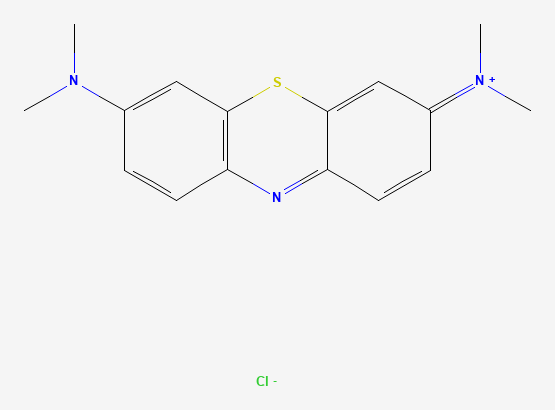
Methylene blue is methylthioninium chloride, a phenothiazinium dye, and its chemistry and its color are the same fact. The oxidized form is blue; accepting two electrons gives leucomethylene blue, which is colorless. The molecule cycles between those states readily, which is why it served as a redox indicator long before anything else, and why a preparation that has lost its color has changed oxidation state rather than merely faded.
Concentration does not scale the effect, it changes its direction. The literature describes the behavior as hormetic: at low concentrations the dye is described as an alternative electron carrier, accepting electrons from NADH and passing them further down the respiratory chain, effectively bypassing a segment of it. At higher concentrations the same cycling is reported to generate reactive oxygen species rather than relieve them. A page that quotes a concentration for this molecule without saying which side of that turn it sits on has left out the part that matters.
This preparation is a combination cream rather than a single active, pairing methylene blue at a low percentage with estriol, so it carries the handling requirements of both. The practical constraints are those of a potent dye: it stains skin, fabric and work surfaces, the vehicle has to hold it at a concentration low enough to be cosmetically acceptable while remaining uniform through the base, and it is sensitive to light. These are non-sterile preparations compounded under USP General Chapter 795 with a beyond-use date assigned at preparation. Confirm storage and in-use dating for the container format at account setup.
The human evidence should be described carefully. Published work on skin is concentrated in cultured fibroblasts and reconstructed three-dimensional skin models rather than in controlled clinical trials. An injectable methylene blue product approved for methemoglobinemia is a different formulation by a different route, and no topical cream is FDA-approved. Compounded medications are not FDA-approved finished drug products, and nothing on this page is a statement that any preparation is suitable for a given patient.
Peer-Reviewed References
Anti-aging potentials of methylene blue for human skin longevity
Xiong ZM, O’Donovan M, Sun L, Choi JY, Ren M, Cao K
Scientific Reports · 2017 · PMID: 28559565
The potentials of methylene blue as an anti-aging drug
Xue H, Thaivalappil A, Cao K
Cells · 2021 · PMID: 34943887
Atamna H, Mackey J, Dhahbi JM
BioFactors · 2012 · PMID: 22419586
Figure sources
- [1]PubChem CID 6099, Methylene blue. National Center for Biotechnology Information, PubChem. Public domain.
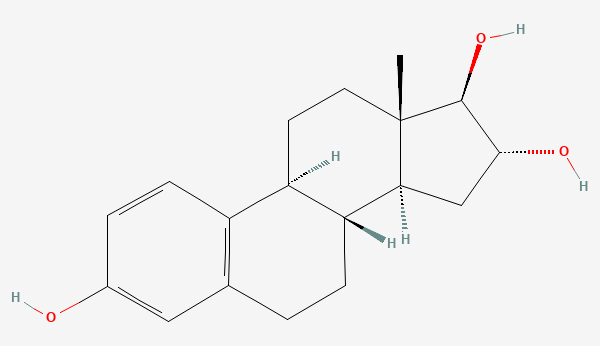
- [2]PubChem CID 5756, Estriol. National Center for Biotechnology Information, PubChem. Public domain.
Ready to add Methylene Blue 0.0064% / Estriol 0.003% Cream to your protocol?
Compounded formulations are dispensed by our 503A pharmacy partner, licensed by the Texas State Board of Pharmacy, under a valid patient-specific prescription. Prefer a formal quote? Request formulation-specific pricing instead.