For clinics that have built membership programs around compounded peptides, the most important variable in 2026 is not clinical, it is regulatory. The FDA continues to review which bulk drug substances may be used in 503A compounding, and that review directly determines which peptides a pharmacy can legally prepare. Understanding the category framework is the difference between a durable program and one that has to be unwound.
What the 503A Framework Actually Governs
Section 503A of the Federal Food, Drug, and Cosmetic Act governs traditional, patient-specific compounding by a licensed pharmacist or physician. A compound prepared under 503A must be tied to a valid prescription for an individual patient. When a compound uses a bulk drug substance that is not a component of an FDA-approved drug and does not appear in an official monograph, that substance has to fall within the FDA’s evaluation framework to be used lawfully.

Key Distinction
503A is patient-specific compounding under state board oversight. 503B outsourcing facilities are FDA-registered, follow cGMP, and can supply office-use inventory. The bulk-substance rules differ between the two pathways, so a peptide’s status under one does not automatically carry to the other.
The Bulk Drug Substance Categories
FDA’s interim policy on bulk drug substances sorts nominated substances into three categories while they await a decision on the 503A bulks list. Practitioners should understand what each category signals for sourcing.

- Category 1: substances that may be used while under evaluation, provided they meet the interim conditions the FDA has set out.
- Category 2: substances that raise significant safety concerns and should not be used in compounding during the review.
- Category 3: substances nominated without sufficient supporting information for the agency to evaluate them.
- Substances that are components of FDA-approved drugs or appear in a USP monograph follow their own established pathway.
Why Several Peptides Moved Categories
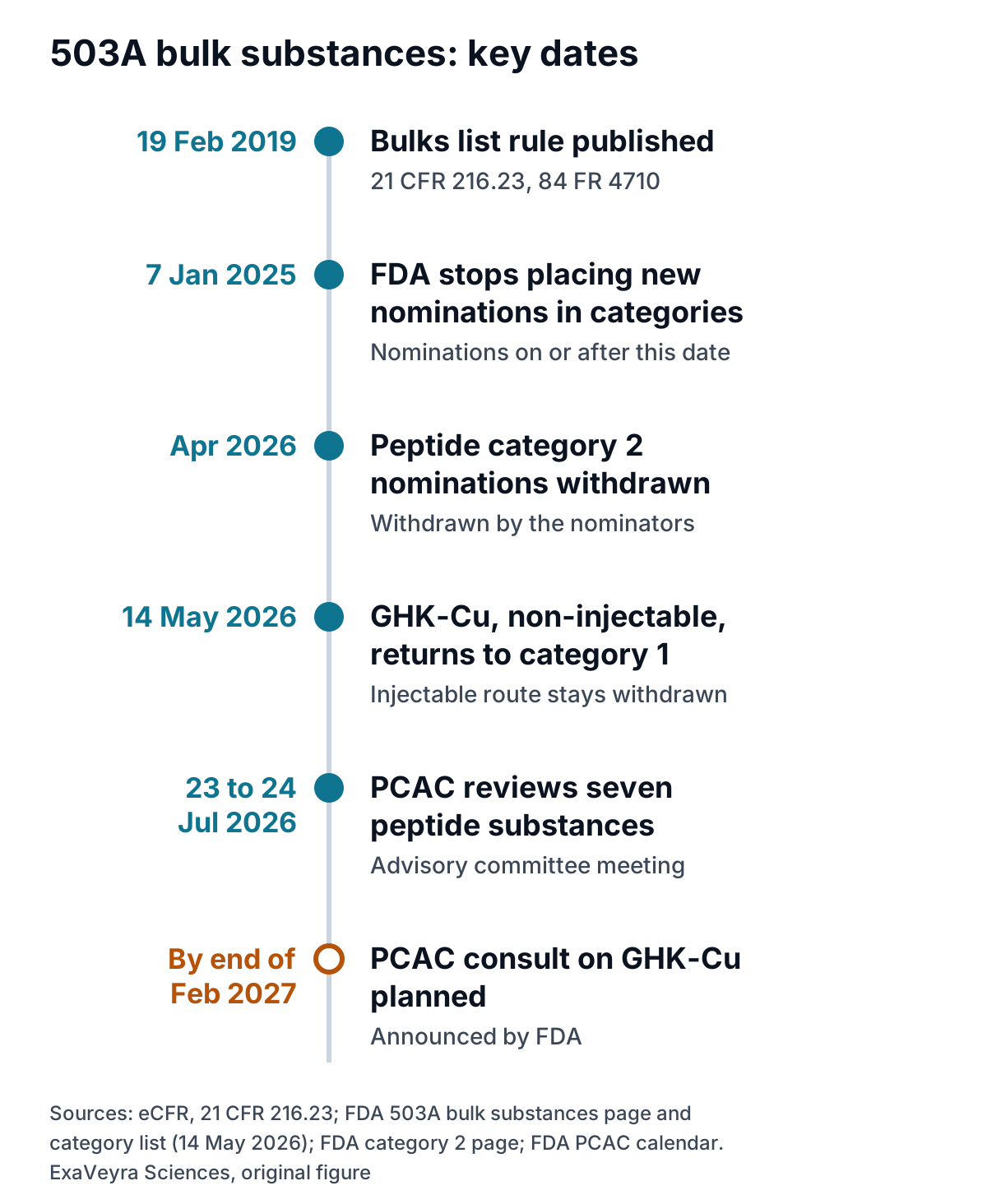
Several dated FDA actions reshaped the peptide picture. On 7 January 2025, FDA stated that it does not intend to place substances nominated on or after that date into the categories, while existing placements stand. In April 2026, nominators withdrew several peptides from category 2, among them BPC-157, TB-500, CJC-1295, ipamorelin and GHK-Cu for injectable routes, and a withdrawn entry sits in no interim category for the route it covers. On 14 May 2026, FDA returned GHK-Cu for non-injectable routes, which covers topical preparations, to category 1. On 23 and 24 July 2026, the Pharmacy Compounding Advisory Committee reviewed seven substances for the bulks list, and its votes are advice rather than decisions. As of 18 October 2026, the bulks list at 21 CFR 216.23 still names six substances and no peptides, so category status remains the practical signal a compliant 503A pharmacy reads.
| Sourcing Question | Before Verifying | After Verifying |
|---|---|---|
| Is the substance eligible? | Assumed available because a pharmacy offered it | Confirmed against current FDA category status |
| Documentation | Invoice only | COA, lot number, and category basis on file |
| Pharmacy pathway | Whatever the vendor used | Matched to intended use (503A vs 503B) |
| Review cadence | One-time check | Re-verified as FDA lists are updated |
What This Means for Concierge and Longevity Clinics
- A compounded peptide is only as compliant as the bulk-substance category behind it. Vendor availability is not a substitute for eligibility.
- Programs built around a single peptide carry concentration risk if that substance is reclassified. Diversifying documentation and sourcing reduces disruption.
- Patient consent and program materials should describe the compounded, prescription nature of any peptide and avoid disease-treatment claims.
- Marketing that names specific peptides alongside outcome claims is a compliance exposure independent of the sourcing question.
The clinics that weather category changes are the ones that treated eligibility as a verifiable fact, not a vendor’s assurance.
How to Stay Compliant Through the Transition
- Ask every pharmacy partner to state the basis on which a peptide is being compounded and to supply a certificate of analysis for each lot.
- Keep a running record of which peptides your program relies on and re-check their status when the FDA updates its evaluations.
- Confirm that the prescribing provider holds appropriate licensure and that each compound is tied to a valid, patient-specific prescription.
- Separate your regulatory copy from your marketing copy so that no material implies an unapproved use.
Compliance Note
Category status changes over time. A protocol that was compliant last year may need revision as the FDA updates its evaluations. Build periodic review into your program rather than treating sourcing as a one-time decision.
Educational Disclaimer: This article is for educational purposes only and does not constitute medical or legal advice. It does not identify any specific peptide as safe, effective, or appropriate for any use. Compounded peptides require a valid prescription and appropriate pharmacy licensure. Practitioners are responsible for verifying current FDA guidance and for compliance with all applicable state and federal regulations.
References
- 1.U.S. Food & Drug Administration. Compounding and the FDA: Questions and Answers (Sections 503A and 503B). fda.gov/drugs/human-drug-compounding/compounding-and-fda-questions-and-answers.
- 2.U.S. Food & Drug Administration. Bulk Drug Substances Used in Compounding Under Section 503A of the FD&C Act, including the 7 January 2025 nomination cutoff; 503A Categories Update, updated May 14, 2026. fda.gov/drugs/human-drug-compounding/bulk-drug-substances-used-compounding-under-section-503a-fdc-act and fda.gov/media/94155/download.
- 3.U.S. Food & Drug Administration. July 23-24, 2026 Meeting of the Pharmacy Compounding Advisory Committee. fda.gov/advisory-committees/advisory-committee-calendar/july-23-24-2026-meeting-pharmacy-compounding-advisory-committee-07232026.
- 4.Electronic Code of Federal Regulations. 21 CFR 216.23, Bulk drug substances that can be used to compound drug products in accordance with section 503A. Last amended February 19, 2019 (84 FR 4710). ecfr.gov/current/title-21/section-216.23.