There is a specific moment in every rapidly evolving regulatory landscape where the window between "this is technically permissible" and "this is verifiably compliant" becomes very narrow very fast. Florida just entered that window.
On July 1, 2025, Florida Senate Bill 1768 became effective, creating Florida Statutes § 458.3245 and § 459.0127 to authorize licensed allopathic and osteopathic physicians to administer stem cell therapies not yet approved by the FDA, specifically for orthopedics, wound care, and pain management.[1]
This is a major change in the operational landscape of regenerative medicine.
For a state that a 2021 survey identified as the leading geography for unlicensed stem cell interventions nationwide, codifying a legal pathway for non-FDA-approved therapies is a structural shift in how regenerative medicine is practiced, sourced, and enforced in the continental United States.[2]
The question posed at this stage is whether biologics sourcing infrastructure has matured enough to meet the documentation and cold chain standards the law now demands.
FDA Regulations Under 21 CFR Part 1271: What Still Applies in Florida
Before getting into what Florida now allows, the federal regulatory layer deserves precise attention, because the two frameworks are not fully harmonized and that tension carries real consequences for Florida stem cell clinics operating in this space.
The FDA regulates human cells, tissues, and cellular and tissue-based products under 21 CFR Part 1271, promulgated under the authority of the Public Health Service Act (42 U.S.C. § 264) and the Federal Food, Drug, and Cosmetic Act (21 U.S.C. §§ 301 et seq.).[3] Under this framework, a product qualifies as a "361 HCT/P," exempt from premarket approval, only if it satisfies four criteria simultaneously: minimally manipulated, intended for homologous use only, not combined with any other article except water, crystalloids, or a storage agent, and either carrying no systemic effect or used autologously.[4]
Products that fall outside any of those four criteria require a full Biologics License Application under Section 351 of the PHS Act before commercial distribution. The FDA's 2020 guidance on minimal manipulation and homologous use makes this framework explicit, and the agency has enforced it consistently through warning letters and injunctions against clinics and manufacturers distributing unapproved allogeneic products.[5]
Florida's SB 1768 creates a state-level authorization that runs parallel to this federal structure, but does not preempt it. Critically, the law does not protect manufacturers who ship products into Florida from out of state. When biologics travel in interstate commerce, federal FDA jurisdiction is intact regardless of what Florida law says.[6] State authorization at the legislative level does not neutralize federal enforcement authority, and the documented history of FDA injunctions against unapproved HCT/P manufacturers operating under assumed state protection makes that clear.
In practical terms, the Florida law primarily benefits product manufacturers and cell therapy laboratories physically located within Florida, and clinicians sourcing from properly registered, in-state or federally compliant facilities.
Florida SB 1768 Stem Cell Therapy Requirements for Physicians
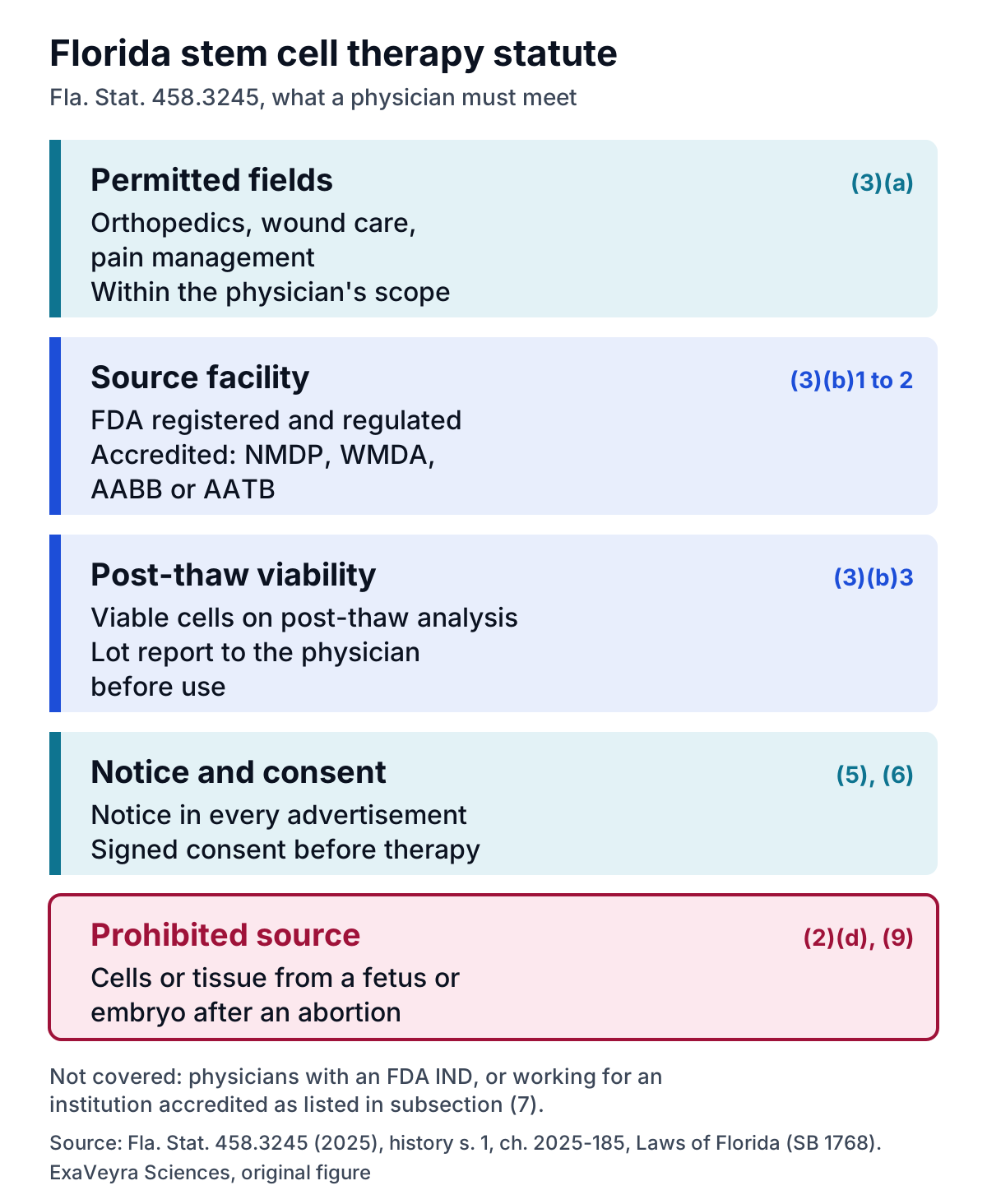
The statute is detailed and the compliance obligations are specific (Fig. 1). A summary of what Florida stem cell clinics are required to meet (Fig. 2):
MSC Biology and Why Stem Cell Source Quality Determines Clinical Outcomes
The legal requirements are one dimension of this conversation. The biological reality of what you are sourcing is the other, and for clinicians who will stand behind these treatments in front of patients, the biology is what keeps you up at night.
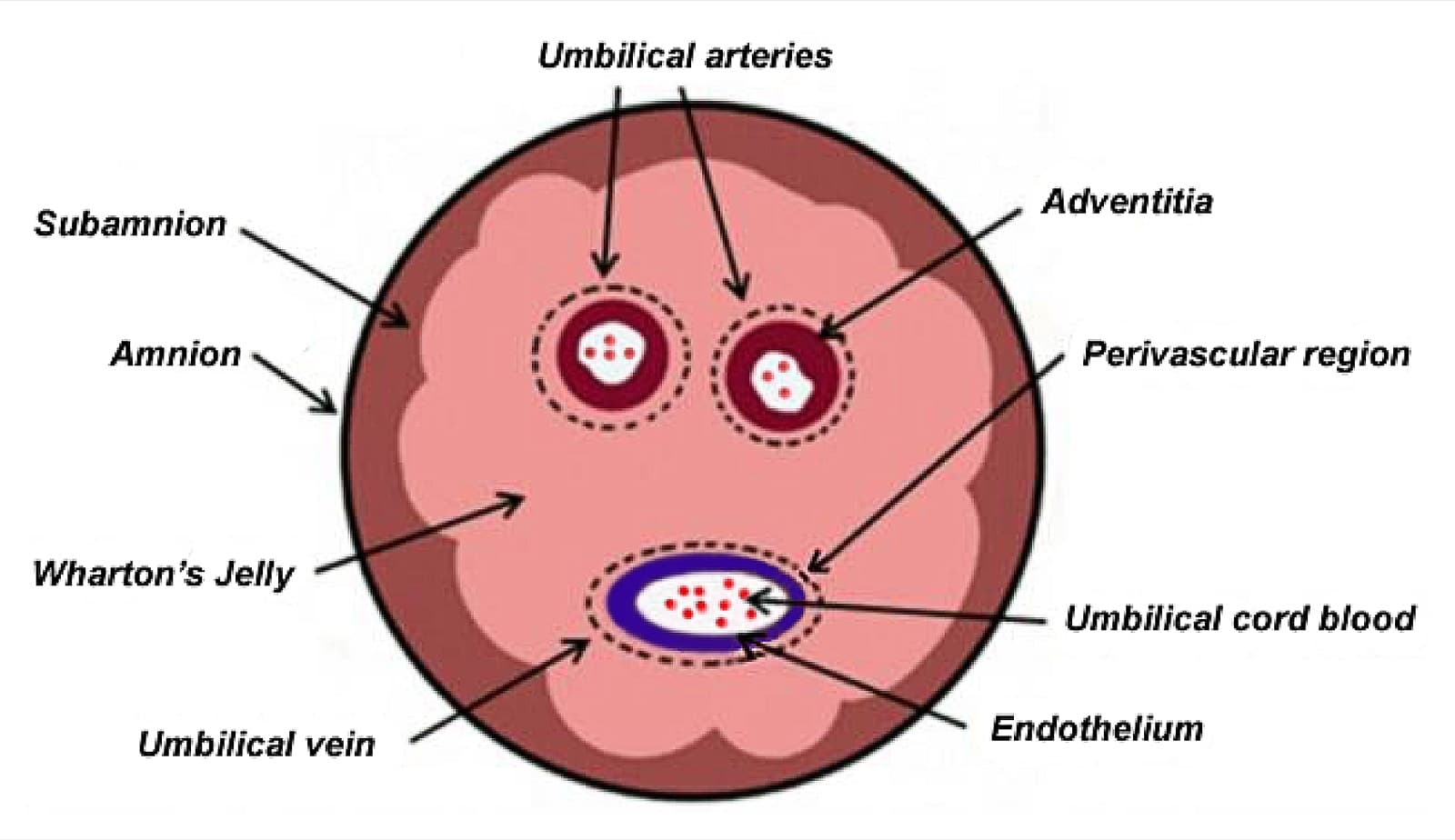
Mesenchymal stem cells are not a homogenous commodity. A 2025 review in Frontiers in Bioengineering and Biotechnology describes the core challenge with precision: MSC therapeutic function varies with donor characteristics including age, sex, and health status; tissue source (bone marrow, adipose, umbilical cord); and culture conditions including media formulation and oxygen levels.[15] MSCs from older donors exhibit reduced proliferation and diminished secretion of regenerative factors. Umbilical cord-derived MSCs demonstrate enhanced proliferative capacity and lower immunogenicity compared to adult bone marrow sources, which is part of why perinatal tissue has become the preferred source for allogeneic applications (Fig. 3).[16]
This biological variability carries direct clinical consequences. It contributed to the Phase III failure of Prochymal, an MSC product for graft-versus-host disease, where variable IDO activity across donor lots produced inconsistent clinical outcomes.[15] Lot-to-lot variation in a living cell product is simultaneously a regulatory problem, a clinical outcomes problem, and a liability problem. Rigorous manufacturing controls and transparent characterization data are the only available tools to manage it.
On December 18, 2024, the FDA approved Ryoncil (remestemcel-L from Mesoblast Corporation), the first allogeneic MSC therapy approved for commercial use in the United States.[17]
In orthopedic research, a 2024 network meta-analysis in the Journal of Orthopaedic Surgery and Research pooled 15 studies covering 585 patients and compared bone marrow, adipose and umbilical cord MSC injections in knee osteoarthritis. It is cited here for its study design and makes no claim about any product.[18]
Stem Cell Supplier Documentation Requirements Under Florida Law
Florida stem cell clinics building or revisiting their procurement protocols under SB 1768 should expect clear answers to all of the following from any supplier they work with:
A good supplier answers every one of these questions in writing, for each lot, before your first order ships. That paperwork is what protects your practice.
FDA Enforcement vs. Florida SB 1768: Understanding the Compliance Risk
Legal observers have noted that the Florida law and federal law are structurally at odds in ways the FDA will eventually have to address.[20] Florida's population size and median age make it a substantial market, and if the agency's enforcement posture does not adapt, the gap between what state law permits and what federal law requires will widen as more states follow Florida's lead. Utah passed similar legislation in 2024, and legislative momentum in this direction continues to build.[21]
Federal enforcement authority over products that do not meet the 361 HCT/P criteria remains active and has not diminished under state-level authorization. The FDA's Center for Biologics Evaluation and Research has enforced consistently and specifically against exosomes, umbilical cord blood, Wharton's jelly, and amniotic tissue products marketed for cellular or cell-dependent indications without approval.[22] The agency's publicly stated posture has not shifted in response to SB 1768.
The physician who structures their stem cell sourcing around a supply chain that is simultaneously SB 1768-compliant and aligned with federal CGTP standards occupies the strongest defensible position regardless of how the federal-state tension ultimately resolves.
Regulatory Disclaimer: This article is a literature and regulatory summary. It does not constitute legal advice, medical advice, or a compliance determination for any specific product or practice. The regulatory landscape described here reflects the state of law and published guidance as of early 2026, in a field that is actively evolving. Florida's Department of Health is still developing implementing rules for SB 1768, and those rules will add specificity the statute does not yet provide. Physicians building a stem cell protocol in a Florida clinic should consult a regulatory attorney with experience in FDA HCT/P law and Florida medical practice statutes, alongside their malpractice carrier.
Human cell and tissue products: ExaVeyra supplies mesenchymal stem cell material, from a registered tissue bank operating under 21 CFR Part 1271, only for laboratory research and sponsor-held IND studies; for an IND study, the IND number, sponsor details and protocol are required before any supply. Establishment registration is not product approval, and ExaVeyra makes no claim that any cell or tissue product is safe or effective for any condition. Whether a study's use complies with Florida law and the investigator's scope of practice is a determination for the sponsor, the investigator and their counsel. ExaVeyra Sciences is a supplier: it does not provide medical care and takes no part in clinical decisions.
ExaVeyra supplies mesenchymal stem cell products from an FDA-registered tissue bank only for laboratory research and sponsor-held IND studies; for an IND study, the IND number, sponsor details and protocol are required before any supply. To learn how we can support your research, submit a clinic application.
Florida Senate Bill 1768 (2025). Fla. Stat. §§ 458.3245, 459.0127. Effective July 1, 2025.
View source 1Parents Guide to Cord Blood Foundation. "Florida Stem Cell Law and the FDA." Regulatory analysis. 2025.
View source 2FDA. Center for Biologics Evaluation and Research (CBER). Public Health Service Act (42 U.S.C. § 264); Federal Food, Drug, and Cosmetic Act (21 U.S.C. §§ 301 et seq.).
View source 3FDA. "HCT/Ps." 21 CFR Part 1271.10(a). Electronic Code of Federal Regulations.
View source 4FDA. "Regulatory Considerations for Human Cells, Tissues, and Cellular and Tissue-Based Products: Minimal Manipulation and Homologous Use." Guidance for Industry and FDA Staff. July 2020.
View source 5Fidjlaw.com. "Florida's New Stem Cell Laws: Unburdened By What Has Been." November 2025.
View source 6Florida House Bill 1617. HHS Committee Analysis. Florida House of Representatives. April 22, 2025.
View source 7BillTrack50. FL S1768: Stem Cell Therapy. Legislative summary.
View source 8Florida House Bill 1617. HHS Committee Analysis. April 22, 2025. Committee analysis of the House companion bill; the enacted text is SB 1768.
View source 9RegenOMedix. "Florida Stem Cell Law Updates and Insights." 2025.
View source 10FDA. "Current Good Tissue Practice (CGTP) and Additional Requirements for Manufacturers of HCT/Ps." Guidance for Industry. December 2011.
View source 11Parents Guide to Cord Blood Foundation. "Florida Stem Cell Law and the FDA." Post-thaw viability measurement challenges. 2025.
View source 12RegenOMedix. "Florida Stem Cell Law Updates and Insights." Statutory notice and informed consent requirements under SB 1768. 2025.
View source 13Florida House Bill 1617. HHS Committee Analysis. Criminal penalties and disciplinary action provisions. April 22, 2025.
View source 14Patel JC, Shukla M, Shukla M. From bench to bedside: translating mesenchymal stem cell therapies through preclinical and clinical evidence. Frontiers in Bioengineering and Biotechnology. 2025;13:1639439. doi:10.3389/fbioe.2025.1639439
View source 15Han X, Liao R, Li X, et al. "Mesenchymal stem cells in treating human diseases: molecular mechanisms and clinical studies." Signal Transduction and Targeted Therapy. 2025;10(1):262. PMID 40841367.
View source 16FDA. Approval of Ryoncil (remestemcel-L, Mesoblast Corporation). December 18, 2024. First FDA-approved allogeneic MSC therapy for steroid-refractory acute GVHD in pediatric patients.
View source 17Chen X, Zheng J, Yin L, Li Y, Liu H. Transplantation of three mesenchymal stem cells for knee osteoarthritis, which cell and type are more beneficial? a systematic review and network meta-analysis. Journal of Orthopaedic Surgery and Research. 2024;19(1):366. doi:10.1186/s13018-024-04846-1. PMID 38902778.
View source 18FDA. "Regulation of Human Cells, Tissues, and Cellular and Tissue-Based Products (HCT/Ps): Small Entity Compliance Guide." Guidance for Industry. November 2022.
View source 19Fidjlaw.com. "Florida's New Stem Cell Laws: Unburdened By What Has Been." Federal enforcement and Supremacy Clause analysis. November 2025.
View source 20Parents Guide to Cord Blood Foundation. "Florida Stem Cell Law and the FDA." Utah and Florida state legislation comparison. 2025.
View source 21Fidjlaw.com. "Florida's New Stem Cell Laws: Unburdened By What Has Been." FDA enforcement history on exosomes, umbilical cord blood, Wharton's jelly, and amniotic tissue. November 2025.
View source 22Frequently Asked Questions
What did Florida SB 1768 change?+
Effective July 1, 2025, SB 1768 created Florida Statutes 458.3245 and 459.0127 to authorize licensed allopathic and osteopathic physicians to administer stem cell therapies not yet approved by the FDA, limited to orthopedics, wound care and pain management, and only from sources supplied by FDA-registered, accredited facilities.
Does SB 1768 override FDA regulation?+
No. The state authorization runs parallel to 21 CFR Part 1271 and does not preempt it. Federal jurisdiction remains intact for products that travel in interstate commerce, so the law primarily benefits manufacturers physically located in Florida and clinicians sourcing from federally compliant facilities.
What are the four criteria for a 361 HCT/P?+
Under 21 CFR Part 1271 a product is exempt from premarket approval only if it is minimally manipulated, intended for homologous use only, not combined with any other article except water, crystalloids or a storage agent, and either carries no systemic effect or is used autologously. A product failing any criterion requires a Biologics License Application.
Which cell sources does SB 1768 permit, and which does it prohibit?+
SB 1768 does not list permitted tissue types. Its definition of stem cell therapy covers afterbirth placental perinatal stem cells and human cells, tissues, or cellular or tissue-based products that meet its requirements. It makes treatment or research using human cells or tissues derived from a fetus or an embryo after an abortion a third-degree felony (Fla. Stat. 458.3245(9)(a) and 459.0127(9)(a)), and whatever the source, the cells must come from an FDA-registered facility accredited by the National Marrow Donor Program, the World Marrow Donor Association, AABB or AATB, with a post-thaw viability report for the lot sent to the physician before use.
What documentation should a Florida clinic expect from a stem cell supplier?+
FDA registration under 21 CFR Part 1271, current AABB, AATB, NMDP or WMDA accreditation, a lot-specific Certificate of Analysis covering sterility, identity and quantitative characterization, a post-thaw viability report from a validated assay, temperature-monitored cold chain records, and laboratory-verified stability data.